



On a sweltering evening in rural northern Nigeria, the whirr of a plastic fan and the glow of a single LED bulb draw a cluster of children into a one-room house at the edge of the village.
Until a few months ago, the family relied on kerosene lamps and a sputtering diesel generator that ran out of fuel often.
Now, a small solar-powered system keeps the lights on for a few hours each night and runs a basic phone charger and fan.
In communities like this, across sub-Saharan Africa, modest new connections are transforming daily life: students can study after dark, shopkeepers can stay open longer, and health workers can store vaccines more reliably.
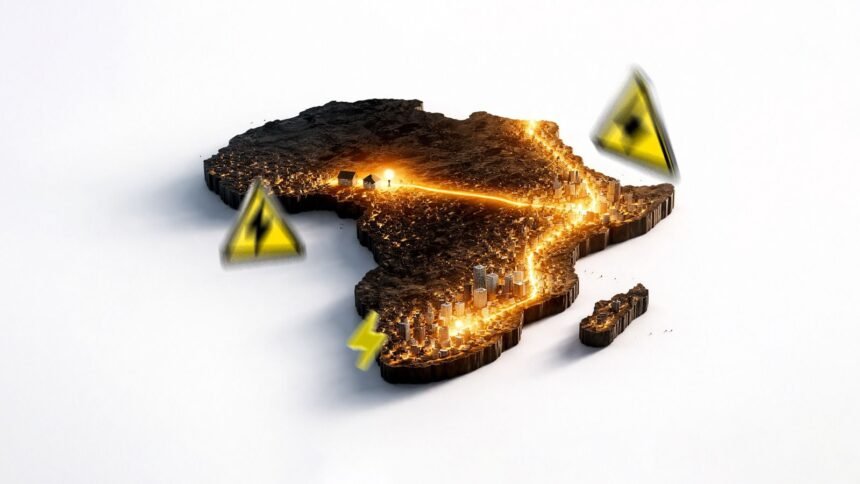
These scenes are the human face of “Mission 300,” a sweeping effort led by the World Bank Group and the African Development Bank to connect 300 million people in sub-Saharan Africa to electricity by 2030.
Launched in 2024, the partnership commits the World Bank Group to support connections for 250 million people, with the African Development Bank targeting another 50 million.
The aim is to cut into a staggering access gap: nearly 600 million people in sub-Saharan Africa still live without electricity, and population growth threatens to erase hard-won gains if access does not expand quickly.
Background and Stakes
Mission 300 is the latest, and one of the most ambitious, attempts to tackle the continent’s chronic electricity deficit. According to the World Bank, the initiative is designed to “deliver affordable power, expand electricity access, boost utility efficiency, attract private investment and improve regional energy integration.”
Early signals suggest that the campaign is beginning to move the needle. The World Bank says it has already connected more than 31 million people in Africa to electricity through operations aligned with Mission 300, with projects under implementation expected to reach nearly 100 million people in the coming years.
A separate progress account published in late 2025 estimated that roughly 32 million people had gained access to electricity through Mission 300–linked interventions and aligned programs, with financing plans in place to reach tens of millions more.
The initiative leans on a mix of approaches: extending national grids where feasible, building solar mini-grids, and deploying stand-alone systems in remote areas where grid extension would be prohibitively expensive. Supporters say this diversified strategy acknowledges a basic reality.
There is no single path to electrifying a continent where dense cities and sparsely populated rural regions often coexist within the same country.
Human Stories and Real-world Examples
In villages across countries like Ghana, Mozambique, and Togo, solar mini-grids financed by multilateral banks and private partners have allowed small businesses to refrigerate food, weld metal, and power milling machines.
Shop owners report staying open later, farmers grind grain locally rather than travel long distances, and women running home-based enterprises report having more time and income.
Yet new connections do not automatically solve deeper problems of reliability and affordability. In some countries, households that were recently electrified complain of frequent outages and tariffs that feel out of reach for low-income families.
Off-grid systems can fail if maintenance and customer service are weak, and diesel generators remain a fallback in places where the grid is unreliable, or fuel subsidies persist.
These tensions go to the heart of Mission 300’s promise and its limits. The initiative is framed not just as a campaign to connect households but as a step toward broader economic transformation:
a way to power clinics, schools, and small industries while steering countries away from high-carbon development paths. But delivering on that vision requires more than cables and panels; it demands durable reforms in how power systems are governed and financed.
Policy, Debate, and Expert Views
A cornerstone of Mission 300 is a new wave of “National Energy Compacts,” country-led plans that outline targets, reforms, and investment needs across the energy sector.
Under the Dar es Salaam Energy Declaration, endorsed at the Africa Energy Summit in Tanzania in early 2025, African governments committed to accelerating these reforms and aligning national strategies with Mission 300’s goals.
By late 2025, the World Bank and its partners reported that 29 National Energy Compacts had been unveiled or updated, with more countries preparing their own.
A World Bank Africa update on social media in 2025 highlighted “30 National Energy Compacts = 30 countries on board,” underscoring how political buy-in is being framed as a critical part of the effort.
In practice, these compacts often require politically sensitive moves: adjusting tariffs, tackling the debts of state-owned utilities, opening space for independent power producers, and strengthening regulators.
Proponents argue that without such changes, even large volumes of concessional finance will struggle to attract the private investment needed to reach scale.
A World Bank overview emphasizes that “Mission 300 is as much about reforms as it is about financing,” pointing to efforts to make utilities more efficient, integrate regional power markets, and expand distributed renewable energy.
At the Africa Energy Summit in Dar es Salaam, development partners pledged more than 50 billion dollars in support of energy access and related infrastructure, signaling an unprecedented level of external backing.
Critics and skeptics, however, caution against viewing Mission 300 as a guaranteed success. Analysts point out that many African countries are juggling debt distress, climate shocks, and political instability, any of which can delay projects or derail reforms.
Civil society groups warn that aggressive efforts to court private investment could leave the poorest households behind if subsidies and consumer protections are not robustly designed.
There is also debate over technology choices. Some climate advocates argue that every dollar should go toward renewable energy and clean cooking to avoid locking in fossil-fuel infrastructure that could undermine global climate goals.
Others contend that, in the short term, gas-fired power and existing thermal plants will remain part of the mix, especially in countries where baseload demand is growing quickly.
What Comes Next
For households newly connected to the grid or to a solar mini-grid, the immediate gains are clear: fewer hours lost to collecting firewood, less money spent on kerosene and diesel, more time for work and study.
On a continental scale, though, Mission 300 is testing whether the international financial system and African governments can move in sync, at speed, to deliver a basic service that much of the world takes for granted.
The coming years will reveal whether National Energy Compacts become funded, implemented plans rather than glossy documents, and whether lenders can simplify their procedures enough to match the urgency of the goals.
If the 2030 target is met, Africa could halve its electricity access gap within a decade, reshaping prospects for industrialization, jobs, and climate resilience.
If the effort falls short, millions will remain in the dark, and Mission 300 will stand as a case study in the limits of ambition without sustained political will. For now, the small circle of light in that Nigerian home is both a sign of progress and a reminder of the vast distance left to travel.