





Pan-African: The Great Lakes as a New Frontier for Energy Sovereignty
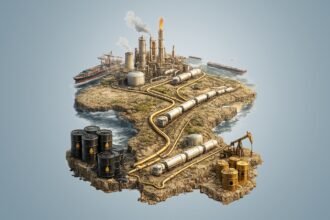
Across the African landscape, the emergence of the Great Lakes region as a significant petroleum province represents a transformative shift in the continent’s quest for energy sovereignty. For decades, the African hydrocarbon narrative was dominated by the coastal giants of the Atlantic and the Mediterranean. However, the development of inland basins in East Africa signals a new era of “territorial depth,” in which landlocked nations are reclaiming their agency in the global energy market. This Pan-African movement toward decentralized resource extraction is essential to fostering regional resilience and ensuring that a diversified, indigenous energy portfolio fuels the continent’s developmental engine.
Uganda’s Oil Trade Outlook: Transitioning to Producer Status
The oil trade outlook for Uganda in 2026 is defined by the historic transition from an exploration-focused frontier to an active commercial producer. After years of technical preparation and infrastructure development, the nation is poised to commence commercial crude production later this year. The current outlook is characterized by an aggressive expansion of the resource base; in late April 2026, the Ministry of Energy and Mineral Development announced a third petroleum exploration licensing round scheduled for the 2026/27 financial year. This proactive strategy aims to sustain production levels for the long term, ensuring that Uganda remains a stable and significant participant in the regional energy market for decades to come.
East Africa’s leading Oil Traders: The Emerging Hubs
Uganda is rapidly positioning itself as a primary hub within a growing network of East African oil traders. While Kenya and Tanzania have traditionally dominated the region’s logistical corridors, Uganda’s entry into the upstream sector creates a new center of gravity. This emerging ecosystem is defined by a collaborative approach to resource management, where the success of the Ugandan fields is inextricably linked to the maritime gateways of its neighbors. The “leading traders” of 2026 are not just national oil companies, but a sophisticated mix of regional partners and international majors who are integrating the Great Lakes’ resources into a unified East African energy corridor.
West Africa vs. East Africa: Comparative Models of Extraction
The development of Uganda’s oil trade offers a compelling contrast to the established extraction models of West Africa. While the Atlantic producers have traditionally focused on offshore, export-oriented mega-projects, the East African model is defined by complex inland logistics and a strong emphasis on regional integration. Uganda’s approach prioritizes the development of localized refining capacity and the construction of the East African Crude Oil Pipeline (EACOP), a project that necessitates deep cross-border cooperation. Unlike the often-isolated enclave models seen in parts of West Africa, the East African strategy seeks to embed the oil industry into the broader fabric of regional trade and infrastructure.
Investments in Oil Trade: Capitalizing on the Albertine Graben
High-value commitments from global energy leaders, including TotalEnergies and CNOOC, currently dominate the investment landscape in Uganda’s petroleum sector. These investments focus on developing the Tilenga and Kingfisher fields in the Albertine Graben. The 2026 licensing round represents a critical effort to attract “fresh capital” into untapped blocks, ensuring a continuous pipeline of exploration projects. For the Ugandan state, these investments are a primary driver of foreign direct investment, providing the liquidity to fund large-scale national infrastructure while signaling to the global market that the nation’s upstream sector remains a viable and attractive destination for long-term equity investment.
Oil Trade vs. Non-Oil Trade: Rebalancing the Economic Portfolio
As Uganda prepares to become a significant oil exporter, a primary challenge is managing the “Dutch Disease” and preserving a healthy non-oil trade sector. The national strategy emphasizes that petroleum revenue should catalyze, rather than replace, traditional exports such as coffee and tea. Rebalancing the economic portfolio involves utilizing oil wealth to lower energy costs for local manufacturers, thereby increasing the competitiveness of Ugandan non-oil products in regional markets. By fostering a “dual-track” economy, the state aims to ensure that the eventual depletion of hydrocarbon reserves does not leave the nation vulnerable to the shocks of a single-commodity market.
Debt Management: Leveraging Reserves for Fiscal Stability
The commencement of oil production provides Uganda with a powerful new tool for managing its national debt. By establishing a dedicated petroleum fund and utilizing future production as collateral for developmental loans, the state can move toward more sustainable financing models. However, the current global financial climate, impacted by volatility in the Middle East, requires a disciplined approach. Effective debt management in 2026 involves transparently allocating oil revenues to high-return infrastructure projects that enhance the nation’s productive capacity, ensuring that sovereign obligations are met without compromising the fiscal health of future generations.
Industrialization & Development: The Downstream Multiplier Effect
The ultimate goal of Uganda’s oil trade is to trigger a “downstream multiplier effect” that drives national industrialization. This involves constructing a domestic refinery to meet the growing demand for petroleum products in the Great Lakes region. By refining its own crude, Uganda can reduce its reliance on costly fuel imports and create a stable supply of inputs for a burgeoning petrochemical industry. This industrial roadmap is essential for transforming the nation from a provider of raw materials into a manufacturing hub, ensuring that oil sector development results in a more resilient, self-sufficient, and prosperous Ugandan Republic.