





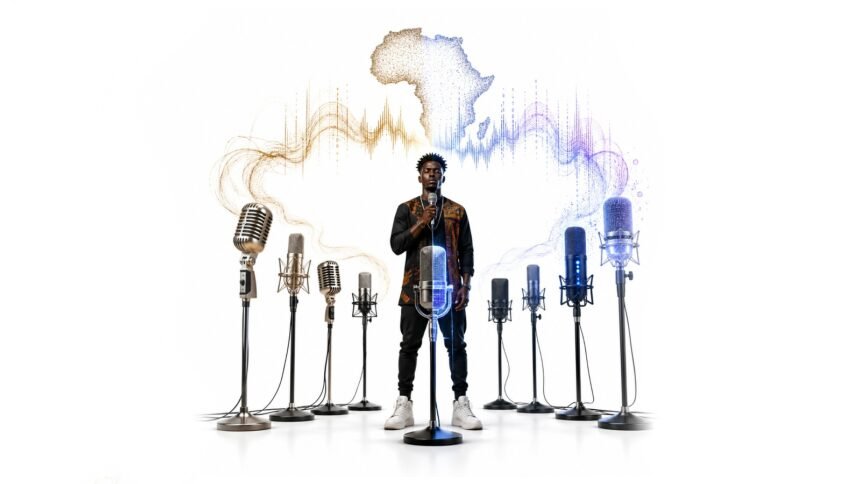
Pan-African: The Digital Vanguard of Continental Sound
Across the African landscape, music serves as the continent’s definitive global ambassador for its cultural and economic aspirations. In the 21st century, the Pan-African identity is increasingly defined by its “digital vanguard”, a generation of creators who leverage emerging technologies to bypass traditional gatekeepers and reach global audiences. As the continent moves toward the goals of the African Continental Free Trade Area, the music industry has emerged as a primary sector for regional integration, demonstrating how shared rhythmic and linguistic heritage can be transformed into a unified economic force that asserts African agency on the world stage.
Music Industry in Africa: A Multi-Billion Dollar Frontier
The music industry in Africa is currently undergoing explosive growth, transitioning from a collection of informal markets into a sophisticated, multi-billion-dollar frontier. This expansion is driven by the rapid penetration of mobile technology and the global dominance of “made-in-Africa” genres. However, this growth is accompanied by significant structural challenges, particularly in intellectual property (IP) protection. Many African markets remain vulnerable to unauthorized exploitation due to comparatively weak legal frameworks, creating a landscape in which the pursuit of commercial success must be balanced with the urgent need for robust regulatory oversight and the professionalization of the industry’s administrative pillars.
Leading African Countries in the Music Industry: The Regional Hubs
The continental music industry is anchored by several high-performance regional hubs that set the standard for production and export. Nigeria remains the undisputed leader, with Lagos serving as the global center for Afrobeats and a primary destination for international music technology investment. South Africa continues to dominate through its sophisticated infrastructure and the global rise of Amapiano, while Kenya and Ghana serve as vital creative corridors for East and West Africa, respectively. These nations are not just exporters of sound; they are the testing grounds for new business models, where the integration of digital streaming and local “fintech” solutions is redefining how artists monetize their talent in emerging economies.
Jazz & Hip-Hop: The Evolution of Transnational Rhythms
African Jazz and Hip-Hop represent the deep, transnational connections that define the continent’s musical evolution. From the “Ethio-jazz” of Addis Ababa to the high-life-influenced jazz of Accra, these genres have historically served as a bridge between the continent and its diaspora. In 2026, African Hip-Hop has moved beyond mere imitation to become a powerful tool for social commentary and linguistic preservation, with artists increasingly utilizing indigenous languages to reach local audiences. These genres illustrate the “rhizomatic” nature of African music, where global influences are continuously absorbed and repurposed to create something that is both contemporary and deeply rooted in ancestral heritage.
AI & Authenticity: Reclaiming the Human Element
The emergence of Artificial Intelligence (AI) presents a dual reality of risk and reward for African creators. While AI-generated music offers tools for production efficiency, it also poses a threat of “erasure” through the unauthorized cloning of voices and styles. A landmark development in this space occurred in April 2026 at the Atlantic Music Expo in Cape Verde, where industry leaders discussed the risks of AI plagiarizing African sounds. High-profile incidents, such as the unauthorized AI choir featured on a track by Nigerian artist Fave, have spurred a movement toward “authentic reclamation,” where artists integrate AI-assisted versions of their work to assert ownership. The prevailing consensus is that while technology can complement production, it can never substitute the “emotional frequency” and lived experience that define authentic African talent.
Investments in Music: The Rise of Indigenous Tech and Equity
Investment in the African music industry is shifting toward “indigenous technology” and localized equity models. Programs like “Sona,” an AI-based tool built specifically on local music and governed by local artists, represent a move toward “cultural preservation through tech.” Unlike global AI models that train on averages, these African-led initiatives are designed to amplify the specificities of local sound while ensuring that IP rights remain with the creators. This influx of specialized capital is essential to building a sustainable ecosystem in which African firms, rather than just foreign platforms, control the distribution and monetization of the continent’s creative output.
Music as a Unity Factor: Harmony Across Borders
Ultimately, music remains the most potent “unity factor” on the African continent, transcending political and linguistic boundaries to foster a sense of shared destiny. Whether through the collaborative festivals in Praia or the cross-border digital collaborations that define the modern era, music provides a platform for “soft diplomacy” that political institutions often struggle to achieve. By harmonizing diverse cultural expressions, the industry acts as a social glue that reinforces the Pan-African ideal. Reclaiming the future of African music requires a commitment to protecting the human element of creativity, ensuring that the integration of technology enhances rather than replaces the authentic voices that tell the continent’s story.