



A Two-Year Clock, a Commission Form and a Ruling Party That Holds Every Seat
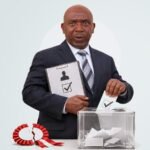
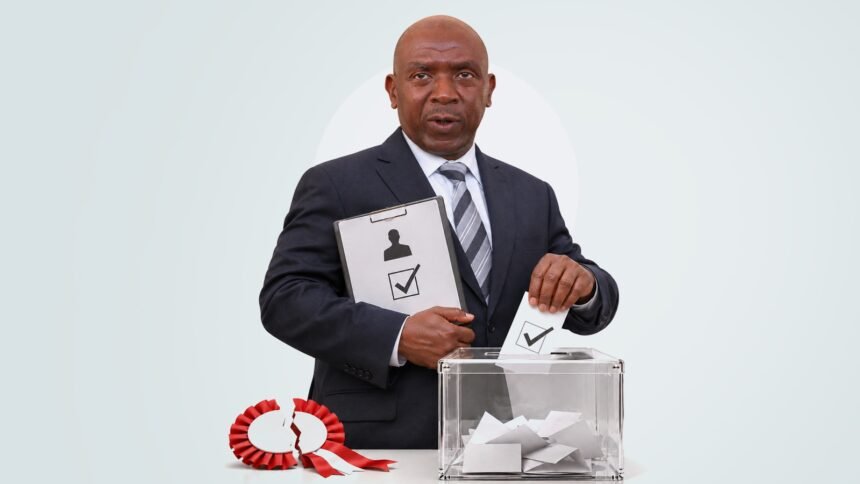
“It is not the party that votes, but individuals, the citizens.” With that line, Agathon Rwasa, the former rebel leader who finished second in Burundi’s 2020 presidential election, explained why losing control of his party has not ended his ambitions. On Saturday 21 November, a day before the filing period closed, he arrived around midday at the offices of the Independent National Electoral Commission (CENI) in Ngagara, Bujumbura, accompanied by supporters, including former members of parliament, and submitted his candidacy for the 3 May 2027 presidential election as an independent.
His bid is a test of whether Burundi’s next election will offer voters a real choice. The ruling CNDD-FDD has governed for more than 20 years and already holds every seat in the National Assembly. Several parties are boycotting the vote. A UN expert has warned that conditions for a free and credible election are not in place. Whether the electoral commission accepts or rejects Rwasa’s file will say a great deal about the contest to come, and about the shrinking space for opposition politics in the Great Lakes region.
The Man Who Lost His Party
Rwasa led the National Congress for Freedom (CNL), the country’s main opposition party, until March 2024, when he was removed at an extraordinary congress held under heavy police protection and organized by dissident members of parliament. They accused him of breaking party rules and dividing the movement. He denounced the move as a government plan to exclude him from the presidential race, and the party leadership passed to a figure seen as close to those in power.
The following year, the electoral commission rejected his candidacy for the legislative elections on the same grounds: his link to the party he no longer led. Rwasa now says he has cut all ties with the CNL. “I have no relationship with that party,” he said, adding that nobody could accuse him of attending its meetings or contributing to it.
An Argument Over Article 99
The dispute turns on a constitutional clause and a commission form. Article 99 of Burundi’s Constitution allows presidential candidates to stand independently and sets a two-year waiting period for a member of a party’s leadership body who resigns or is removed. “Two years after a member of a political party’s governing body has been removed from office, they may stand as an independent candidate. We are therefore referring to removal from office or resignation,” Rwasa said. Since he was ousted in March 2024, he argues, the two years have passed.
The difficulty came when he handed over his documents. The commission asked for proof that he does not belong to a political party, and its form, in his reading, requires both resignation and removal. “Can you be removed and think of resigning at the same time? It is practically impossible,” he said, insisting that the Constitution outranks any form. His critics see a different problem: by going to the Supreme Court to contest his removal, they argue, he is still claiming a stake in the CNL, which they say is incompatible with standing as an independent. Both readings are on the table, and only the commission and, on appeal, the Constitutional Court can settle them.
A Deposit as a Show of Strength
Every presidential candidate must lodge a deposit of 100 million Burundian francs. Rwasa presented his success in raising it as proof of popular backing. “The proof is that I have managed to raise 100 million. If people agreed to help me raise the deposit, will they fail to support me in the election?” he said. He noted that the money is returned if a file is rejected or if a candidate wins at least 5 percent of the vote, adding that Rwasa would not be the one to fall short of 5 percent.
He also pointed to the CNL’s past: the party, he said, came second in the 2010 local and parliamentary elections, a vote the opposition says was marred by widespread fraud. Asked why he would run when others are boycotting, he said he would have been “guilty” had he abstained, and that he wants to offer an alternative and not leave the field open to the CNDD-FDD.
The Field and the Timetable
President Évariste Ndayishimiye, the ruling party’s candidate, was the first to file and is seeking a second seven-year term. A handful of lesser-known candidates have also submitted papers. The commission has four days to examine the files and is due to give its answers on 27 November. After any appeals have been heard, the final list of candidates is expected on 6 December. The first round is set for 3 May 2027, with a possible run-off on 1 June.
The wider climate is tense. Burundi faces shortages and inflation. In late September, Fortuné Gaetan Zongo, the UN Special Rapporteur on the human rights situation in Burundi, warned of signals that could compromise free and credible elections in 2027, including restrictions on pluralism, the closure of civic and media space, and human rights violations. “An election cannot be free if the main competitors are excluded,” he said.
A Choice That Belongs to Burundians
Rwasa says the commission has no grounds to hesitate if it “plays fair and respects the legal provisions in force”. The decision due on 27 November will be read far beyond Bujumbura. If a ruling party that already controls parliament also faces no serious challenger for the presidency, the 2027 vote risks becoming a formality. Letting the courts and the electorate, rather than administrative forms, decide who may compete would be the clearest sign that Burundians still hold the final say over who governs them.