

Pan-African Perspectives: Disability as a Catalyst for Inclusive Growth
Across the African continent, disability is increasingly being reframed from a marginal health issue to a central tenet of human rights and sustainable development. The African Union’s “Continental Plan of Action for People with Disabilities” emphasizes that true Pan-African progress is impossible without the full participation of the estimated 80 million Africans living with some form of disability. In many regions, people with disabilities are not merely recipients of aid but are active agents of change, pushing for a “Society for All” that recognizes their diverse contributions to the continent’s cultural and economic tapestry.
People with Disabilities in Africa: A Spectrum of Challenges
The status of people with disabilities in Africa is defined by a complex spectrum of physical, sensory, and cognitive challenges, often exacerbated by systemic barriers. While many disabilities are congenital, a significant portion of the population acquires them through environmental factors, inadequate healthcare, or infectious diseases. Across the continent, these individuals frequently face limited access to specialized services, assistive technologies, and formal employment, creating a cycle of poverty and social exclusion that requires robust, evidence-based policy interventions.
Disabilities Due to Animal Attacks: The Rising Crisis at Lake Turkana
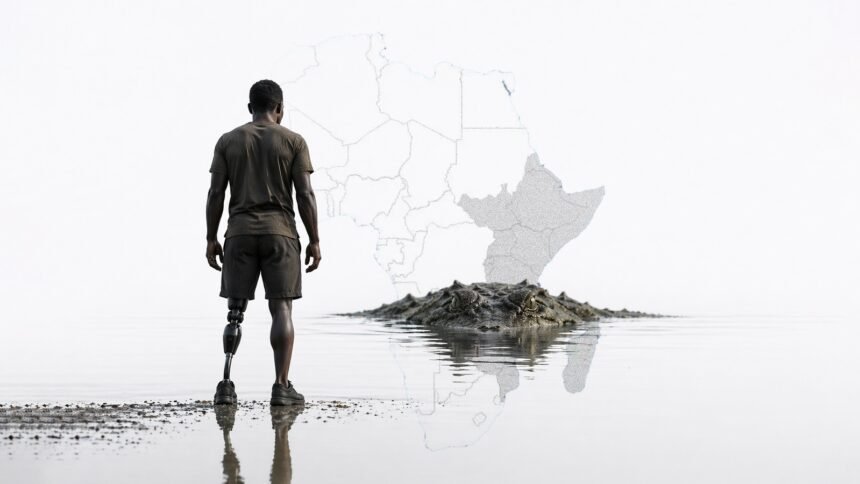
In Northwest Kenya, a unique and harrowing cause of permanent disability has emerged: human-wildlife conflict driven by environmental change. As water levels in Lake Turkana rise due to the climate crisis and tectonic movements, Nile crocodiles have shifted their habitats closer to human settlements. Over the past year, these predators have caused seven recorded deaths and 15 serious injuries, many resulting in survivors losing limbs to the crushing force of a crocodile’s bite. Victims, primarily fishers and their families, often face life-altering amputations after attacks leave their limbs mangled beyond repair.
People with Disabilities in East vs. West Africa: Regional Responses
While both East and West Africa face high numbers of people with disabilities, the environmental drivers of acquired disability differ significantly. In West African megacities like Lagos, the housing crisis and extreme commutes exacerbate the struggles of people with physical impairments, who must navigate an urban landscape that is often physically hostile. In contrast, the East African experience is increasingly defined by the loss of limbs in rural, resource-dependent communities near lakes and rivers. These regional distinctions highlight the need for tailored interventions that address the specific socio-economic and environmental roots of disability in different parts of the continent.
WHO-AU Efforts: Strengthening the Framework for Inclusion
The World Health Organization (WHO) and the African Union (AU) are working in tandem to strengthen the continental framework for disability inclusion. Multilateral efforts focus on integrating disability services into primary healthcare systems and promoting the local production of low-cost assistive devices, such as the tricycles used by survivors of crocodile attacks in Turkana. These organizations advocate for “Disability-Inclusive Development,” ensuring that national agendas, including Kenya’s response to the Lake Turkana flooding, prioritize the safety and economic reintegration of those permanently disabled by environmental disasters.
Children with Disabilities: The Fragile Path to the Future
Children with disabilities represent one of Africa’s most vulnerable groups, often facing “double marginalization” based on their age and physical status. In communities around Lake Turkana, children are particularly at risk; recorded fatalities include children as young as eight and ten who were attacked while swimming or playing near the shore. For survivors, a childhood disability often means the loss of educational opportunities and a lifetime of dependence on family assistance, as seen in the tragic stories of those who can no longer attend school or support their households.
Inclusion & Integration: From Survival to Economic Agency
For survivors like Ng’ikalei Loito, who previously sold fried dough to support her five children, a permanent disability often results in the sudden loss of economic agency. Integration efforts must therefore go beyond immediate medical care to include vocational training and specialized mobility aids. In Turkana, survivors adapt by starting small businesses at home, such as selling water or charcoal, yet they remain largely dependent on relatives’ support. True integration requires a societal shift that views these individuals as capable economic actors rather than passive victims of circumstance.
Special Education & Accessibility: Breaking Down the Physical Barriers
Access to education for people with disabilities remains a significant challenge across East Africa, where physical and institutional barriers are common. In flood-affected areas of the Rift Valley, the submersion of schools and hospitals further restricts access to specialized care and learning environments for people with physical impairments. Strengthening accessibility involves not only rebuilding physical infrastructure but also training educators to provide “Special Education” that accommodates diverse learning needs, ensuring that a physical disability does not become a permanent barrier to intellectual growth.
Development: Ensuring a Just and Accessible Future
The ultimate goal of disability-inclusive development is to ensure that Africa’s “dynamic growth” does not leave its most vulnerable citizens behind. In regions like Turkana, development must balance environmental conservation with the safety of human settlements to prevent the further creation of disabilities. By implementing rigorous awareness campaigns, recruiting local scouts, and providing immediate medical attention to victims, state institutions can begin to bridge the gap between community safety and environmental reality. A just and accessible future for Africa is one where every citizen, regardless of physical ability, can navigate their environment with dignity and contribute to the continent’s collective prosperity.