





Pan African Currents: Resource Rivalries Reshaping the Continent
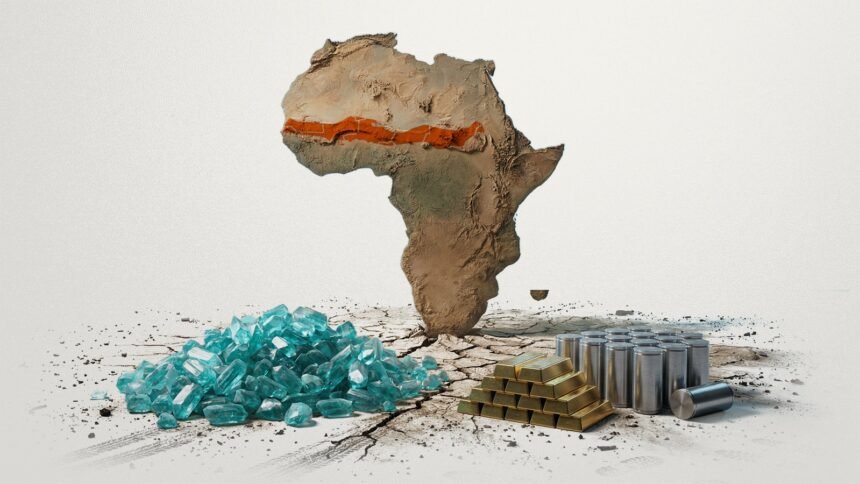
Across the vast expanse of Africa’s Sahel, a semi-arid belt stretching from Senegal to Sudan, a new scramble for resources unfolds against a backdrop of geopolitical maneuvering. This region, rich in lithium, gold, uranium, and other critical minerals essential for global energy transitions, has become a focal point for external powers seeking to secure supply chains amid escalating demand. By early 2026, the interplay between instability and opportunity has drawn sharp contrasts in approaches, particularly between India and Russia. While Pan-African aspirations for sovereignty and equitable development echo through summits and declarations, the reality on the ground reveals a fragmented landscape where military coups, jihadist insurgencies, and resource nationalism dictate the terms of engagement.
The African Union’s push for continental integration, exemplified by the African Continental Free Trade Area, aims to harness these minerals for local beneficiation. Yet, foreign involvement often prioritizes extraction over empowerment. Russia’s assertive expansion, bolstered by military pacts, contrasts with India’s risk-averse strategy, highlighting how insecurity could prompt New Delhi to abandon Sahel ventures entirely. This dynamic not only tests bilateral ties but also influences broader Pan-African efforts to assert control over natural resources, as nations such as Mali, Burkina Faso, and Niger navigate alliances that promise security but risk entrenching dependency.
Africa-India Bonds: Prudent Partnerships in Precarious Terrains
India’s engagement with Africa has evolved into a multifaceted alliance, emphasizing mutual growth through trade, technology, and capacity building. By 2026, bilateral trade will exceed $110 billion, with investments in pharmaceuticals, renewable energy, and agriculture underscoring a commitment to sustainable development. Yet, in the mineral sector, India’s approach remains measured, focusing on stable Southern African nations such as South Africa, Zambia, and Namibia for cobalt, copper, and lithium, which are key to its electric vehicle ambitions targeting 30 percent penetration by 2030.
In the Sahel, however, India’s footprint is tentative at best. The recent withdrawal from a Russian-backed lithium exploration in Mali, initiated by Rosatom in 2025, exemplifies this caution. Citing political volatility and militant threats, Indian entities like Khanij Bidesh India Ltd opted out, prioritizing investment safety over potential gains. This decision aligns with broader Africa-India frameworks, such as the India-Africa Forum Summit, which promote non-exploitative ties but avoid high-risk zones. As coups ripple through the region, nine since 2020, India’s strategic autonomy manifests as a deliberate pivot toward less turbulent partnerships, potentially foreclosing opportunities in the Sahel altogether if insecurity persists.
India-Russia Ties: Converging Interests, Diverging Risks
The Indo-Russian relationship, forged in Cold War-era nonalignment, continues to thrive in 2026 through defense collaborations and energy deals, yet divergences emerge in African arenas. Russia’s pivot to the continent, accelerated following the invasion of Ukraine, involves deepening military-economic pacts in the Sahel, where it provides security in exchange for mining concessions. This contrasts with India’s aloof stance, as critiqued in recent analyses, which risks perceived detachment from great powers.
Joint ventures, like the stalled Mali lithium project, highlight these tensions. Rosatom’s outreach to Indian firms aimed at leveraging New Delhi’s technical expertise, but security concerns, amplified by al-Qaeda-linked attacks on economic assets, prompted India’s exit. While Russia integrates military support through the African Corps to safeguard operations, India lacks such leverage, adhering to a non-interventionist ethos. This asymmetry could strain bilateral ties, as Russia’s gains in the Sahel’s gold and uranium fields underscore India’s vulnerabilities, potentially prompting a complete halt to regional mining to avoid entanglement in Moscow’s assertive playbook.
Mining Prospects in the Sahel: Veins of Wealth Amid Volatility
The Sahel’s mineral bounty, holding significant lithium reserves in Mali, uranium in Niger, and gold across Burkina Faso, offers the potential for economic transformation, yet extraction remains fraught. By 2026, production surges in gold, with Burkina Faso’s output hitting historic highs under revised mining codes that boost state equity to 15 percent. These reforms aim to reclaim sovereignty, but insurgent control over artisanal sites funnels revenues to jihadists, complicating formal operations.
Russia capitalizes on this chaos, securing licenses for Nordgold in Burkina Faso and building gold refineries in Mali with 38 percent stakes, yielding mutual benefits amid junta alliances. India, conversely, views the outlook more dimly; its sole foray into Sahel lithium has faltered, signaling a broader retreat. With global demand for critical minerals soaring, the region’s prospects hinge on stability, but persistent conflicts, exacerbated by nine coups, deter risk-averse investors like India, potentially leading to a full operational pause while Russia forges ahead.
Security Veils: Instability’s Grip on Resource Realms
Insecurity blankets the Sahel like shifting sands, with al-Qaeda and Islamic State affiliates launching attacks on mines and convoys, displacing communities and disrupting supply lines. By 2026, jihadist incursions in Mali’s Bougouni region, near lithium deposits, exemplify how militants target economic lifelines, extorting protection fees or seizing sites outright. Coup d’états in Burkina Faso and Niger further erode governance, fostering environments in which foreign projects become liabilities.
Russia mitigates these veils through militarized escorts by the Africa Corps, embedding security with extraction, whereas India, unbound by such commitments, prioritizes evacuation advisories from Western allies. The Mali pullout, amid warnings of rising threats, underscores how security calculus overrides mineral allure. If left unchecked, this volatility could compel India to suspend all Sahel mining, thereby safeguarding investments while ceding ground to bolder actors, perpetuating a cycle in which instability stifles equitable development.
Development Dawn: Forging Sustainable Paths Beyond Peril
Envisioning a Sahel dawn requires transcending insecurity to unlock developmental dividends. Pan-African initiatives, such as the Alliance of Sahel States’ push for integrated mining corridors, aim to foster local processing and job creation, thereby reducing dependence on raw material exports. Russia’s model, blending aid with extraction, such as wheat shipments and solar projects, offers short-term relief but risks long-term indebtedness.
India’s potential role, emphasizing technology transfer and green innovation, could illuminate sustainable paths, yet current retreats signal missed opportunities. By halting operations in the Sahel, India avoids risks but forfeits the opportunity to shape equitable frameworks, allowing Russia to dominate narratives of sovereignty. A proactive dawn requires multilateral security pacts, through AU-led forces, to stabilize regions and attract balanced investment. In a 2026 multipolar world, bridging security and development could transform the Sahel from a mineral mirage into a beacon of shared prosperity, urging India to recalibrate rather than withdraw.


