



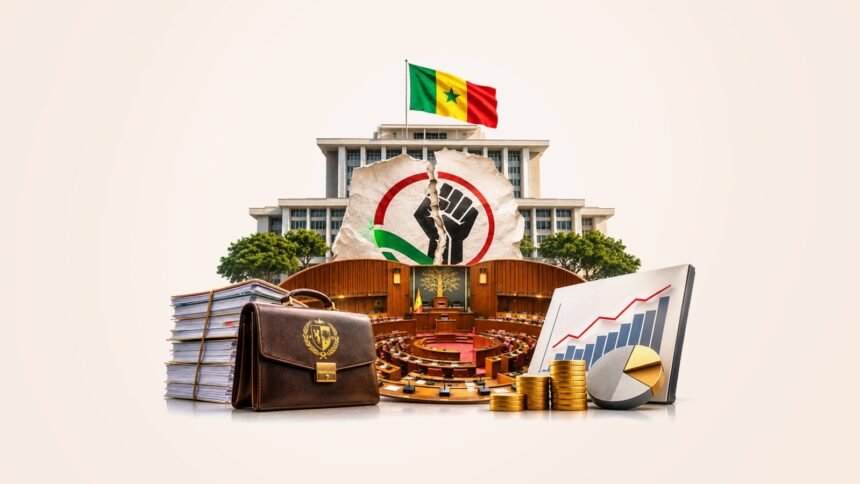
From Chosen Candidate to Party Outsider
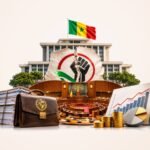
Here is a paradox few democracies have produced: a sitting president who is no longer a member of the ruling party, and a ruling party that controls parliament but no longer has a seat in the presidency it won. That is where Senegal stands after Tuesday, 17 November, when the National Council of Pastef-Les Patriotes declared that President Bassirou Diomaye Faye and 31 other people had automatically lost their membership and were “definitively struck from the list of members of the party”.
The decision, issued in Dakar as communiqué number 02/PASTEF/CN/2026, cites Article 6 of the party’s statutes. It does not set out the reasons, and it says nothing about the president’s position as head of state. It presents the step as the mechanical result of a statutory rule rather than as a disciplinary sanction. Accounts of the move differ on how to describe it: some present it as the expulsion of “inactive members”, while the party’s own wording speaks only of an automatic loss of membership that it has merely recorded. Either way, the man Pastef carried to the presidency in March 2024 is now formally outside it.
A Partnership That Came Apart in Public
The rupture has been building for most of the year. Ousmane Sonko, Pastef’s leader, designated Faye as the party’s candidate for the 2024 presidential election after his own candidacy was invalidated. Once in office, Faye appointed Sonko prime minister. The two men were the twin faces of an anti-establishment movement that promised a clean break with the old political class.
That arrangement ended in May this year, when Faye dismissed Sonko as prime minister after disagreements over how the state should be run. Sonko later became speaker of the National Assembly, and he was confirmed again as head of Pastef at a tense congress that the president did not attend. In July, Faye launched a party of his own, the Kiiraay Republican Patriots, alongside senior officials and prominent figures aligned with his administration. On 14 November, three days before the National Council met, Sonko described the political split between the two men as definitive.
Some names on the list help explain the timing. Several of those struck off, including Yankhoba Diémé and Ibrahima Sy, had joined the government even though Pastef had announced it would not take part in it. Others listed include Moussa Balla Fofana, Aldiouma Sow, Bakary Sakho and Fatou Kiné Diakhaté. The party has also seen a wave of resignations from its internal bodies in recent weeks, with some officials announcing that they would move to the president’s new formation. When Sonko was asked earlier whether Faye might be excluded, he said the question was not on the agenda. Three days after he called the split final, it was.
A Majority Without a President
The arithmetic of the National Assembly is what turns a party quarrel into a governing problem. Pastef holds 130 of the 165 seats. The president’s new party officially holds none. Every law, every budget, and every major appointment that needs parliament now passes through a chamber run by the man Faye removed from government, and dominated by a party that has just removed Faye from its rolls.
The president keeps wide executive powers, but the state’s budget still has to pass through parliament. That is the pressure point. Earlier this month lawmakers rejected a revised budget for 2026, a setback for the government’s talks with the International Monetary Fund. The deadlock now threatens the release of significant IMF financing and could freeze new spending planned for 2027, in a country already carrying a heavy debt burden.
The 2027 Budget Lands in a Divided Chamber
The timing of the expulsion could hardly be sharper. On Wednesday, 18 November, the draft 2027 budget reached the plenary of the National Assembly after unfavorable votes in committee. The Finance Commission’s rapporteur, Mady Danfakha, presented a general report setting out planned spending of FCFA 7,005.6 billion against projected revenue of FCFA 5,653.9 billion. That leaves a deficit of FCFA 1,351.7 billion, equal to 4.7 percent of gross domestic product. Planned spending is FCFA 246.3 billion lower than in the rejected revised bill for 2026.
The commission declined to approve several parts of the draft, including the revenue forecasts, the provisions on public debt and certain institutional budgets. Members questioned the consistency of the figures and whether the documents they needed had been sent to them in time. The draft itself contains measures that any government would want to defend: family security grants rising to FCFA 140 billion in 2027 from FCFA 35 billion in the initial 2026 law, FCFA 416 billion in commitments for five hospitals in Bakel, Mbour, Ziguinchor, Kaolack and Saint-Louis, FCFA 480 billion to clear arrears owed to businesses, and a FCFA 22 billion restructuring fund for struggling firms.
What the Split Means for Senegal’s Creditors and Citizens
For lenders, the question is not who is right in the Faye-Sonko dispute but whether Senegal can pass a credible budget at all. For citizens, the stakes are more immediate. Hospital construction, family grants and payment of overdue bills to local companies all depend on a vote in a chamber where the government has no reliable majority. A budget held hostage to a personal and party rivalry would hurt the households the 2024 movement promised to serve.
There are also wider regional echoes. Senegal has long been held up as one of West Africa’s steadiest democracies, with peaceful transfers of power in a neighborhood marked by coups. A clean, rules-based resolution of this standoff, through parliamentary bargaining, the courts if needed, or voters at the next opportunity, would reinforce that reputation. A prolonged paralysis would weaken it.
Deciding Senegal’s Course at Home
The 2024 alternance was sold as a moment when Senegalese voters took their country back from a political class they felt no longer answered to them. Its leaders spoke often of economic self-determination: renegotiating contracts, reducing dependence on external finance and rebuilding the state’s own capacity. That project is now at risk of being undone not by outside pressure but by a split at its own center. A state that cannot agree on its own budget ends up negotiating its priorities with creditors from a position of weakness. Whether Faye and Sonko can separate their rivalry from the business of governing will decide whether Senegal sets its own fiscal course in 2027, or has it set for it.