





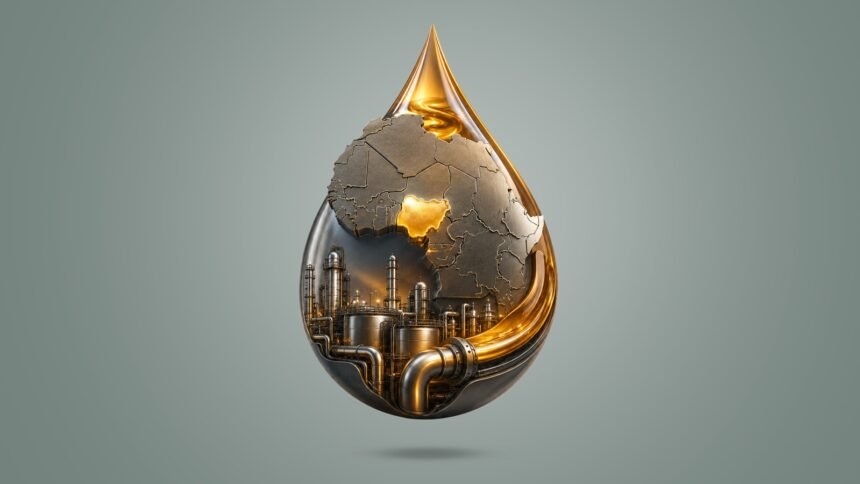
The Pan-African Transition: Breaking Legacy Hydrocarbon Paradigms
Across the African landscape, the contemporary configuration of macroeconomic policy centers on a decisive transition away from upstream resource extraction toward domestic downstream processing. For decades, the continent’s major oil-producing nations remained trapped in an asymmetric trade framework, exporting high-quality crude while spending valuable foreign reserves to import expensive, refined transport fuels. Reclaiming the continent’s economic destiny requires establishing large-scale, sovereign refining infrastructures. By internalizing value-added manufacturing, African industrial anchors can stabilize regional balance of payments, reduce vulnerability to external supply shocks, and lay a secure foundation for integrated continental self-sufficiency.
Nigeria’s Downstream Re-alignment: Reversing the Core Extraction Model
The contemporary oil trade outlook for Nigeria is undergoing a significant realignment, fundamentally altering the country’s standing in global energy markets. Historically known as an upstream giant hampered by inadequate domestic refining capacity, the state has long grappled with the fiscal strain of importing consumer fuels. The full operation of major domestic infrastructure early this year was explicitly designed to transform the country into a major net exporter of refined products. This downstream expansion creates a powerful economic multiplier, positioning the state to achieve energy independence, reduce domestic transport costs, and supply premium refined fuels to the wider West African maritime corridor.
Structural Balancing: The Imperative of Non-Oil Sectors
To ensure long-term structural resilience, economic planners must balance this downstream energy revolution with targeted investments in the non-oil trade sector. Over-reliance on carbon exports has historically exposed the national balance sheet to severe commodity price volatility and Dutch disease dynamics. Reengineering the wider economic engine requires utilizing petroleum revenues to build competitive manufacturing hubs, advanced agricultural corridors, and digitized transport logistics. By transforming resource wealth into modern infrastructure, the state can foster inclusive development, generate sustainable employment outside the energy sector, and secure a balanced, diversified domestic market.
Geopolitical Pressures: Global Energy Shocks and the Cost-of-Living Crisis
The stability of the regional fuel market is severely challenged by intense international economic shocks, which complicate domestic energy logistics. The ongoing war in the Middle East has triggered massive disruptions across global shipping lanes, causing international crude and energy product prices to escalate sharply. In local markets, these external pressures have driven gasoline and transport fuel costs to record highs, worsening an acute cost-of-living crisis. This dynamic demonstrates that, even as a nation expands its domestic processing capacity, local consumer prices remain deeply tied to international geopolitical realities, underscoring the need for highly resilient domestic refining buffers.
The Megaproject Footprint: Private Capital and Downstream Consolidation
At the absolute center of this downstream transformation is the Dangote Group, a multinational industrial conglomerate whose massive private investment has rewritten the rules of African industrialization. Established by billionaire industrialist Aliko Dangote, the group has systematically invested billions of dollars in building the continent’s largest single-train refining facility. This monumental project relies on advanced global supply networks and international process technology to process diverse crude grades. By consolidating its operations, the conglomerate has created a high-capacity industrial anchor that dominates regional fuel trade, demonstrating that disciplined private capital can successfully execute complex megaprojects that alter transatlantic energy flows.
Technical Adaptation: Managing Volatility in Refining Yields
The practical maintenance of high-volume fuel production requires navigating intricate engineering challenges and variations in raw materials. In mid-2026, the refinery’s specialized gasoline-making unit, the Residue Fluid Catalytic Cracking unit (RFCC), experienced an operational slowdown, resulting in a 34% capacity reduction beginning on May 21. According to industry monitor IIR Energy, the temporary slowdown was initially caused by processing lighter crude grades, which led to insufficient feed availability for the unit, and by a mechanical issue with its flue gas slide gate valve. However, with repair work almost complete, the unit is on track to resume full operating rates in mid-June. This technical disruption had an immediate impact on commercial output; data from commodities analytics firm Kpler shows that seaborne gasoline exports fell from an April peak of 81,000 barrels per day to 17,000 bpd in May, and stand at 10,000 bpd in June so far, illustrating how short-term mechanical adjustments can quickly impact international trade figures.
Advanced Industrial Growth: Building Sovereign Value Chains
The way forward for the West African energy trade depends on the successful expansion and vertical integration of these industrial gains into a resilient, continent-wide manufacturing framework. Reclaiming the path to sustainable economic growth involves optimizing regional trade pathways, reducing maritime shipping barriers, and harmonizing safety standards under the African Continental Free Trade Area (AfCFTA). To sustain this industrial momentum, future public policy must focus on strengthening upstream-downstream linkages, ensuring that local crude producers have guaranteed logistics channels to high-capacity domestic processing centers. By combining advanced refining tech with stable sovereign trade agreements, the region can transition from a historical position of resource dependency into a dominant, self-sustaining hub of global industrial production.