






Pan-African Pachyderm Pathways: Forging Continental Connections
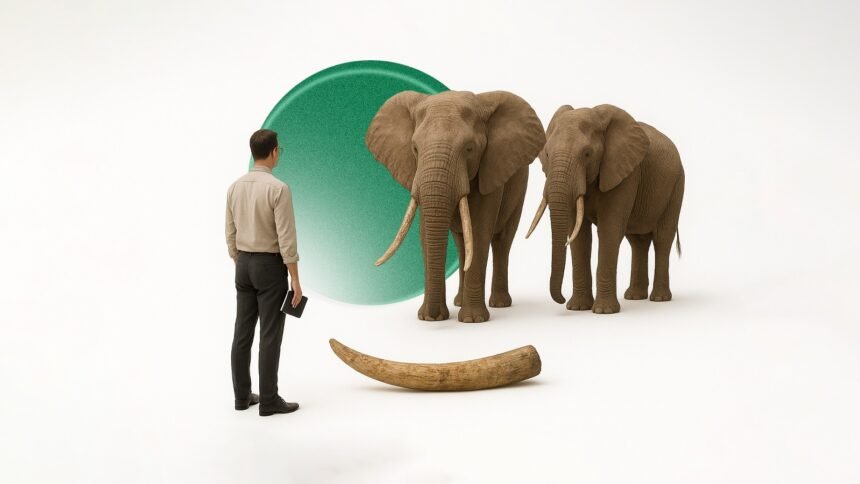
Across Africa’s sprawling savannas and shadowed forests, the legacy of Iain Douglas-Hamilton resonates as a Pan-African beacon, bridging disparate ecosystems from Tanzania’s Lake Manyara to Mali’s remote watering holes. Born in 1942 into a Scottish aristocratic lineage marked by valor and exploration, Douglas-Hamilton’s journey was intertwined with the continent’s fate when he relocated to Tanzania at age 23. Eschewing lions for elephants, he immersed himself in their world, pioneering aerial surveys that spanned nations and revealed the interconnectedness of migratory routes. His vision transcended borders, fostering collaborations that unified East African conservation efforts and raising global awareness of the plight of a species emblematic of Africa’s primal heritage. In an era of postcolonial reconfiguration, his work amplified indigenous voices by integrating Maasai and Samburu knowledge into scientific discourse, thereby weaving a Pan-African narrative in which elephants symbolize shared stewardship amid rising human pressures.
Wildlife’s Whispered Wisdom: Decoding Sentient Societies
Douglas-Hamilton’s profound insights into wildlife dynamics elevated elephants from mere megafauna to sentient architects of their realms. Through meticulous fieldwork in the 1960s, he dismantled colonial-era misconceptions, documenting how these giants grieve, learn from elders, and navigate vast terrains in matriarch-led units. His dossiers—initially numerical, then personalized with names such as Sophi—chronicled hundreds of individuals, tracing lineages through ear shapes and tusks. This empathetic lens revealed parallels with human societies: long lifespans that foster cultural transmission, complex communication via infrasound, and adaptive decisions amid environmental flux. In Africa’s wildlife tapestry, his revelations underscored elephants’ role as keystone species, engineering habitats that sustain biodiversity from acacia groves to riverine corridors. By highlighting their intelligence and social depth, he shifted paradigms in wildlife, inspiring a generation to view conservation not as dominion but as dialogue with thinking beings.
Elephants’ Empathic Echoes: Behavioral Breakthroughs and Bonds
At the heart of Douglas-Hamilton’s odyssey lay an unbreakable bond with elephants, whose empathetic echoes he amplified through groundbreaking ethology. From Lake Manyara’s herds, he unraveled their migratory patterns, mapping territories spanning thousands of kilometers and exposing vulnerabilities to habitat fragmentation. His collaborations with Jane Goodall in the 1960s forged a kinship of understanding, where elephants emerged as grieving, playful entities with human-like traits—mourning kin, forming alliances, and exhibiting altruism. Innovations such as radio collars in the 1980s and GPS tracking in subsequent decades transformed monitoring, revealing Mali’s desert trekkers as exemplars of endurance. In Africa’s elephant enclaves, his work highlighted threats such as climate-altered water scarcity, positioning these pachyderms as barometers of ecological health. Through documentaries and advocacy, he humanized their struggles, ensuring their voices reverberated in policy arenas worldwide.
Legacy’s Looming Leviathans: Institutional Innovations and Inspirations
The leviathans of Douglas-Hamilton’s legacy loom largest in the institutions he birthed, chief among them Save the Elephants, founded in 1993 as a bulwark against extinction. This organization crystallized his lifelong ethos, channeling research into action across Kenya’s Samburu and beyond. His aerial censuses in the 1970s halved Africa’s elephant count revelations, sparking the “ivory holocaust” alarm that catalyzed international bans. Post-2010, amid resurgent poaching fueled by Asian demand, he mobilized celebrities such as Yao Ming to reshape attitudes and curb trade through cultural diplomacy. Today, his progeny—daughters Saba and Dudu, alongside son-in-law Frank Pope—perpetuate this inheritance at Elephant Watch Camp and research hubs, training rangers and deploying AI for real-time tracking. In Africa’s conservation continuum, his blueprint endures, inspiring transboundary accords and youth-led initiatives that safeguard 36,000 Kenyan elephants against perennial perils.
Cultural Crossroads: Harmonizing Human and Herd Narratives
Douglas-Hamilton’s legacy intersects Africa’s cultural crossroads, where human narratives entwine with herd harmonies in profound reciprocity. Marrying Oria Rocco in 1971, he embedded family life in Tanzania’s wilds, naming daughters with Swahili essence—Saba for seven, Dudu for bug—symbolizing cultural immersion. His advocacy decolonized conservation, elevating pastoralist wisdom in managing human-elephant interfaces, as seen in the Elephants and Bees Project, where beehive fences deter crop raids while honoring local ingenuity. In Pan-African lore, elephants are associated with ancestral spirits; Douglas-Hamilton’s work respected this, integrating rituals into strategies that reduced conflict by 70% in Laikipia. By fostering coexistence, he bridged cultural divides, transforming potential adversaries into allies and ensuring that Africa’s oral traditions and scientific rigor coalesce to safeguard shared landscapes.
Tourism’s Tranquil Trails: Sustainable Encounters with Giants
In the realm of tourism, Douglas-Hamilton’s influence carves tranquil trails where encounters with giants bolster economies without exploitation. His family’s Elephant Watch Camp in Samburu exemplifies this, blending luxury with learning to generate $3 billion annually for Kenya’s wildlife sector. Advocating non-intrusive safaris, he pioneered guidelines that minimize disturbances, such as vehicle caps at crossings and night-sky alternatives to diversify revenue. His anti-poaching campaigns stabilized populations, enhancing migratory spectacles that draw 450,000 visitors yearly to the Maasai Mara. Yet he cautioned against commodification, promoting community shares—35% of conservancy fees—to empower local communities. In Africa’s tourism tapestry, his model harmonizes velvet vistas with ethical imperatives, ensuring that gentle giants propel prosperity while preserving dignity for both species.
Conservation’s Colossal Campaigns: Combating Crises and Catalyzing Change
Douglas-Hamilton’s conservation campaigns stand as colossal testaments to resilience amid Africa’s crises. Alerting the world to 1970s poaching surges, he mobilized Uganda’s post-war guards and Kenya’s 1989 ivory burn—a spectacle that galvanized global bans. Facing 2010’s slaughter, where rebels and gangs decimated herds for $100 tusks resold for thousands, he orchestrated attitude shifts in China, leveraging basketball icons for awareness. Innovations such as the Human-Elephant Coexistence Toolbox, including drone habituation and the STE Wildtracks App, reduced killings by 50%. In Pan-African contexts, his efforts aligned with AU-UN synergies, funding transboundary parks and ranger academies. His optimism amid tempests—poaching, climate change, habitat loss—fueled paradigms in which conservation integrates agroforestry and resilient crops, turning crucibles into catalysts for renewal.
Protection’s Perpetual Pledge: Future Frontiers for Africa’s Icons
As protection’s perpetual pledge, Douglas-Hamilton’s vision charts future frontiers where Africa’s icons thrive alongside humanity. His final endeavors addressed climate-population nexuses, advocating permeable corridors and permeable paradigms to mitigate conflicts claiming 200 lives yearly. Through Save the Elephants’ 30×30 commitments—30% protection by 2030—his heirs expand sanctuaries to 4 million hectares and deploy 10,000 thermal cameras for monitoring. In Kenya’s bastions, where 1,023 black rhinos and 36,000 elephants persist, his tech-driven defenses—blockchain-tracked ivory, AI predictions—fortify against syndicates. Pan-Africanally, this pledge inspires Ethiopia’s rewilding and Mozambique’s revival, ensuring that migrations multiply and dignity endures. In dawn’s dominion, his odyssey ignites a renaissance: elephants are not relics but resilient partners in an unbounded tomorrow.


