




From a Mining Raid to a Locked Cell
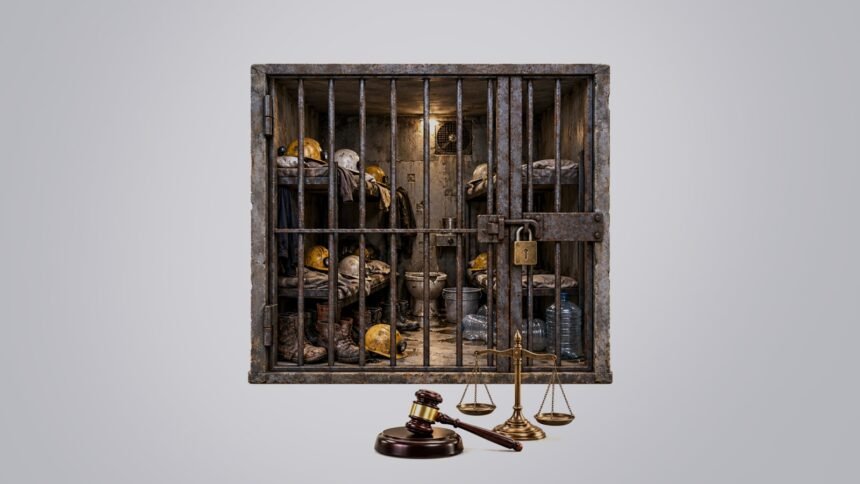
Shortly after 7 pm on 16 September, the men inside a detention cell in Minna began banging on the doors and walls. They shouted for help and pleaded for water. About 50 of them had been packed into a cell of roughly 20 square meters, with inadequate ventilation, no running water, poor lighting, and no functioning toilet. Nobody opened the door, and nobody called a doctor. By the time the night was over, 33 detainees were dead, 14 of them minors.
Six weeks later, an independent ministerial committee has put an official name to what happened. Presenting its report to Interior Minister Olubunmi Tunji-Ojo in Abuja on Tuesday, committee chairman Jonathan Kure said the deaths in the custody of the Nigeria Security and Civil Defense Corps (NSCDC), a paramilitary government agency, were a preventable custodial tragedy, caused by unlawful detention conditions, a failure in the duty of care, disregard for repeated distress calls and inadequate supervision. The men had been arrested on suspicion of illegal gold mining in Niger State. The case now tests whether a federal inquiry can be turned into prosecutions, compensation and lasting reform.
What the Committee Found
The medical and forensic findings were stark. The deaths resulted from “environmental asphyxia, acute respiratory failure caused by prolonged confinement in a severely overcrowded and poorly ventilated detention cell aggravated by heat stress and dehydration”, Kure said. “The committee concluded that these circumstances amounted to cruel, inhuman and degrading treatment,” he added.
The report rejected the explanation first offered locally, that the deaths were the result of a disease outbreak, saying medical and forensic evidence did not support it. It also settled the toll. Niger State authorities had initially put the number of dead at 37, but the committee confirmed 33. “The committee confirmed 33 as the verified casualty figure because higher numbers reported immediately after the incident could not be reconciled with available records and identified victims,” Kure said. There were 41 survivors, six of whom were treated at the General Hospital in Minna and later discharged.
A Raid Without Orders
The committee traced the deaths back to the raid itself. It found that the operation was conducted without an approved operational order, proper planning, consultation with the relevant mining authorities or the involvement of specialized mining marshals, and that the NSCDC’s national headquarters was not informed before it began.
The raids swept up men, women and children. By the evening of 16 September, 75 people had been detained, and 74 remained in custody overnight after one was released. Adults and minors were held together, and food and drinking water were either unavailable or grossly inadequate. The panel singled out the Niger State Commandant, Suberu Aniviye, for authorizing and supervising the operation without adequate planning and oversight, permitting overcrowding, and afterward attributing the deaths to a disease outbreak.
Evidence That Was Cleaned Away
Part of the truth may never be known. Post-mortem examinations were carried out on only three bodies; the other 30 had been buried before the committee’s medical team arrived. According to the report, the detention area was cleaned, disinfected and altered before independent forensic investigators reached it, in what the committee described as an alleged attempt to destroy evidence, and this limited parts of the forensic examination.
Some survivors have said that a substance which stung their throats and noses was sprayed into the cell before the door was slammed shut. The committee said toxicology reports and the other medical evidence available did not support that allegation. The claim therefore stands as survivors’ testimony that the panel could not confirm, not as a fact, and the clean-up of the cell is one reason it may be impossible to test further.
Money, Dismissals and a Missing Line
The recommendations are extensive. The committee proposed about N1.4 billion in compensation: N30 million for each of the 33 bereaved families and N10 million for each of the 41 survivors, alongside educational support for dependants, medical rehabilitation, psychological support and a formal apology from the federal government. It called for the summary dismissal of the officers principally responsible and their prosecution for offenses including murder, criminal negligence, torture and inhuman treatment where applicable, plus investigations by anti-corruption agencies into allegations of extortion and mismanagement of exhibits.
The panel also recommended removing NSCDC Commandant-General Prof. Abubakar Audi and overhauling the corps’ leadership. One committee member, the lawyer and rights activist Deji Adeyanju, objected that this recommendation was missing from the executive summary read out by the chairman. However, he later confirmed it remained in the main report. Tunji-Ojo said the government would act, with administrative steps handled by his ministry and judicial matters referred to the Attorney-General of the Federation.
Cells Built for Neglect
Beyond individual blame, the committee listed the conditions that make such deaths possible: inadequate detention facilities, weak custodial oversight, no CCTV monitoring, poor documentation, insufficient emergency medical capacity, weak reporting systems and chronic underfunding. It called for reforms covering recruitment, promotions, discipline, deployment, training, supervision and intelligence gathering. None of those failures is unique to one state command, which is why the report reads as a warning about custody across the security agencies, not only about one night in Minna.
Justice the State Owes Its Own
Governments are entitled to regulate informal gold mining, and to enforce the rules that govern it. But a state’s authority over its own resources means little if the people it arrests can suffocate in its cells while guards ignore their cries. The real measure of this report will be whether officers stand trial, whether the families receive the money, and whether Nigeria’s detention system is rebuilt so that the next raid does not end in a mass grave. Accountability delivered at home, by Nigerian courts, would say more about the strength of the state than any crackdown on illegal mining.