





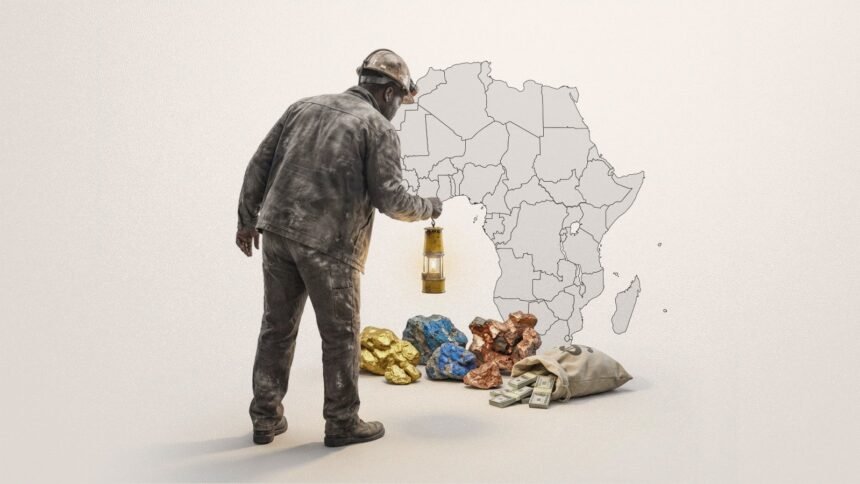
Africa’s mineral wealth is widely recognised, yet the continent continues to lose promising mining assets to foreign buyers long before they reach full value. At the Africa’s Investment Forum in Rabat, Morocco, experts described this as one of the continent’s most costly structural failures, a gap they said is rooted not in geology but in the absence of early-stage funding.
They emphasized that across many countries, local licence holders often sell their exploration rights at a fraction of their potential worth simply because they cannot raise capital for drilling, geological surveys, or feasibility studies, on November 28.
Without this early technical work, African firms are forced to exit too soon, leaving foreign investors to capture the downstream gains once the resource is proven, they said.
“Africa is not short of minerals; it is short of risk capital. The early part of the mining cycle is where all the value is created, but it’s also where African investors and banks disappear. That’s how we end up selling billion-dollar assets for a few million,” said Nina Yose, the Acting Divisional Executive of Metals, Mining, Infrastructure & Energy at the Industrial Development Corporation South Africa.
“Without exploration capital, African players are effectively operating blind. You cannot get a fair deal if you don’t know the true value of what you have. Foreign buyers come in with data, engineers, and geologists. Local holders have nothing but a licence. It’s not a fair negotiation.”
They highlighted that the consequences of this imbalance stretch far beyond lost ownership.
“Once Africa sells too early, it misses the opportunity to influence pricing, control refining and processing, or develop local supply chains. When we give away exploration rights, we give away decades of economic growth. We lose the jobs, the downstream industries, and the bargaining power that come from owning the resource from discovery to production,” said Begna Gebreyes, the Head of Heavy Industries, Telecoms & Technology at Africa Finance Corporation.
He argued that bridging this funding gap is essential for Africa to participate meaningfully in the global critical minerals market.
“International investors often prefer buying de-risked deposits rather than funding early exploration themselves, which makes it even more urgent for African institutions to step in. If Africa doesn’t finance exploration, someone else will, and they will own the mine. We cannot keep outsourcing discovery, yet it is where the real wealth begins,” said Gebreyes.
Guy-Robert Lukama, the Chairman of Gecamines, a mining company in DR Congo, said governments, development banks, and private investors need to design dedicated exploration funds, improve geological data systems, and create incentives that allow African firms to stay in the value chain longer.
“Without these structural shifts, Africa will keep exporting opportunity long before it ever exports minerals, ” he said. ” The continent’s most considerable losses happen before minerals even reach the ground, he said.
“The tragedy is not that we lack minerals, it’s that we keep surrendering the upstream value because we don’t have the capital to prove what’s actually there. If African governments and financiers don’t step in at the exploration stage, we will continue building mines for other people’s balance sheets. The opportunity is ours; the data is what allows us to claim it.”


