






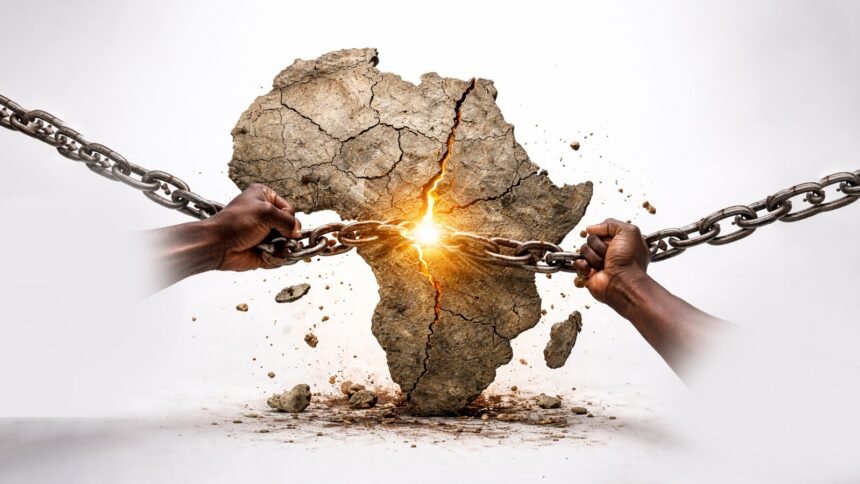
As a young African born and raised on this continent, I write from lived experience, not distant observation. I belong to a generation that grew up in the aftermath of conflict, under the weight of economic strain, and within systems often criticised for being slow to reform. Yet what defines us is not the stagnation we inherited, but the refusal to accept it.
From Generation Z (1997–2012) to Generation Alpha (2013–present), Africa’s youth are emerging not as passive recipients of history, but as active architects of a different future. Unlike earlier eras, when migration was seen as the only path to opportunity, many young Africans are increasingly choosing to build and stay at home. The narrative is shifting from departure to development.
For decades, Africa’s most talented young professionals left the continent in search of education and employment opportunities abroad, often contributing their expertise to foreign economies. Today, however, a growing number are choosing to return. Equipped with international exposure, advanced skills, and global networks, they are investing in local enterprises, strengthening institutions, and transferring knowledge back home. This reverse flow of talent is not merely symbolic; it represents a strategic reinvestment in the continent’s development. The decision to return and build rather than remain abroad reflects renewed confidence in Africa’s long-term potential.
Across the continent, this transformation is visible. In innovation hubs in Kigali, Lagos, Nairobi, Accra, and many more cities, young entrepreneurs are building fintech platforms, agritech solutions, and creative enterprises that respond directly to African realities. According to the United Nations, Africa has the youngest population in the world, with more than 60 per cent under the age of 25. This is not merely a demographic statistic; it is a structural force capable of reshaping economies and governance systems.
The energy of this generation is not confined to business; it is also evident in civic engagement, environmental activism, digital advocacy, and the creative industries. Young Africans are using social media to hold themselves accountable to others. They are demanding transparency, challenging corruption, and insisting on inclusion. They are not content with symbolic representation; they seek structural participation.
This is not to romanticise the moment. Many African countries continue to face systemic challenges: unemployment, fragile institutions, armed conflict, inflation, and unequal access to education. In some regions, war and instability still displace families and limit opportunity. The promise of youth cannot erase these realities.
But what is different now is the mindset.
This generation has grown up in a connected world. Access to global information has expanded ambition. Exposure to innovation has expanded imagination. The belief that prosperity exists only beyond African borders is steadily weakening, as the challenges facing Western societies, from economic instability to social fragmentation, are now more visible than ever. Increasingly, young Africans understand that wealth creation, professional growth, and intellectual leadership can happen within the continent.
The creative economy is a powerful example. African music, film, and fashion are commanding global audiences. Technology ecosystems are attracting international investment. Agricultural innovation is modernising rural economies. Even in governance, youth-led movements are influencing policy conversations.
There is a quiet but undeniable cultural shift taking place, from survival to strategy.
Africa’s youth are not naïve about the obstacles ahead. They understand the bureaucracy, the policy gaps, and the economic volatility. Yet instead of surrendering to inherited limitations, they are forming partnerships, building networks, and leveraging technology to bypass traditional barriers.
By the time these generations are fully integrated into governance, not merely as voters, but as legislators, ministers, policymakers, and heads of institutions, the political landscape will inevitably shift. Representation shapes priorities. When those who understand youth unemployment, digital economies, climate vulnerability, and education reform from lived experience begin drafting and voting on laws, policy will move closer to contemporary realities.
Leadership drawn from Generations Z and Alpha is likely to prioritise innovation, transparency, and long-term sustainability over short-term political survival and corruption. The inclusion of young Africans in decision-making spaces will not simply refresh faces in parliament; it will recalibrate national agendas.
The question, therefore, is not whether this generation has potential. It clearly does. The more pressing question is whether institutions, public and private, are prepared to match its ambition.
If adequately supported by quality education, access to finance, inclusive policymaking, and regional integration, Africa’s new generation could transform demographic pressure into a demographic dividend. If neglected, the same demographic wave could deepen frustration.
Africa stands at a crossroads. Its youth stand at the centre of that intersection. They are not waiting for permission, rescue, or to inherit stagnation; they are choosing to build the continent.
And that choice, perhaps more than any statistic, is the continent’s most powerful promise.


