





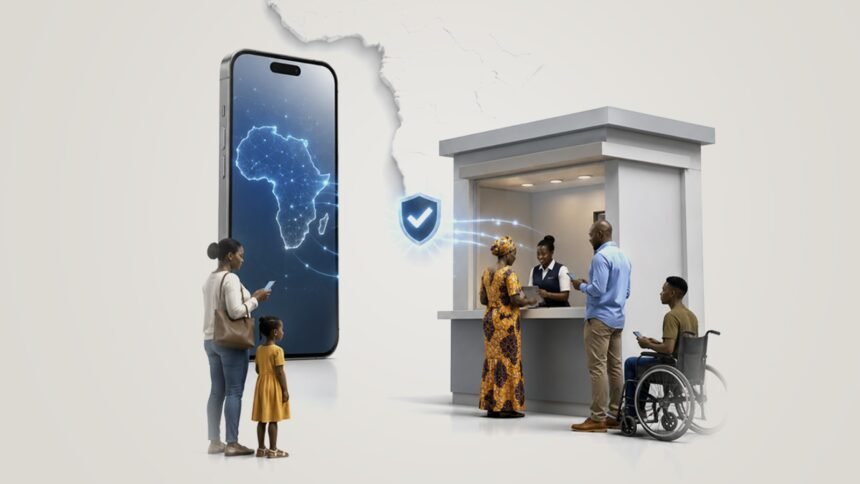
Digital transformation across Africa is being shaped less by the level of technological advancement and more by the human systems that determine whether it is actually used, according to officials.
Across governments and development partners, there is growing agreement that while digital platforms are being built quickly, a lack of digital skills, public trust, and user confidence means even the most advanced systems can underperform or fail.
This perspective was highlighted during a panel discussion at the inaugural Convention on South-South and Triangular Cooperation, held in Kigali on June 22, and organized by the Rwanda Cooperation Initiative (RCI) in partnership with UNDP.
The two-day meeting brought together government officials, international organizations, and development practitioners to examine how countries in the Global South are collaborating to scale digital governance and public service delivery systems.
Minister of ICT and Innovation Paula Ingabire emphasized that digital transformation is no longer about isolated technological upgrades, but about building integrated systems that place citizens at the center of service delivery.
“Many countries have made significant progress in digitizing public services, but fragmentation remains a key challenge across institutions and sectors. The real measure of success is not how many systems we build, but how seamlessly they work together to serve citizens. This is why interoperability across government platforms is essential,” she said.
The Minister further highlighted that digital transformation must be understood as a governance reform process rather than a purely technical exercise.
“Digital transformation is fundamentally about redesigning how government works, not just digitizing existing paper processes. Coordinated institutional change alongside technological investment is highly needed in the process,” she said.
She also stressed the importance of trust, inclusion, and accessibility in ensuring adoption, noting that systems only deliver impact when citizens are able and willing to use them.
“Technology only becomes transformative when people trust it, understand it, and can confidently use it in their daily lives,” she added.
Israel Bimpe, the CEO of Irembo, said successful digital transformation begins with understanding citizens’ needs rather than focusing solely on technology.
He noted that Rwanda has prioritized inclusion by combining digital platforms with physical service agents, community outreach, and access through both smartphones and basic mobile phones.
“Not everyone has a smartphone, and not everyone knows how to use digital systems. That is why we design for digital confidence as much as we do for digital access. The principle of zero trips, zero paper aims to eliminate unnecessary physical visits and paperwork when accessing government services,” he said.
Bimpe said initiatives such as digital service agents, citizen engagement campaigns, and simplified online processes have helped build trust and increase adoption.
He cited reforms in civil status services, pension verification, and name-change applications as examples of how redesigning services around users can reduce bureaucracy and improve efficiency.
Nana Chinbuah, the Deputy Resident Representative of UNDP Rwanda, said that the biggest challenge in digital transformation is not the absence of platforms, but ensuring that solutions work seamlessly across institutions and deliver real value to citizens.
“Governments are under increasing pressure to deliver more efficient, transparent and inclusive services, while also grappling with rising concerns around cybersecurity, data sovereignty and digital exclusion,” she said.
She added that the real bottleneck lies in institutional coordination and interoperability.
“The biggest challenge is how to move solutions across institutions so they can work together, share data, and adopt common standards. Digital transformation is fundamentally a governance issue, not just a technology issue,” she said.
She further noted that South-South cooperation plays a critical role in accelerating progress by enabling peer learning and the exchange of tested models.
“South-South cooperation adds value by offering governments tested models, peer learning, and practical lessons on what works and what does not, beyond financial support,” she said.
Kané Lacine, Director General of Smart Africa, an alliance of 31 African countries, international organizations, and global private-sector players tasked with advancing Africa’s digital agenda, said citizens think in terms of services and outcomes, not just things going digital.
“That is why we must design around the citizen, not around government structures. Interoperability, trust frameworks, and data governance should be the foundational pillars for scaling digital transformation across countries,” he said.
“Sovereignty is not about isolation. It is about maintaining control over strategic digital assets while working with partners to accelerate progress. At the same time, we need more agile procurement models because traditional and rigid processes often slow innovation, experimentation, and the adoption of new technologies.”
We need experimentation, agile procurement, and continuous improvement. Digital systems evolve, and our procurement models must evolve with them, he said.