




A Desert Corridor Between the Atlantic Coast and the Sahel
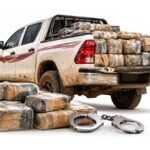
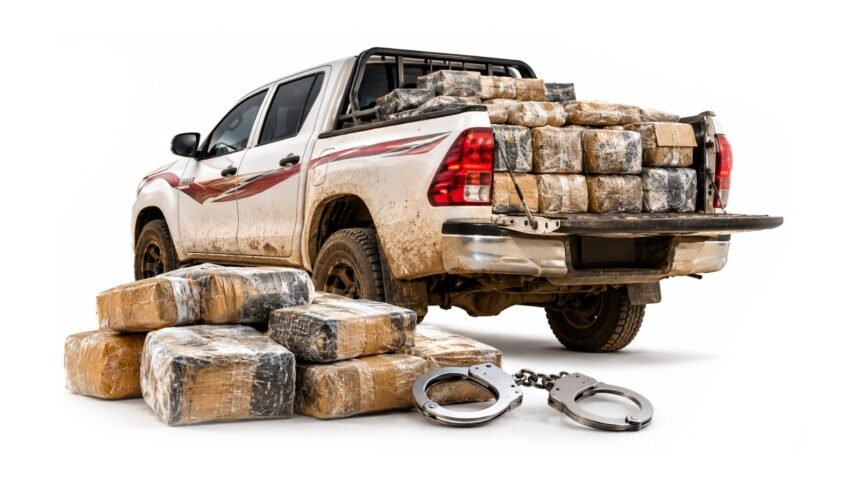
One thousand seven hundred kilograms. That is the weight of the cocaine that Mauritania’s police say they found in a single pickup truck in the desert of the country’s far east, close to the border with Mali. Announcing the seizure over the weekend in a statement posted on social media, the police called it the largest quantity of the drug ever intercepted. They described the haul as “high quality” cocaine, in the form of crack. Two foreign nationals traveling in the vehicle, a Toyota Hilux, were arrested.
The seizure is a reminder that West Africa’s role in the global cocaine trade is no longer confined to its Atlantic ports and island hubs. The drug, produced in South America and largely destined for Europe, increasingly moves overland through the Sahel, where conflict, vast distances and porous borders give traffickers room to operate. A record find in Hodh Ech Chargui, a region better known for its pastoralists and its refugee camps than for drug busts, shows how far inland those routes now run.
Three Months of Watching a Network
According to the police, the operation was the result of a three-month investigation by the Central Office for the Fight Against Narcotics and Psychotropic Substances. Using modern surveillance and tracking methods, investigators identified a network they described as “extremely dangerous”, active in several neighboring countries and planning to expand its activities into Mauritania.
A team from the office then intercepted the vehicle in the Dacheh area, a desert zone in Hodh Ech Chargui. One local account places the operation about five kilometers from the eastern border. The police did not give the exact date of the interception. They said the two suspects and the seized cargo were handed to the public prosecutor on Thursday 19 November, at the end of the preliminary investigation, and that searches were continuing for three other people of the same nationality, said to be directly linked to the network.
What the Statement Leaves Out
Several important details are missing from the official account. The police did not name the nationality of the two arrested men or of the three suspects still at large. They did not name the country the cargo came from or the one it was heading to. According to the police, the suspects themselves said the drugs had come from a neighboring country and were bound for another bordering country, passing through areas along Mauritania’s eastern and north-eastern frontiers.
Those frontiers touch Mali to the east and south and Algeria and Western Sahara to the north. Several routes would fit the description, and it would be speculation to pick one. What can be said is that the claim about origin and destination comes from the suspects, as relayed by the police, and has not been independently confirmed. The scale of the claim that this is a record also rests on the police’s own assessment. Some accounts of the statement describe it as the largest seizure ever made in Mauritania, while others describe it as the largest so far in the countries of the sub-region. Until the police clarify, the safest reading is that it is the biggest cocaine seizure Mauritania’s authorities say they have made.
A Region Built for Transit
Law enforcement agencies have long described West Africa as a transit and redistribution zone for cocaine heading from Latin America to markets abroad. Criminal networks use Atlantic shipping lanes, port infrastructure and the land corridors that link coastal states to the Sahel. From there, Sahelian routes carry part of the trade on towards North Africa and Europe, with Mali and Niger among the territories crossed. Seizures in several West African countries in recent years point to how deeply these networks have taken root and how quickly they shift routes when one is closed.
Mauritania sits at a junction of these flows. It has a long Atlantic coastline and a land border with Mali of more than 2,000 kilometers, much of it running through open desert. The eastern regions, including Hodh Ech Chargui, also lie close to areas of Mali where the state’s control is limited and armed groups are active. That combination makes the east both a natural corridor for smugglers and a hard place for any state to police.
The Limits of a Single Seizure
A large seizure is a success for the police, and the three-month investigation suggests growing capacity to track networks rather than relying on chance roadside stops. But a single truckload, however large, tells little about how much passes undetected. Traffickers typically spread risk across many shipments and routes, and a record seizure can sometimes reflect a rise in the overall volume moving through an area as much as better enforcement.
What follows will matter more than the headline figure. Prosecuting the two men, capturing the three suspects still at large, and cooperating with neighboring states to identify the network’s organizers will show whether this is a turning point or a one-off. Cocaine money has a record of corrupting officials and financing armed groups in the region, which gives the case weight well beyond the drug itself.
Keeping the Corridor Closed
For Mauritania, the stakes are about who controls its territory. A country that has worked to present itself as a stable partner in a turbulent Sahel cannot afford to let its eastern desert become a highway for transnational crime. Holding that line depends on more than police operations: it requires border cooperation with Mali and other neighbors, courts able to try complex cases, and economic opportunities in eastern regions so that the trade offers less to local people. The 1,700 kilograms seized at Dacheh are a measure of what is at stake, and of how much more the state will need to do to keep its desert its own.