




Terrorism in Africa is no longer a distant storm on someone else’s horizon; it has become one of the main weather systems shaping global security debates.
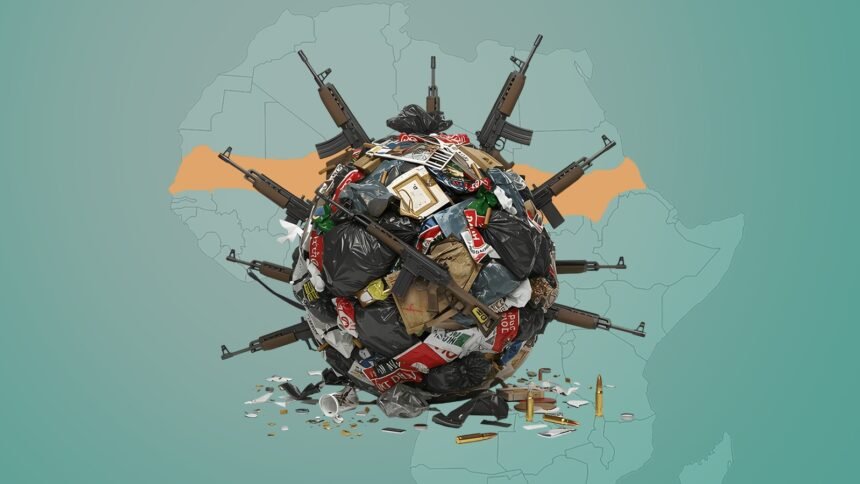
According to new figures presented to the UN Security Council, the Sahel region now accounts for about 19% of all terrorist attacks worldwide and more than half of terrorism-related deaths, a staggering share for a strip of land many politicians still struggle to locate on a map.
Across Burkina Faso, Mali, Niger and their neighbours, around four million people have been displaced as armed groups overrun villages, cut supply routes and turn vast rural zones into ungoverned spaces.
This is not just another grim African statistic; UN officials warn that the interlocking networks of groups affiliated with Al-Qaeda and the so‑called Islamic State are knitting together a transcontinental web that stretches from the Atlantic to the Red Sea.
UN Secretary‑General António Guterres did not mince words when he told the Council that the Sahel’s insurgencies are “not only a regional dramatic reality” but a “growing global threat,” language usually reserved for pandemics or nuclear proliferation.
From Jama’at Nusrat al‑Islam wal‑Muslimin disrupting fuel corridors into Bamako to Islamic State affiliates pushing toward coastal West Africa, the pattern is one of militants probing, learning and adapting faster than state security structures.
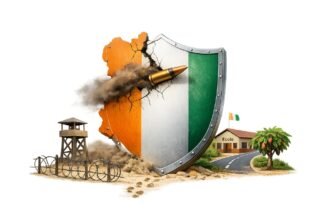
Officials fear a “disastrous domino effect” in which fragile coastal states like Benin, Togo and Ghana suddenly find their northern regions sliding into the same chaos that engulfed parts of Mali and Burkina Faso a decade ago.
In other words, the firebreak that was supposed to keep Sahelian instability away from major maritime trade routes and energy projects is looking worryingly flammable.
The uncomfortable truth is that this crisis did not emerge from a vacuum; it grew in the cracks of poverty, weak institutions and climate stress that long made the Sahel a textbook case of structural vulnerability.
Communities that once survived on rain‑fed agriculture have seen their livelihoods eroded by erratic weather and creeping desertification, making recruitment pitches from armed groups promising protection or income tragically persuasive.
Schools and clinics have been hit especially hard, with more than 14,800 schools and around 900 health facilities closed across the region, creating a generation of young people whose main exposure to organised authority may be a man with a gun.
When state services vanish, the flag that matters is the one flying over the checkpoint on the only usable road, and extremists understand that better than most technocrats.
Regional leaders insist they are not sitting on their hands.
ECOWAS is accelerating the deployment of a standby force, starting with about 1,650 personnel and aiming for up to 5,000 troops once funding and logistics line up, a rare show of military ambition from a bloc better known for communiqués than combat.
Officials talk about intelligence‑sharing cells, joint border patrols and coordinated air support, an attempt to prevent militants from playing national armies off against each other as they slip back and forth across colonial‑era frontiers.
Yet even supporters concede that no number of regional brigades can substitute for the slow, grinding work of rebuilding trust between central governments and peripheral communities that often see the state as just another predatory actor.
For outside powers, the temptation is to treat the Sahel as the next front in a familiar “war on terror” script, but the current UN messaging pushes for something more nuanced: counter‑terrorism rooted in development, governance reform and climate resilience rather than airstrikes alone.
That means investing in local policing instead of only elite counter‑terror units, funding schools and irrigation alongside drones and surveillance gear, and supporting regional diplomacy that can nudge juntas and fragile democracies alike away from zero‑sum rivalries.
Otherwise, the world risks watching a slow‑motion security disaster harden into a permanent feature of the African landscape, with every new attack reinforcing the narrative that the Sahel is ungovernable—and that is exactly the storyline extremist recruiters are trying to sell.
In the meantime, coastal African states, European capitals and multilateral lenders all face an awkward calculus: pay now for a messy mix of peacekeeping, humanitarian aid and state‑building, or pay later when the Sahel’s armed networks export more violence, refugees and organised crime across borders and seas.
The question is no longer whether the world can afford to care about the Sahel, but whether it can afford not to, because in security terms what happens in Gao or Dori increasingly refuses to stay there.