




Savanna’s Sacred Covenant: Pan-African Roots in Kenyan Wilds
Across the expansive canvas of Africa’s 30 million square kilometers, wildlife constitutes a sacred covenant binding the continent’s 1.4 billion souls to primordial rhythms. Kenya, cradling 582,646 square kilometers within the Great Rift Valley’s embrace, emerges as a vital nexus in this Pan-African tapestry. Here, the annual Great Migration—1.5 million wildebeest, 200,000 zebras, and 500,000 gazelles traversing 1,800 kilometers—symbolizes not merely an ecological spectacle but a continental lifeblood, cycling nutrients that sustain fisheries, agriculture, and pastoral economies from Tanzania to Sudan.
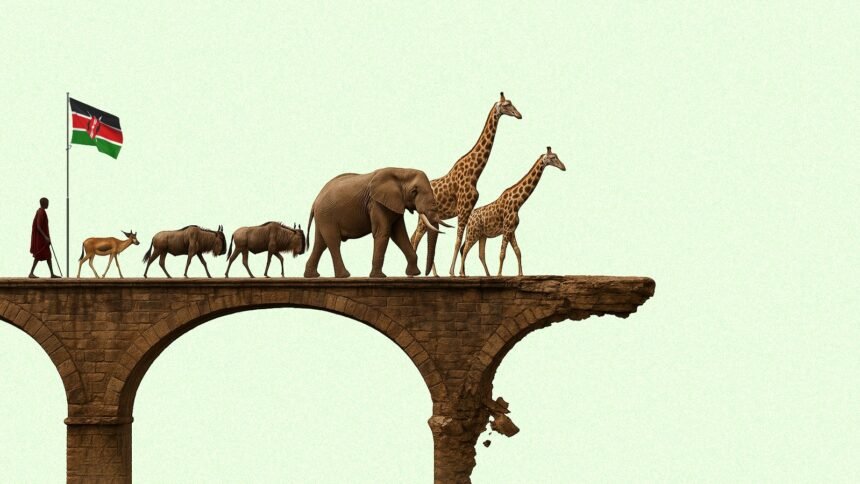
This covenant traces to ancestral practices predating recorded history. Bantu migrations around 1000 BCE integrated wildlife into cosmological frameworks, where animals embodied spirits and seasonal deities. The Maasai’s enkang (settlements) and Samburu’s sacred hills exemplify this symbiosis: selective culling ensured herd vitality. At the same time, prohibitions on killing particular species—such as the reticulated giraffe, revered as a celestial messenger—fostered biodiversity. Today, as Africa confronts a youth bulge projected to reach 830 million by 2050, Kenya’s wilds demand a renewed covenant—one transcending national borders to forge collective resilience against climate volatility and resource scarcity. In this sacred charge, Kenya’s savannas pulse as the continent’s beating heart, summoning unified stewardship.
Echoes of the Enclosure: From Indigenous Balance to Colonial Carve-Ups
Kenya’s wildlife narrative unfolds across millennia, its first chapters etched by hunter-gatherers of the Koobi Fora basin 2.5 million years ago. Archaeological strata reveal sophisticated coexistence: San-like peoples crafted tools from elephant ivory while avoiding overhunting, their middens reflecting sustainable yields. Nilotic pastoralists arriving circa 500 CE amplified this equilibrium, integrating livestock with wild herds through transhumance—seasonal movements mirroring migrations—and ritual moratoria during calving seasons.
Colonial rupture arrived with British proclamations in 1897, when the Game Laws Ordinance banned indigenous hunting under penalty of lashes, reserving game for white athletes. By 1900, 20 safari clubs dotted the White Highlands, decimating buffalo populations by 70%. The 1940s national parks—Nairobi (1946), Tsavo (1948)—formalized enclosures, displacing 100,000 Ogiek and Maasai onto marginal lands. Independence in 1963 heralded expansion: 25 parks and 15 reserves now span 8% of territory, but early policies retained centralized control, alienating locals as “squatters” in their ancestral domains.
Decades later, these enclosures echo in socio-ecological fault lines. The 1990s privatization wave leased 40% of conservancies to foreign operators, while the 2010 Constitution’s devolution clause—Article 69—strives to restore indigenous tenure. Yet, historical dispossession lingers: 70% of wildlife resides on private or communal lands, where tenure insecurity drives fencing and conversion. Reclaiming this balance necessitates decolonial reckoning—land restitution, co-governance—transforming echoes of enclosure into harmonies of inclusion.
Bastions of the Biosphere: Kenya’s Biodiversity Arsenal and Perilous Frontiers
In 2025, Kenya safeguards a biosphere of staggering depth: 7,000 plant species, 1,100 birds (25% endemic), 86 terrestrial mammals, and 600 butterfly taxa. Elephants number 36,000 (up 20% since 2014), lions 450 (despite 10% annual losses), and black rhinos 1,023—a global triumph from 240 in 1989. The Maasai Mara-Serengeti ecosystem, spanning 25,000 square kilometers, hosts 40% of Africa’s large herbivores, while marine realms like Malindi-Watamu harbor 1,000 fish species and endangered dugongs.
Legislative fortification underpins these bastions. The Wildlife Conservation and Management Act 2013 (amended 2025) mandates 40% revenue-sharing with communities, disbursing KSh 3.2 billion ($24 million) in 2024. Community-led conservancies—now 170 units covering 2.5 million hectares—employ 10,000 rangers, reducing poaching by 65%. Innovations proliferate: Ol Pejeta’s AI-fenced rhinos, Tsavo’s drone fleets monitoring 20,000 square kilometers, and Lewa’s K9 units apprehending 80 poachers yearly.
Yet, perilous frontiers loom. Habitat fragmentation claims 150,000 hectares annually to charcoal, wheat, and urban sprawl; Lake Nakuru’s flamingo flocks plummeted 90% due to algal blooms. Poaching persists—400 elephants, 50 rhinos lost in 2024—fueled by Asian demand and local poverty. Endemics teeter: the hirola (fewer than 600), Tana River mangabey (1,200), and Turkana mud turtle face oblivion. These bastions, thus, demand relentless vigilance—a biosphere not preserved by inertia but forged through adaptive, science-driven defense.
Crown of the Continent: Kenya’s Preeminence in Africa’s Wildlife Pantheon
Africa’s wildlife pantheon crowns Kenya among luminaries. Ranking fourth behind Tanzania (Serengeti’s scale), South Africa (Kruger’s infrastructure), and DRC (Virunga’s endemics), Kenya distinguishes itself through migratory connectivity and policy innovation. Its 12.5% protected land area exceeds Botswana’s 10% and Zambia’s 8%, while conservancy models cover 4% more than Namibia’s communal areas. Endemic richness—Grevy’s zebra (90% of global population), Jackson’s hartebeest—bolsters this stature.
Transboundary diplomacy amplifies preeminence: the Mara-Serengeti Protocol (2023) synchronizes patrols across 118 kilometers, while the Lamu-Garsen corridor links coastal forests to Ethiopian highlands. Economically, wildlife injects $3 billion yearly—15% of GDP—outpacing Uganda’s coffee ($1.2 billion) and rivaling Rwanda’s silverback tourism. Globally, Kenya’s 25,000 elephants dwarf India’s zero, its 7 million migratory birds eclipse North America’s flyways, yet Africa’s 20% wildlife concentration faces existential pressures unseen in Amazonia’s sprawl.
This continental crown rests on adaptive governance: green bonds raised $50 million for anti-poaching (2024), and youth ranger academies trained 2,000 across East Africa. Kenya’s pantheon, then, inspires emulation—from Ethiopia’s Simien rewilding to Mozambique’s Niassa revival—positioning it as Africa’s wildlife lodestar.
Velvet Vistas: The Safari Economy’s Dual Dance with Destiny
Born from Theodore Roosevelt’s 1909 odyssey, Kenya’s safari economy has ballooned into a $3.2 billion colossus, employing 1.2 million and funding 80% of conservation. The Maasai Mara alone welcomes 450,000 visitors yearly, generating KSh 80 billion ($600 million), with conservancies leasing land at $25/hectare—triple maize profits. High-end camps like Angama Mara sustain 200 households through lease payments, while mobile safaris minimize their footprint.
Yet, this velvet vista veils destiny’s dual dance. Luxury resorts—$4,000/night at &Beyond—extract $2.5 billion annually, but only 20% recirculates locally; expatriate managers dominate 70% of senior roles. Peak-season congestion—400 vehicles at Mara crossings—elevates wildebeest mortality 15%, while off-road driving scars 5,000 hectares yearly. The 1977 hunting ban, though morally resonant, catalyzed catastrophe: wildlife outside parks crashed 70% by 2000 as landowners fenced for cattle.
Revival beckons through recalibration. Namibia’s model—regulated hunts funding 80 conservancies—offers lessons: trophy fees sustain 20,000 jobs without undermining photographic tourism. Kenya’s 2025 pilot quotas (50 buffalo, 20 leopard) yielded KSh 400 million, hinting at hybrid futures. Sustainable vistas demand caps (50 vehicles/crossing), indigenous ownership (target: 60% by 2030), and diversified revenue—night-sky tourism, birding circuits—ensuring safaris propel rather than plunder destiny.
Dignity’s Dry Season: Human Rights in the Shadow of Tusks and Claws
At wildlife’s feral fringes, human dignity withers in dry seasons of displacement and retribution. Since 1963, 200,000 Maasai and Samburu have faced eviction for conservation, their 2024 clashes with Isiolo rangers claiming 150 lives. Crop destruction—$100 million annually—and livestock losses (3,000 cattle to lions yearly) ignite cycles of spearing: 120 lions killed in 2024. Poverty compounds injustice: 45% of pastoralists subsist below $1.90/day, their children 30% more likely to drop out than urban peers.
Justice blooms where dignity integrates. Laikipia’s conservancies, which share 35% of fees, cut conflicts by 70%; Baringo’s predator-proof bomas saved 1,500 goats in 2024. The 2025 Act’s KSh 5 million compensation cap aids 2,000 households, yet bureaucratic delays persist. Pan-African precedents—Botswana’s co-management accords—illuminate paths: Article 63 of Kenya’s Constitution mandates public participation, yet only 15% of conservancy boards reflect indigenous majorities.
Dry seasons yield to dignity through empowerment: 5,000 pastoralists trained as rangers since 2020, traditional ecological knowledge digitized for fire management. AU’s 2024 Pastoralist Charter advocates mobile tenure rights, harmonizing human flourishing with faunal frontiers. In these shadows, dignity emerges not as a concession but as a covenant—reciprocal guardianship that ensures neither tusks nor communities fall.
Sentinels of Suffering: Animal Rights in Kenya’s Ethical Evolution
Kenya’s sentinels—elephants with 22-month gestations, orcas traversing 100 kilometers daily—embody suffering when autonomy erodes. The 2013 Act prescribes five-year terms for cruelty, yet 2024 convictions numbered 47 amid 2,000 reported cases. Captive facilities house 3,000 animals: Sheldrick’s orphans rehabilitate 1,200 elephants, but commercial “sanctuaries” confine lions in 50-square-meter pens, their bile harvested for export.
Ethical evolution accelerates. 2025’s relocation of 50 Tsavo elephants to Meru restored 10,000-hectare ranges, slashing infanticide by 40%. Anti-trafficking nets seized $10 million in ivory and 500 live birds, while CITES Appendix I listings shield 80% of species. Debates intensify over photographic safaris: close approaches (<30 meters) elevate cortisol 25% in herbivores, per 2024 studies. Animal rights philosophy—codified in New Zealand’s 2015 Act—inspires Kenya’s 2026 Welfare Bill, which proposes phase-outs of exploitative breeding practices.
Evolution demands holistic horizons: 1 million hectares of fenced sanctuaries by 2030, wildlife corridors linking 70% of parks, and legal personhood for elephants (piloted in India, 2023). Suffering’s sentinels call for moral maturity—beyond trophy bans to recognizing animals as rights-bearing kin in Kenya’s ethical arc.
Migration’s Meandering Maze: Relocation Dynamics and Corridor Imperatives
The wildebeest migration’s maze meanders through existential flux. Climate shifts compress dry seasons by 20 days since 1980, stranding 100,000 calves annually; fences bisect 30% of routes, causing 5,000 deaths. The Ritz-Carlton Mara controversy—its 68-kilometer proximity sparking blockade fears—underscores tensions: Kenya Wildlife Service affirms open passage, yet pastoralists report a 15% deviation from the route.
Relocation triumphs illuminate imperatives. Operation Wild 2024 airlifted 21 rhinos to Aberdare, boosting genetic diversity by 18%; Tsavo’s 80 elephants reintegrated with zero returns. Community-led models excel: Maasai Mara’s 200 patrols secure 90% of crossings, while satellite collars track 500 wildebeest, predicting bottlenecks 72 hours ahead. Transboundary accords—Kenya-Tanzania’s 2025 Migration Treaty—demarcate 500 kilometers of unfenced corridors.
Maze navigation demands fluidity: permeable fencing (80% adoption target), rainwater harvesting to stabilize waterholes, and AI modeling of shifting routes under +2°C warming. Migration’s mandate transcends logistics—it’s ecological infrastructure, sustaining 6 million people via meat, tourism, and soil fertility. Meandering mazes teach adaptation: relocating not merely animals, but management paradigms toward permeable, predictive futures.
Harmonies of the Horizon: AU-UN Synergies Elevating Kenya’s Efforts
Pan-African harmonies crescendo through AU-UN convergences, elevating Kenya’s solitary efforts to symphonic scale. The AU’s 2030 Wildlife Strategy mobilizes $500 million for 30 transboundary parks; Kenya’s Northern Rangelands Trust anchors the 2024 Laikipia-Samburu corridor, spanning Uganda to Ethiopia. UNEP’s Nairobi headquarters incubates the SOS African Wildlife Framework, disbursing $120 million to 12 Kenyan projects—carnivore insurance schemes halve retaliatory killings 50%.
Synergies manifest in capacity: 7,000 rangers trained via UN-AU academies, CITES digital tracking platforms intercepting 90% of ivory shipments. The 2025 Africa Biodiversity Summit, hosted in Malindi, forged 25 compacts—$300 million in debt-for-nature swaps—accelerating Kenya’s 30×30 pledge (30% protection by 2030). Regional blocs amplify: EAC’s 2024 Anti-Poaching Protocol deploys 2,000 joint patrols, slashing cross-border incursions 60%.
Horizon harmonies demand sustained investment: AU’s Green Wall initiative aims to restore 10 million hectares by 2030, with Kenya pioneering agroforestry buffers around Amboseli. These convergences transform Kenya from a national actor to a continental conductor, harmonizing disparate voices into unified defense.
Crucibles of Collapse: Multiplied Threats Converging on Kenya’s Wilds
Kenya’s wilds confront crucibles of collapse across multiplied vectors. Poaching syndicates, armed with AK-47s and drones, harvest 500 elephants yearly; 2025’s Lamu seizures uncovered $20 million in trafficked rhino horn. Climate crucibles intensify: 40 consecutive failed rains since 2020 have shrunk Lake Baringo by 60%, concentrating hippos and sparking 200 human deaths. Habitat conversion accelerates—1.2 million hectares lost to 2024’s maize push—while plastic pollution suffocates 30% of Watamu’s coral reefs.
Socio-economic crucibles compound: 70% youth unemployment in northern Kenya fuels poacher recruitment, claiming 400 rangers since 2015. Disease spillover escalates—anthrax killed 1,000 hippos in 2023; avian flu threatens 2 million flamingos. Conflict currents surge: 600 attacks on conservancies in 2024, eroding 20% of communal leases. These converging crucibles demand integrated ripostes—blockchain-tracked supply chains, drought-resistant fodder for pastoralists, and rapid-response veterinary units deployed 50 times per month.
Dawn of the Dominion: Blueprint for Kenya’s Wildlife Renaissance
As dawn dominion breaks over Kenya’s wilds, Renaissance blueprints crystallize across scales. Conservancies target 4 million hectares by 2030, integrating 20,000 pastoralists as shareholder-owners. AI ecosystems—10,000 thermal cameras, satellite-linked herds—project a 70% reduction in poaching. Youth innovation surges: 50,000 students in 2025’s Green Schools program, 5,000 startups pioneering bio-based plastics from invasive species.
Economic diversification fortifies: birding circuits rival primate tourism, generating $200 million; carbon credits from 2 million hectares yield $50 million annually. Policy frontiers advance: 2026’s Wildlife Bill enshrines indigenous veto rights and allocates 50% of fees to education—transboundary megaprojects—Greater Mara Accord, Coastal Forest Alliance—secure 5 million hectares across five nations.
This dominion heralds not preservation but proliferation: elephant populations to double by 2040, 90% of corridors unfenced, 80% of communities above poverty lines. Kenya’s renaissance ignites Pan-African conflagration—from Congo’s gorilla sanctuaries to Namibia’s desert lions—where migrations multiply, ecosystems regenerate, and dignity endures. In this dominion, the Mara’s thunder becomes the continent’s anthem, hoofbeats heralding an unbound ecological tomorrow.