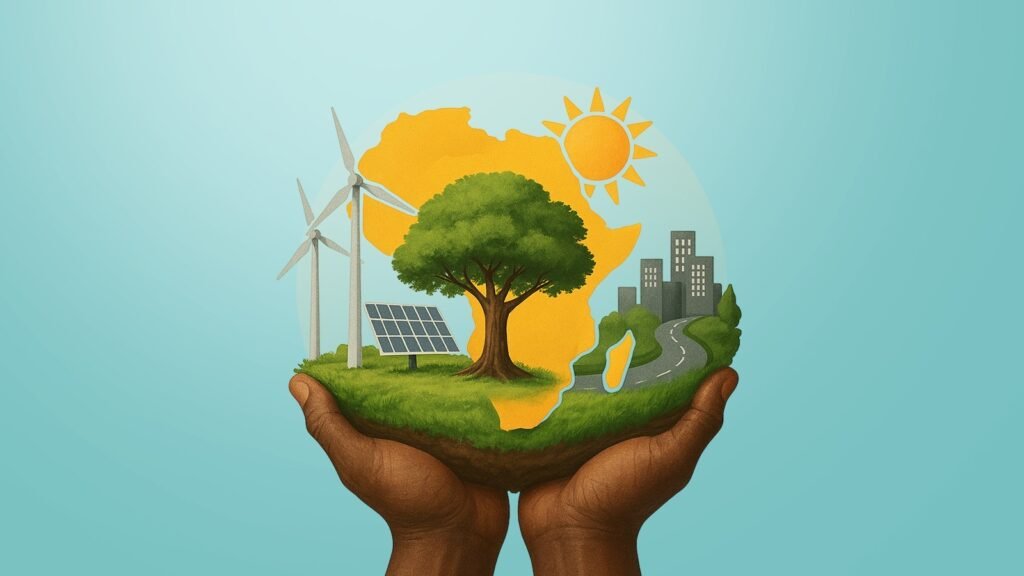






Africa faces significant challenges regarding development and growth. The Sustainable Development Goals (SDGs), with their environmental, economic, and social dimensions, address the continent’s pressing needs. These goals have been integrated into the African Union’s Agenda 2063 to be consistent with local conditions aand environments. Private and governmental institutions play a crucial role in inclusive growth that tackles many of the continent’s issues, such as climate change, poverty, healh, and infrastructure.
The continent offers opportunities for investors due to its emerging markets. However, challenges hinder the integration of environmental, social, and governance (ESG) considerations, including developmental needs, weak infrastructure, persistent economic volatility, and limited capacity.
In 2004, former UN Secretary-General Kofi Annan launched an initiative calling on major financial institutions to develop recommendations on how markets could integrate ESG considerations into investment decisions. This resulted in a report titled “Who Cares Wins,” marking the official beginning of the ESG concept. Today, the term is used to evaluate investments and companies from a sustainability perspective. Environmental, Social, and Governance (ESG) is a comprehensive framework that assesses an organization’s impacts on the environment; the treatment of employees, stakeholders, and community members; and the quality of governance. ESG principles support the financial development of companies and contribute to improving economic and social aspects.
Understanding the applications and principles of environmental, social, and governance (ESG) supports practical sustainability efforts. These principles consider ecological standards and their impact on climate change, waste management, and the protection of ecosystems. The social aspect involves considering, engaging, and supporting the community to mitigate the social effects, such as poverty, and to support social development efforts by working towards achieving the social dimension of the Sustainable Development Goals (SDGs). The movement encompasses leadership and strategic aspects that ensure sustainability by developing plans and policies that facilitate sustainability efforts within organizations. ESG needs to be integrated into organizational strategies to ensure progress toward sustainable practices.
ESG Reports
ESG reports are essential tools that demonstrate an organization’s commitment to sustainability by highlighting its efforts in implementing ESG principles.
Environmental Pillar: This supports organizations’ efforts to protect the environment, reduce greenhouse gas emissions that cause global warming, mitigate climate change, and preserve ecosystems and biodiversity. The environmental Pillar ensures sustainable practices in natural resource management, waste management, energy efficiency, and the transition to renewable and sustainable energy.
Social Pillar: This encompasses the organization’s efforts to support local communities, address social issues, foster trust and communication among stakeholders, create a stimulating work environment, and respect employee rights.
Governance Pillar: Governance encompasses the systems and processes that govern the company, including board diversity, executive compensation, and ethical business practices. Strong governance ensures transparency, accountability, and integrity, which are essential for long-term success and investor confidence.
Governance encompasses the systems and processes that govern a company, including board diversity, executive compensation, and ethical business practices. Strong governance ensures transparency, accountability, and integrity, which are essential for long-term success and investor confidence. These factors are not financial but directly impact an organization’s performance and long-term success, providing a comprehensive strategic vision for sustainable business practices. The transition to adopting global sustainability standards requires a concerted effort, as African organizations face similar challenges. Environmental, social, and governance (ESG) outlines an organization’s commitments to society and the environment.
ESG Practices for Africa’s Private Sector Transformation:
On March 27, 2023, the African Union invited the African private sector to participate in a comprehensive study on Environmental, Social, and Governance (ESG). The study aimed to understand ESG principles and how to integrate them to suit the specific context of the African private sector. The African Union seeks to promote ESG practices within the African private sector. The study targeted eight sectors, conducting interviews with chambers of commerce and major companies across agriculture, construction, energy, manufacturing, mining, finance, transport, and tourism.
It is crucial to commit investors and development aid donors to supporting sustainability and innovation efforts on the continent. Encouraging beneficiaries and stakeholders to adopt sustainability concepts and achieve ESG goals will strengthen development efforts. Africa is an attractive investment destination due to its abundant natural resources. Adopting a sustainable approach for companies operating in Africa ensures the safety of the environment and society from potential harm arising from various activities, particularly in sectors such as mining.
The African Union’s focus on this issue reflects its responsibility to encourage investors and private sector stakeholders to adopt sustainable practices. Environmental and social governance involves ensuring that it is referenced in investment contracts and that there is compliance with laws and regulations pertaining to environmental, social, and corporate governance.
Marrakech Declaration Overview
On November 24, 2025, the Morocco International Mining Congress & Exhibition (IMC 2025) was held in Morocco under the theme “Strategic and critical metals: Morocco, an open industrial and technological hub for regional and global added value.” This conference followed extensive work and coordination among African leaders. The conference’s declaration is considered a continental reference for environmental, social, and governance (ESG) standards, specifically designed to address the continent’s conditions and challenges. The conference launched a framework tailored by Africans because existing corporate standards did not reflect the African reality.
The African ESG Framework, as reflected in the Marrakech Declaration, reflects a growing recognition that Africa’s vast mineral wealth, critical to the global energy transition and digital economy, must translate into tangible benefits for local populations. According to the African Development Bank, the continent can provide a favorable environment for investors and international financial institutions, which can play a pivotal role in bridging the financing gap and building capacity to support environmental, social, and governance (ESG) projects.
This presents an opportunity to develop continental ESG regulations, adopted by African leaders, that are tailored to the continent’s specific circumstances. Governments can support the development of mechanisms for tax exemptions, subsidies, and accreditation programs for partnerships that encourage companies to adopt ESG standards. Awareness-raising and capacity-building programs through workshops and conferences provide a space for discussion and the exchange of experiences on ESG practices.