





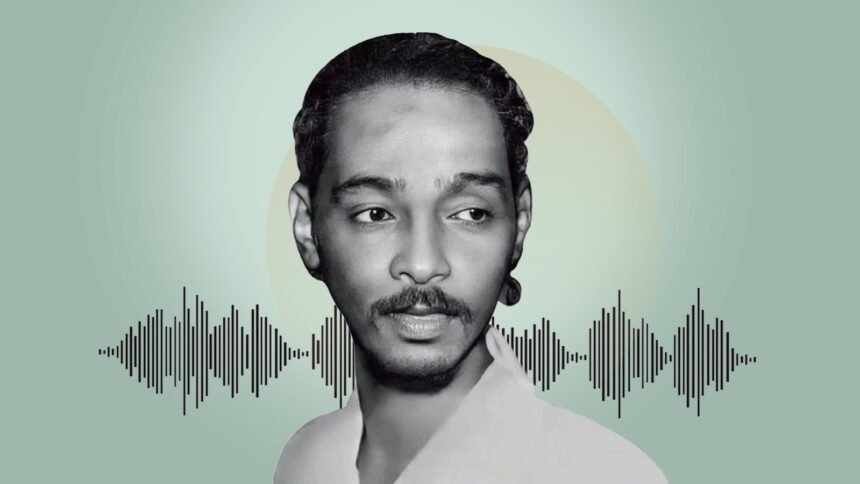
Saharan Symphonies: Pan-African Currents in Sudan’s Melodic Resistance
In the cradle of the Nile, where ancient kingdoms birthed rhythms that echoed across the continent, Sudanese women and men have long harnessed song as a shield against empire and autocracy. From the lyres of Kushite queens to the tambourines of Darfur dervishes, music in Sudan weaves Berber chants with Arab maqams, Nilotic calls with Swahili sways—a pan-African tapestry defying borders drawn by colonial cartographers. The Anglo-Egyptian Condominium (1899–1956) stifled these voices under martial law, yet post-independence coups—seven by 2025—fueled a sonic rebellion. Under Jaafar Nimeiri’s Sharia imposition (1983) and Omar al-Bashir’s theocratic grip (1989–2019), artists faced bans, exiles, and fatwas, their melodies branded haram for evoking joy over jihad.
This lineage of defiance spans legends: the late Mohammed Wardi, whose folk anthems rallied the 1964 October Revolution; the enduring Aisha el-Siddig, whose haqiba blends Sufi ecstasy with feminist fire; the departed Ibrahim Kuwaili, guitar in hand, against the scars of southern secession. Alive icons like Alsarah, fusing Nubian scales with Brooklyn beats, carry the flame, while emerging rappers in Omdurman spit against the carnage of the 2023 civil war. Their struggles mirror the Maghrib’s: Algerian raï clashing with Islamists, Moroccan gnawa defying the shadows of Hassan II. In Sudan, where two civil wars (1955–1972, 1983–2005) claimed millions and Darfur’s genocide scorched 300,000 souls, music became insurgency—cassettes smuggled past censors, concerts as coded protests.
Politically, these voices challenged Islamist regimes’ veils: Bashir’s morality police shuttered clubs, yet underground haflas pulsed with forbidden fusion. Legacies ripple pan-African: Wardi’s tours inspired Fela Kuti’s Afrobeat defiance, el-Siddig’s harmonies echo Miriam Makeba’s anti-apartheid calls. To youth amid Hirak uprisings and RSF-SAF clashes, the message endures: melody mends fractures, rhythm reclaims stolen futures. In this chorus of resilience, Mahmoud Abdelaziz emerges not as an outlier, but an oracle—a whale surfacing from the Nile’s depths to sing of unity unbound.
Bahri’s Rising Refrain: Mahmoud’s Sudanese Genesis
Born Mahmoud Abdulaziz Saleh on October 16, 1967, in Khartoum North’s Bahri quarter—a riverside hive of shipyards and spice markets, where the White and Blue Niles converge—Abdelaziz inhaled the polyphony of Sudan’s soul from cradle’s breath. Bahri, cradle of the Mahdist revolt’s echoes, hummed with haqiba’s hypnotic strings, the tambura’s Nubian twang, and wedding ululations that drowned out the artillery of the Anya-Nya insurgency. His father, a modest clerk, tuned ouds by lamplight; his mother wove tales of Kerma pharaohs into bedtime dirges. By seven, the boy commandeered family gatherings, his falsetto mimicking Umm Kulthum’s trills, earning whispers of “a jinn in the throat.”
Adolescence under Nimeiri’s creeping Islamism sharpened his edge. Schools preached puritanism, radios aired only nasheeds, yet bootleg tapes from Cairo smuggled Fairuz’s longing and Bob Marley’s militancy. At sixteen, Abdelaziz formed a garage band in Bahri’s back alleys, blending Sudanese wedding beats with Egyptian shaabi and Ethiopian azmari improvisations—a hybrid heresy in Sharia’s shadow. Expelled from university for “Western decadence,” he hawked songs at Omdurman markets, voice raw as the desert wind. By 1994, his debut cassette, Ya Zalim (O Tyrant), a veiled jab at Bashir’s bread riots, sold pirated copies in the thousands, branding him “Al-Hoot”—The Whale—for his booming baritone and gentle girth, a leviathan gliding through repression’s straits.
This genesis mirrored Sudan’s schisms: northern Arabized elites versus southern animist kin, urban cosmopolitans versus rural zealots. Abdelaziz, Bahri-bred, embodied the hyphen—Sudanese yet pan-African, devout yet defiant. Like Wardi’s bridge-building ballads or el-Siddig’s gender-bending grooves, his early works fused the Nile’s tributaries, prefiguring the eclectic chants of the 2019 revolution.
Fusion’s Flood: The Eclectic Currents of Mahmoud’s Musical Tapestry
Abdelaziz’s oeuvre, spanning nineteen albums from 1994’s raw demos to 2012’s polished Nights of the Nile, was a sonic delta where African roots swelled into global streams. His signature sound—haqiba laced with electric guitar riffs, derbake drums synced to drum-machine pulses, lyrics in Sudanese Arabic laced with Nubian idioms—defied genre’s chains. Tracks like El Fat Zaman (This Time, Tyrant), a 2005 mid-tempo lament skewering corruption amid Darfur’s flames, layered call-and-response choruses with reggae skanks, evoking Fela’s Kalakuta Republic in Khartoum’s casbahs. Habibi Ya Nour El Ain reimagined Fairuz’s classic through a tambura veil, while Sudan Ya Bilad (Sudan, My Country), his 2009 pan-African plea, sampled Ethiopian krar and South African marabi, urging unity against Bashir’s balkanization.
Concerts were catharsis: sold-out Nile Hall galas where 5,000 swayed to “Ya Qalb” (O Heart), a 1998 heartbreak anthem that doubled as an elegy for exile. Banned from state media until 2005’s sly concessions, he thrived on bootlegs and satellite streams, his videos—filmed guerrilla-style in Gezira farms—viraling via smuggled DVDs. Collaborations amplified his reach: duets with Libyan poet Ashur Etwebi on refugee laments, features with Kenyan benga bands fusing Luo licks into haqiba hooks. Albums like Whale’s Wake (2007) charted love’s tempests through jazz-infused oud solos, critiquing the pitfalls of polygamy within Bashir’s moral code.
This fusion was no accident, but an antidote: in a Sudan where radio enforced takfir, Abdelaziz’s eclecticism smuggled secularism, his melodies a mnemonic for the marginalized. Like Rimitti’s raï in Algeria’s Black Decade, his tracks became protest primers, hummed in displacement camps, a cultural counterweight to the regime’s dirges.
Revolutionary Ripples: Al-Hoot’s Enduring Legacy in Sudan’s Sonic Struggle
Abdelaziz’s death on January 17, 2013, in Amman’s Jordan Hospital—after a leukemia battle masked as “routine check”—at 45, ruptured Sudan’s heart. Thousands stormed Khartoum Airport’s tarmac, halting flights in grief’s gale, coffins airlifted amid chaos. Yet his legacy swelled posthumously, a Nile flood cresting in the 2019 thawra. Protesters in Khartoum’s sit-ins blasted El Fat Zaman from megaphones, its chorus—”Rise, O people, from chains’ embrace”—fueling the 70-day siege that toppled Bashir. In the 2023 RSF-SAF inferno, WhatsApp chains recirculate “Sudan Ya Bilad” as morale’s mortar, its pan-African plea echoing from Port Sudan to Juba.
As “Sudan’s youth idol,” he symbolized the unfettered: less mosque-mandated, more marketplace-free, his secular swagger a rebuke to the Inqaz regime’s inquisitions. Albums remastered in exile studios sustain his sound, influencing Alsarah’s Nubian electronica and Omdurman’s trap poets. Pan-African echoes resound: Ethiopian festivals honor his azmari nods, and South African jazz circles cover “Ya Qalb” in township taverns. To a generation scarred by 2.5 million war dead and 7.7 million displaced, Al-Hoot imparts: song is sovereignty, harmony heals hegemony. His whale’s wake laps at Africa’s shores, a legacy not silenced by sickness, but amplified in revolution’s roar.
Tidal Devotion: The Unwavering Fan Base of Sudan’s Whale
No Sudanese artist commanded fealty like Abdelaziz, whose devotees—spanning Bahri’s boatmen to diaspora’s doctors—formed a fervent phalanx, the “Hootists.” In Bashir’s beleaguered 2000s, his fan clubs sprouted in Khartoum’s khalwas and Cairo’s cafes: underground networks swapping tapes and organizing clandestine haflas where 500 packed, sweat-soaked halls would chant the lyrics verbatim. Youth aped his tousled locks, baggy jalabiyas, and that signature salute—a fist-to-heart vow, born from a 1998 fan’s plea, immortalized even on his deathbed photo.
This base, 80% under 30 per anecdotal tallies, transcended class: Gezira farmers memorized Habibi Ya Nour for drought’s despair, Khartoum coeds blasted Ya Zalim at gender-segregated unis as coded feminism. Exiles in Manchester and Melbourne formed “Whale Waves” pods, streaming live sets via encrypted apps, remittances funding his leukemia care. Post-2013, grief galvanized: annual January vigils draw 10,000, blending eulogies with encores, while TikTok duets rack millions, Gen Z remixing haqiba with afrobeats. In war-torn 2025, fan podcasts from safe houses narrate his discography as survival scripture, a bulwark against fragmentation. Al-Hoot’s admirers were not passive; they were pod—a living leviathan, propelling his voice through tyranny’s teeth.
Moonlit Mandates: Cultural Contributions and Charitable Harmonies
Beyond bars, Abdelaziz’s benevolence beamed like desert moons, his 2008-founded Moons of the Countryside (Akwak al-Rif) a nonprofit nebula aiding Sudan’s forgotten. From Darfur’s scorched villages to the Blue Nile’s famine-stricken folds, the initiative—seeded with concert proceeds—built wells in 50 hamlets, vaccinated 20,000 children against the scourge of measles, and schooled 5,000 girls in health and hygiene. He trekked through displacement camps, oud slung over his shoulder, serenading widows with Ya Qalb while aides distributed rice sacks, his presence a balm, blending bard and brother.
This ethos infused his art: lyrics in Nights of the Nile pledged royalties to landmine victims, collaborations with UNICEF anthems amplified anti-FGM campaigns. Pan-African in scope, Moons partnered with Kenyan NGOs for refugee literacy, echoing Makeba’s clinic-building in Guinea. Culturally, he mentored prodigies: scouting Bahri talent, funding studios in Omdurman, and preserving tambura lineages amid the erosion of urbanization. His one-person shows in Juba fostered north-south bridges, prefiguring 2005’s peace accords. In a Sudan where charity courted co-optation—Bashir’s zakat chambers skimming aid—Abdelaziz’s moonlit mandates modeled untainted uplift, his whale’s shadow sheltering the small against the state’s storm.
Thirteen years on, as December’s dust devils whirl over Khartoum’s barricades, Mahmoud Abdelaziz’s lullaby lingers—a Nile hymn for a nation adrift, urging its daughters and sons to sing through the siege, whale-strong and unbroken.