





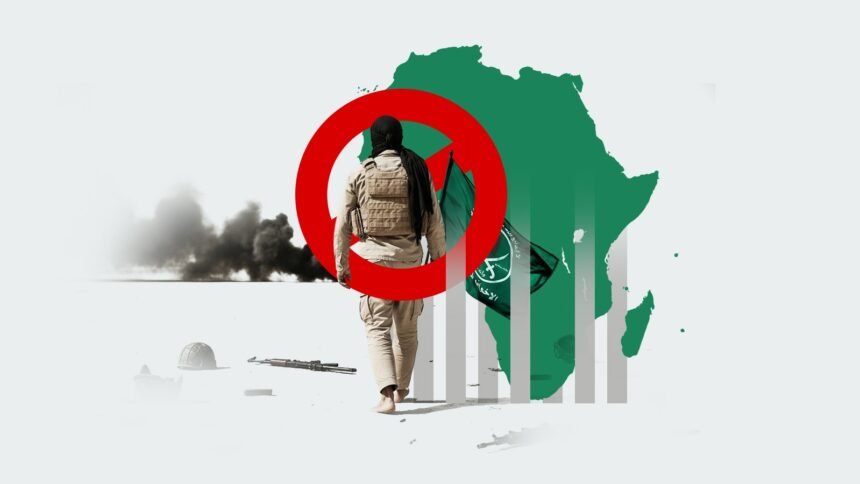
Pan-African Echoes: From Nile Origins to Continental Spread
The Muslim Brotherhood’s incursion into Africa represents a saga of ideological transplantation, rooted in the sands of Egypt, where Hassan al-Banna founded the movement in 1928 as a response to colonial erosion and secular encroachment. Initially a pan-Islamist endeavor blending spiritual revival with social activism, it sought to reclaim Muslim identity amid British imperial dominance, establishing schools, clinics, and welfare networks that doubled as recruitment grounds. This model, emphasizing da’wa (proselytization) and community uplift, swiftly spread southward along the Nile, embedding itself in Sudan’s fertile Islamist soil by the 1940s. There, it morphed into the National Islamic Front, forging alliances with military juntas to institutionalize Sharia principles in governance, education, and law, culminating in Omar al-Bashir’s three-decade regime that blended authoritarianism with religious fervor.
North Africa’s colonial scars—French in Algeria and Morocco, Italian in Libya—provided fertile terrain for Brotherhood offshoots. In Algeria, post-independence turmoil led to the emergence of the Movement for Society for Peace (MSP) in the 1990s. This Brotherhood-aligned party navigated the aftermath of the civil war by advocating moderate Islamism within parliamentary confines, though it was often accused of harboring radical undercurrents. Libya’s Ikhwan, fragmented amid Gaddafi’s repression, resurfaced post-2011 as the Justice and Construction Party, intertwining with militia politics in a fractured state. Westward, Mauritania’s Tawassoul party embodies a hybrid of Salafi rigor and Brotherhood pragmatism, influencing nomadic societies through youth mobilization and anti-corruption rhetoric. In contrast, in Senegal and Gambia, the subtler presence manifests in NGO-driven aid that subtly promotes conservative mores.
Sub-Saharan adaptations reveal the movement’s chameleon-like resilience. In the Horn of Africa, Somalia’s Brotherhood legacy dates to the 1960s, with groups such as Al-Islah infiltrating clan structures and federal institutions, promoting shura (consultative) governance amid perpetual instability. Ethiopia’s Somali-inhabited Ogaden region hosts clandestine cells, where Brotherhood ideals intersect with irredentist aspirations, fostering madrasas that blend religious education with political indoctrination. East Africa’s Swahili coast—Kenya’s northeastern frontiers and Tanzania’s Zanzibar—sees Brotherhood sympathizers operating through charitable fronts, addressing urban poverty through halal economies and gender-specific welfare, often in conflict with secular state policies. This diffusion, fueled by Gulf remittances and shared anti-Western grievances, underscores a pan-African strategy: not conquest by force, but infiltration through piety and patronage, reshaping Africa’s Muslim-majority pockets into ideological bastions.
Yet, this spread carries shadows of erasure. Historical precedents in North Africa—where indigenous Berber populations were displaced by Arab-Islamic expansions—echo in contemporary critiques, portraying the Brotherhood as a vehicle for cultural homogenization that marginalizes Africa’s diverse ethnic tapestries. From Cairo’s blueprints to Cape Town’s whispers, the movement’s pan-African ripples challenge continental unity, pitting revivalist zeal against pluralist realities.
Brotherhood Branches: Localized Webs in Africa’s Diverse Terrain
Africa’s Brotherhood manifests not as a monolithic entity but as a patchwork of chapters, each tailored to local exigencies while echoing core tenets articulated by al-Banna and Sayyid Qutb. Sudan’s chapter, rebranded from the National Islamic Front to the National Congress Party, dominated politics until the 2019 revolution, embedding Islamist cadres in bureaucracy and judiciary, only to face asset seizures and purges post-Bashir. Algeria’s MSP endures as a parliamentary fixture, its survival of the 1990s civil war masking tensions with secular authorities. At the same time, Morocco’s Justice and Development Party (PJD) operates under the monarchy’s oversight, advocating for social justice amid economic disparities.
In the Sahel’s arid expanses, Mauritania’s Tawassoul leverages tribal networks for electoral gains, blending the Brotherhood’s gradualism with calls for economic equity in a nation grappling with the legacies of slavery. West Africa’s Gambia and Senegal host discreet affiliates, where mosque-based initiatives address flood vulnerabilities, subtly advancing Islamist social norms. The Horn’s Somali variants—Damul Jadiid in government circles and Al-Islah in civil society—wield influence over federal policies, from zakat reforms to anti-corruption drives, while contending with al-Shabaab’s violent schisms.
Kenya’s northeastern chapters operate through youth associations and madrasas, fostering coastal identities amid marginalization and maintaining ties to Mombasa’s business elites. Ethiopia’s Somali Regional State harbors parallel networks in which clan-mediated politics intersect with Brotherhood-inspired advocacy for regional autonomy. Transnational ties sustain these branches: Qatari funding, Turkish ideological support, and digital platforms that evade state scrutiny. Yet, fragmentation abounds—tensions between moderates and hardliners, as in Sudan’s post-2019 splits—highlighting the Brotherhood’s rhizomatic strength: adaptable, decentralized, and resilient against crackdowns.
This mosaic extends to lesser-known outposts: Nigeria’s northern student unions echo Qutbian critiques of secularism, while Uganda’s Allied Democratic Forces (ADF) draw partial inspiration from Brotherhood alums. Across the continent, these webs blur lines between charity and politics, embedding in Africa’s undercurrents to challenge hegemonic narratives.
Islam’s Political Pulse: Navigating Africa’s Democratic Currents
Political Islam, as embodied by the Brotherhood, pulses through Africa’s governance veins, offering a vernacular alternative to post-colonial voids. In North Africa, electoral forays post-Arab Spring illuminated this: Tunisia’s Ennahda, disclaiming direct ties to the Brotherhood yet mirroring its strategies, governed coalitions from 2011-2021, fusing Islamist ethics with market reforms until Kais Saied’s 2021 clampdown. Libya’s Brotherhood affiliates vied in post-Gaddafi parliaments, allying with militias in Misrata and Tripoli amid civil strife.
Sub-Saharan engagements reveal improvisation amid fragility. Sudan’s Brotherhood orchestrated Bashir’s ascent in 1989, institutionalizing Sharia amid Darfur’s atrocities, only to fracture in 2019’s uprising. Somalia’s Sharif Sheikh Ahmed, a Brotherhood luminary, presided over transitional governments, tempering clan rivalries with consultative models. In Kenya’s 2022 elections, Brotherhood-linked candidates advocated for Islamic banking, polarizing the electorate along religious lines.
The Arab Spring catalyzed this pulse: Egypt’s fleeting 2012 victory inspired Sahelian echoes, in which Brotherhood rhetoric framed anti-corruption as a moral imperative. Yet, power’s allure breeds backlash—accusations of “one man, one vote, one time” dogged Egypt’s Morsi and Tunisia’s Ghannouchi, fueling coups and criminalizations. In Africa’s multiparty arenas, Brotherhood participation both democratizes and polarizes, blurring reform with hegemony, as seen in Algeria’s MSP, which balances opposition with coalition pragmatism. This dance underscores political Islam’s duality: a mobilizer of masses, yet a divider in diverse polities.
Radical Shadows: Brotherhood’s Tangled Ties with Jihadist Forces
The Brotherhood’s African footprint casts long shadows over jihadist landscapes, where its ideology serves as both deterrent and inadvertent enabler. Officially renouncing violence since Egypt’s 1970s purge of extremist wings, it positions itself as a counter to Salafi-jihadism, condemning al-Qaeda’s takfir and ISIS’s brutality. In Somalia, Al-Islah moderates facilitate al-Shabaab defections, redirecting militants toward politics. Sudan’s remnants disavow AQIM’s Sahelian incursions, portraying jihad as da’wa’s perversion.
Yet, entanglements persist. Qutb’s jahiliyya critiques resonate in Boko Haram’s Nigerian edicts and al-Shabaab’s Somali decrees, with ex-Brotherhood figures providing doctrinal fodder. Congo’s ADF, an ISIS proxy, traces its lineage to Ugandan Brotherhood cells, propagating purity amid resource wars. Mali’s AQIM strongholds shelter Brotherhood veterans mediating with locals, fusing reformism with tactical pacts.
Hybrids emerge: Burkina Faso’s Brotherhood NGOs, aiding refugees, occasionally funnel resources to Kenyan al-Shabaab networks. Nigeria’s Boko Haram, ideologically distinct yet influenced by northern Brotherhood unions, exploits grievances in Lake Chad. Critics highlight historical precedents—Syria’s 1980s insurgency, Hamas’s Gaza origins—as evidence of violence under repression. Thus, while rejecting extremism, the Brotherhood’s orbit inadvertently nourishes jihadist undercurrents in Africa’s ungoverned swathes.
Vigilant Alliances: AU-UN Frameworks Against Emerging Threats
Counter-terrorism in Africa, harmonized by the African Union (AU) and United Nations (UN), confronts the Brotherhood’s ambiguous profile amid overt jihadist perils. The AU’s 1999 Algiers Convention and 2014 Malabo Protocol criminalize terrorist financing and incitement, thereby bolstering intelligence hubs such as the African Centre for the Study and Research on Terrorism. Focus sharpens on kinetic actors—Boko Haram, al-Shabaab—yet overlooks Brotherhood’s ideological incursions, prioritizing border patrols over narrative countermeasures.
UN amplifies: Resolution 2396’s databases and Global Counter-Terrorism Strategy target prevention, urging dismantlement of Brotherhood-linked NGOs as potential conduits. The 2023 AU-UN Joint Framework deploys ATMIS in Somalia to combat al-Shabaab while scrutinizing the Brotherhood’s political inroads. Sahel’s G5 Force, post-MINUSMA, intercepts Mauritanian supply chains, though efficacy wanes amid coups.
Challenges loom: AU sanctions trail national bans, such as Kenya’s 2025 proscription, which outpace consensus. UN’s Resolution 2178 balances rights, warning against alienating Muslims and boosting jihadist recruitment. These alliances blend coercion with diplomacy, yet struggle to address the Brotherhood’s non-violent yet pervasive threat.
Suppression Surge: Banning Waves and Continental Repercussions
Banning the Brotherhood surges as Africa’s defensive tide against its perceived radical nursery, with chapters ensnared in decrees from the Nile to the savanna. Egypt’s 2013 designation ignited precedents: Sudan’s 2019 asset grabs dismantled Bashir’s edifice, Libya’s militia hunts fragmented Ikhwan.
Southward, Kenya’s September 2025 ban under the Prevention of Terrorism Act criminalized symbols, raiding northeastern madrasas linked to Hamas. Tanzania’s Zanzibar surveillance and Ethiopia’s 2024 Ogaden sweeps target youth wings tied to AQIM. Mauritania’s judicial dissolutions and Gambia’s pending bills echo, curbing coastal radicalization.
Yet, repercussions cascade: charity voids impoverish communities, driving informal sectors ripe for jihadist infiltration. Political gaps spawn exiles, as Tunisia’s Ennahda splinters mirror Algeria’s Hirak dispersals—pan-African strains—EAC trade disruptions —AU mediation hurdles—fragmenting ummah unity. Suppression surges risk martyr-making, transfiguring dissent into defiance.
Horizon Hazards: Repression’s Legacy in Africa’s Faith Fabric
As bans constrict Brotherhood enclaves, its horizon teeters between eclipse and resurgence, shadowed by post-Spring decimations—Egypt’s incarcerations, Sudan’s ruptures—hollowing ranks to Qatari/Turkish exiles. Somalia’s co-optation dilutes purity, with alums in sinecures overshadowed by al-Shabaab’s allure. Sahelian schisms erode, as AQIM charisma siphons youth from reformism.
Repression breeds ingenuity: Kenya’s Mombasa cells pivot to encrypted da’wa, crypto-aided welfare evading scrutiny. Ethiopia’s Ogaden diaspora, hardened in camps, heralds a hybrid that merges gradualism with Salafi fervor. AU-UN pacts globalize scrutiny, yet frame bans as inquisitions, galvanizing solidarities.
Hazards demand discernment: unyielding toward outliers, inclusive toward moderates, and anchored in pluralism. Africa’s fabric, threaded with Brotherhood strands, risks jihadist fraying if bans supplant dialogue. In this horizon of hazards, guardians must weigh: exclusion as a bulwark, or a spark to the blaze it douses? The Brotherhood endures, a phantom testament to faith’s dual forge of renewal and rift.