





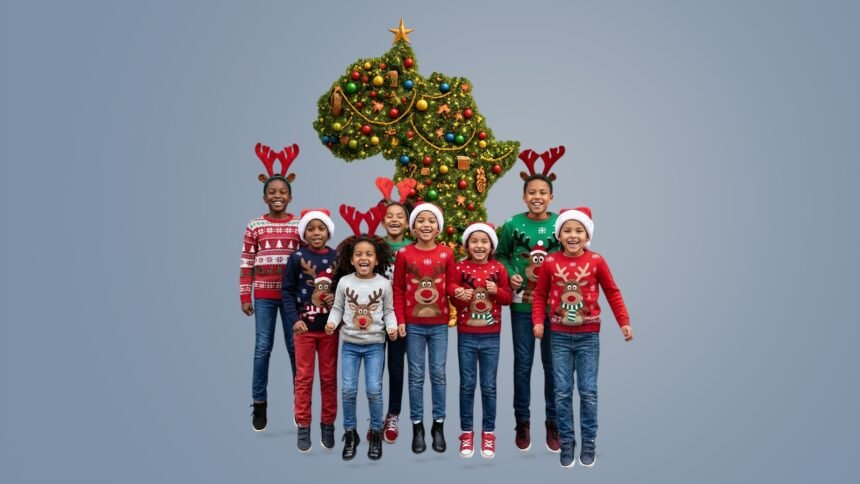
Christmas in Africa transcends its religious origins, emerging as a profound symbol of unity amid the continent’s rich tapestry of cultures, histories, and challenges. As a festival commemorating the birth of Jesus Christ, it weaves together threads of faith, community, and resilience, fostering moments of shared happiness and familial bonds. In a region where Christianity has grown exponentially, now encompassing over 750 million adherents, the holiday serves as a Pan-African bridge, connecting urban dwellers with rural roots and blending ancient rituals with contemporary expressions of joy. This article explores how Christmas ignites collective spirit, drawing from diverse observances to highlight its role in promoting harmony, renewal, and optimism across the continent.
Pan-African Faith: The Enduring Roots of Christmas Reverence
The story of Christmas in Africa is deeply intertwined with the continent’s historical narrative, where faith has long been a source of strength and identity. Mainly introduced by European missionaries during the colonial era, the holiday adapted to local contexts, evolving into a celebration that honors both spiritual heritage and indigenous customs. In Ethiopia, one of Africa’s oldest Christian nations, the observance dates back centuries, rooted in Coptic traditions that predate many Western practices. Here, the festival, known as Ganna, emphasizes communal worship and symbolic games, reflecting a continuity of belief that predates colonial influences.
Across sub-Saharan Africa, where Christian populations have surged by nearly a third in recent decades, Christmas embodies resilience. Countries like Nigeria, with its 74 million Christians, and the Democratic Republic of Congo, integrate the holiday into everyday life, transforming it into a Pan-African emblem of hope. This growth underscores a demographic shift: by mid-century, Africa is projected to host the world’s largest Christian community, amplifying Christmas as a unifying force. Amid historical adversities—from colonial legacies to modern conflicts—the holiday offers a moment to reaffirm shared values, turning personal devotion into collective empowerment.
Festive Mosaic: Christmas Celebrations Igniting African Joy
Christmas celebrations in Africa pulse with vibrant energy, turning the season into a kaleidoscope of joy that spans bustling cities and serene villages. From dawn church services echoing with hymns to evening feasts alive with laughter, the holiday draws people together in expressions of unbridled happiness. In Kenya’s informal settlements, such as Kibera, young performers leap through ballet routines, symbolizing youthful exuberance amid urban challenges. Similarly, in Benin, Santa arrives by boat in floating villages, distributing gifts that spark broad smiles and community cheers.
Parties and gatherings amplify this joy, often featuring music, dance, and shared meals that reflect regional flavors. Nigerian “Detty December” transforms the month into a whirlwind of reunions, with families traveling from afar to indulge in jollof rice, pepper soup, and lively dancing. Ghana’s Bronya sees children in festive attire parading to church, while South Africa’s summer barbecues under decorated trees blend European customs with local twists. These celebrations, marked by an estimated household spending of up to $300 in high-participation nations like Nigeria, infuse economic vitality into regional markets, from livestock sales to artisanal crafts. Yet, beyond materiality, the true essence lies in the intangible: the warmth of togetherness that heals divides and kindles lasting happiness.
Sacred Bonds: Religion as the Core of Yuletide Unity
At its heart, Christmas in Africa is a religious anchor, fostering unity through shared devotion and interfaith respect. With Christianity’s rapid expansion—projected to reach over 800 million followers by 2030—the holiday reinforces spiritual solidarity. In predominantly Christian nations like Rwanda and Zambia, where over 90% of the population identifies as such, midnight masses and prayer vigils draw massive crowds, emphasizing themes of peace and redemption.
Date variations add to this religious diversity: while most observe December 25, Orthodox communities in Ethiopia, Egypt, and Eritrea celebrate on January 7, aligning with the Julian calendar. These observances include prolonged fasts followed by elaborate feasts, underscoring discipline and gratitude. Even in Muslim-majority regions like Senegal and Chad, Christmas promotes harmony, with non-Christians joining in secular festivities. This religious inclusivity transforms the holiday into a Pan-African platform for dialogue, where faith bridges ethnic and denominational lines, nurturing a collective sense of purpose and joy.
Cultural Symphony: Weaving Traditions into Christmas Cheer
Africa’s Christmas is a vibrant fusion of cultures, where global symbols like Santa and trees harmonize with indigenous elements to create unique expressions of joy. In Ecuador-influenced African diaspora communities or local adaptations, fireworks and dances punctuate the night, echoing ancestral rituals. Ethiopian Ganna incorporates a traditional stick-ball game, symbolizing community strength, while Eritrean Ledet features priestly drumming that resonates with ancient rhythms.
This cultural blending extends to cuisine and attire: Zimbabwean sadza pairs with festive meats, and Ugandan matooke complements holiday spreads. In urban hubs like Nairobi or Lagos, modern twists like digital greetings and themed parties coexist with traditional masquerades, appealing to younger generations. Such syncretism not only preserves heritage but also innovates, ensuring Christmas remains relevant. As economic pressures rise, these cultural anchors provide affordable avenues for joy, turning simple gatherings into profound celebrations of identity and resilience.
Kinship Glow: Family Reunions Fueling the Flame of Joy
No aspect of African Christmas shines brighter than family reunions, which serve as the emotional core, radiating happiness and strengthening bonds. Across the continent, the holiday prompts mass migrations, with urban workers returning to rural homes for heartfelt gatherings. In Nigeria, this “December rush” sees diaspora remittances surge, funding feasts and gifts that symbolize love and support.
These reunions mend relationships, offering spaces for storytelling, forgiveness, and shared laughter. Orphans and widows often receive community aid, as seen in visits to Ghanaian orphanages or South African toy drives. Amid challenges like inflation, families adapt with frugal yet joyful traditions—home-cooked meals and handmade gifts—that prioritize connection over extravagance. This emphasis on kinship fosters psychological well-being, with surveys indicating heightened happiness levels during the season, reinforcing Christmas as a beacon of emotional renewal.
Prosperity Pulse: Economic Vibrancy in Festive Waves
Christmas injects a vital economic pulse into Africa, blending celebration with opportunity despite broader hardships. Retail booms in markets for decorations, clothing, and food, with countries like Kenya seeing reduced spending due to costs but sustained enthusiasm. In Nigeria, the surge in tourism from diaspora visitors bolsters local economies, while events like carnivals in Ghana attract investment.
This economic outlook, though tempered by inflation, highlights resilience: families prioritize essentials, yet the season’s spirit drives innovation, such as eco-friendly crafts or digital sales. Looking ahead, as Christianity grows, Christmas could amplify intra-African trade, with festive goods sourced locally. This vibrancy not only sustains livelihoods but also infuses joy, turning economic activity into a communal triumph.
Horizon of Hope: Envisioning Tomorrow’s Yuletide Joy
The future of Christmas in Africa gleams with promise, poised to deepen its role as a uniting force amid evolving landscapes. With Christianity’s rise, celebrations may incorporate more digital elements, such as virtual reunions, while retaining core traditions of faith and family. Climate considerations could inspire sustainable practices, such as eco-decorations, aligning with Pan-African goals for resilience.
Challenges like economic strains or conflicts will test this spirit, yet history shows adaptability—somber observances in war-torn areas still yield hope. As leaders advocate tolerance in holiday messages, Christmas could foster greater interfaith harmony, propelling a continent toward unity. Ultimately, its enduring legacy lies in joy: a radiant force binding Africans in shared happiness, family, and an optimistic gaze toward tomorrow.