





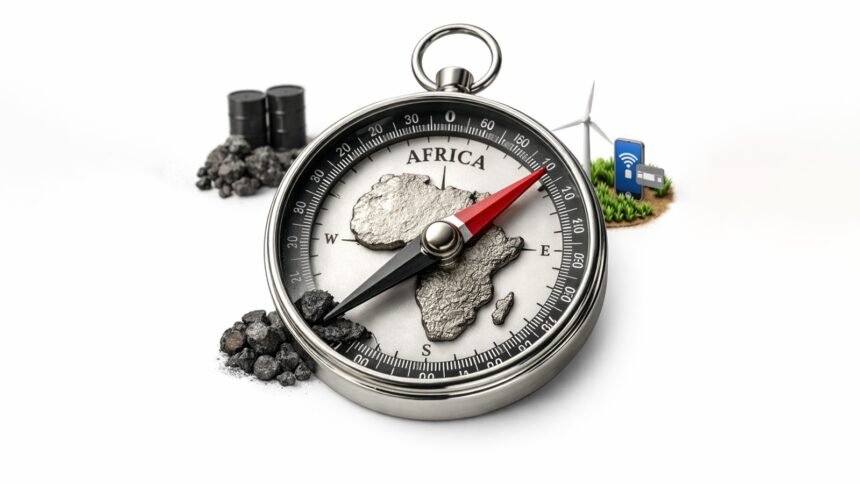
In Africa’s vast economic landscape, investment flows have emerged as pivotal forces shaping continental progress. As 2025 draws to a close, the continent stands at a crossroads of resilience and reinvention, with foreign direct investment surging to unprecedented levels amid global uncertainties. This analysis examines the multifaceted dynamics of investment in Africa, weaving historical threads with contemporary trends to illuminate leading sectors in 2025 and their anticipated evolution through 2026. Drawing from a panoramic view of economic indicators, policy frameworks, and market forces, it underscores Africa’s potential as a beacon of growth, while acknowledging the intricate interplay of opportunities and obstacles.
Pan-African Economic Foundations: Tracing Investment Legacies
The narrative of investment in Africa is deeply intertwined with its historical evolution, from colonial exploitation to post-independence aspirations for self-reliance. During the colonial era, foreign capital predominantly targeted extractive industries, channeling resources outward and perpetuating economic extraversion. Post-colonial ideologies often viewed external investment with skepticism, associating it with neocolonial control, which led to policies favoring state-led development and limiting private inflows. By the late 20th century, structural adjustments and liberalization facilitated renewed engagement, though unevenly distributed.
The early 21st century marked a turning point, with investment diversifying beyond traditional commodities. A decade ago, in 2015, inflows were heavily concentrated in hydrocarbons, mining, and basic infrastructure, reflecting a commodity-driven boom amid high global prices. This era saw annual FDI averaging around $50 billion, often funneled into large-scale projects with limited local linkages. Fast-forward to 2025, and the landscape has transformed: inflows reached a historic $97 billion in 2024, propelled by a 75 percent increase, signaling a shift toward sustainable and technology-infused sectors. This evolution mirrors broader Pan-African ambitions for inclusive growth, where investments now prioritize value addition and regional integration, setting the stage for a more balanced economic architecture.
Continental Investment Magnets: Premier Nations Driving Capital Inflows
Africa’s investment appeal varies across its diverse nations, with certain economies emerging as frontrunners due to stable governance, strategic reforms, and resource endowments. In 2025, small island nations such as Seychelles and Mauritius ranked highly on attractiveness indices, leveraging high-quality institutions and investor-friendly environments despite their small size. Egypt, with its strategic location and infrastructure megaprojects, attracted substantial inflows, ranking among the top recipients. South Africa, as the continent’s industrial powerhouse, continued to attract capital into advanced manufacturing and services, though domestic challenges tempered this.
Other notable performers included Morocco, Ghana, and Algeria, which benefited from policy reforms and sectoral diversification. East African economies such as Rwanda and Kenya excelled in technology and innovation, while West Africa’s Ivory Coast and East Africa’s Tanzania capitalized on natural resources and trade corridors. Ethiopia’s rapid industrialization and Uganda’s energy developments further highlighted regional hotspots. These nations collectively absorbed over half of continental FDI, underscoring how targeted reforms—such as eased regulations and public-private partnerships—amplify investment magnetism. Looking ahead to 2026, projections indicate sustained leadership from these economies, with East and West Africa accelerating as growth epicenters amid stabilizing currencies and enhanced connectivity.
Sectoral Trade Evolutions: Comparative Dynamics Over a Decade
A decade ago, Africa’s investment profile was dominated by the extractive sectors, with oil and gas accounting for approximately 30 percent of inflows, followed by mining (25 percent) and telecommunications (15 percent). These areas thrived on global demand for raw materials, but often resulted in enclave economies with minimal spillover benefits. By 2025, a paradigm shift is evident: renewable energy has ascended to the forefront, capturing over 25 percent of investments, driven by climate imperatives and Africa’s vast solar and wind potential. Agriculture and agritech follow closely at 20 percent, evolving from subsistence models to tech-enabled value chains. Fintech and digital services account for 18 percent, driven by mobile penetration and financial inclusion needs.
This transition reflects a broader move from resource dependency to diversified, sustainable models. Where 2015 investments emphasized volume extraction, 2025 prioritizes innovation and resilience, with sectors like healthcare and infrastructure gaining traction. The top three now—renewables, agriculture, and fintech—embody Pan-African priorities for energy security, food sovereignty, and economic inclusion, in contrast to the hydrocarbon-heavy focus of earlier periods. This sectoral maturation positions Africa for more equitable growth, with intra-continental trade under frameworks like the African Continental Free Trade Area enhancing cross-border synergies.
Union-Driven Development: African Union’s Catalytic Role in Investments
The African Union has been instrumental in fostering a conducive investment ecosystem, channeling collective efforts toward continental prosperity. Through Agenda 2063, the AU promotes flagship initiatives, such as establishing an African Investment Bank and a Pan-African Stock Exchange, to mobilize domestic capital and reduce reliance on external funding. The AfCFTA’s Investment Protocol is a cornerstone, harmonizing policies to facilitate cross-border flows and protect investors while advancing sustainable development goals.
In 2025, AU-led partnerships, including the African Virtual Investment Platform in collaboration with international partners, have highlighted opportunities in agriculture, infrastructure, and digital economies. Efforts to secure $30 billion for infrastructure underscore a strategic push for public-private collaborations, targeting urban-rural linkages and regional value chains. By addressing fragmentation through unified standards and dispute-resolution mechanisms, the AU not only enhances investor confidence but also aligns investments with the Pan-African ideals of shared growth and integration. These initiatives are poised to amplify in 2026, with accelerated implementation fostering deeper economic ties.
Navigating Economic Challenges: Barriers to Pan-African Investments
Despite promising trajectories, investment in Africa continues to grapple with entrenched hurdles that require nuanced strategies. Infrastructure deficits—ranging from inadequate roads and ports to unreliable power grids—impede scalability, with annual funding gaps exceeding $100 billion. Perceptions of elevated risk, compounded by political instability in regions such as the Sahel and Sudan, deter potential inflows, while currency volatility and debt burdens strain fiscal capacity.
Access to finance remains a bottleneck, particularly for small enterprises, with 32 percent of firms citing it as a significant obstacle. Macroeconomic headwinds, including inflation and commodity price fluctuations, further complicate the landscape. Yet, these challenges are not insurmountable; reforms in governance, digitalization, and regional cooperation offer pathways forward. By addressing these through targeted policies, Africa can transform vulnerabilities into strengths, enhancing its appeal in a competitive global arena.
Trade and Development Prospects: Envisioning 2026 and Beyond
As Africa enters 2026, investment projections paint an optimistic yet pragmatic picture, with growth accelerating to 4.1 percent across the continent, outpacing global averages. East and West Africa are forecast to be hotspots, driven by reforms and resource booms, while intra-continental trade under the AfCFTA could expand by more than 50 percent. The focus on clean energy investments—requiring a doubling in regions such as North Africa—will catalyze sustainable development, alongside fintech innovations that streamline payments.
Emerging trends, such as AI integration in agriculture and infrastructure corridors like Lobito, signal a future of interconnected economies. Challenges such as debt distress may persist, but with sound fiscal management and diversified partnerships, Africa is poised to host half of the world’s fastest-growing economies. This trajectory not only promises dignified job creation but also positions the continent as a pivotal player in global trade, embodying resilient Pan-African development.
Sectoral Investment Spotlights: Dominance in 2025 and 2026 Expectations
In 2025, renewable energy is the premier investment sector, with inflows surging amid global decarbonization efforts. Africa’s untapped potential—encompassing solar farms in the Sahara and wind projects in East Africa—has attracted $41 billion in upstream commitments, fostering energy independence and export capabilities. Agriculture and agritech rank second, with innovations in precision farming and supply chains addressing food security, projected to grow consumer spending to $2.21 trillion by 2029. Fintech completes the triad, revolutionizing inclusion through platforms such as the Pan-African Payment System, thereby enabling seamless cross-border transactions.
For 2026, expectations are buoyant: renewables will expand with geopolitical shifts favoring African minerals, potentially tripling clean energy capacity. Agriculture anticipates broader formalization, boosted by urban-rural synergies and climate-resilient practices. Fintech, meanwhile, is poised to integrate AI to enhance services, supporting SME growth amid rising disposable incomes. These sectors, intertwined with trade liberalization, herald an era of inclusive, innovation-led prosperity in which investment propels Africa toward its Agenda 2063 vision.