





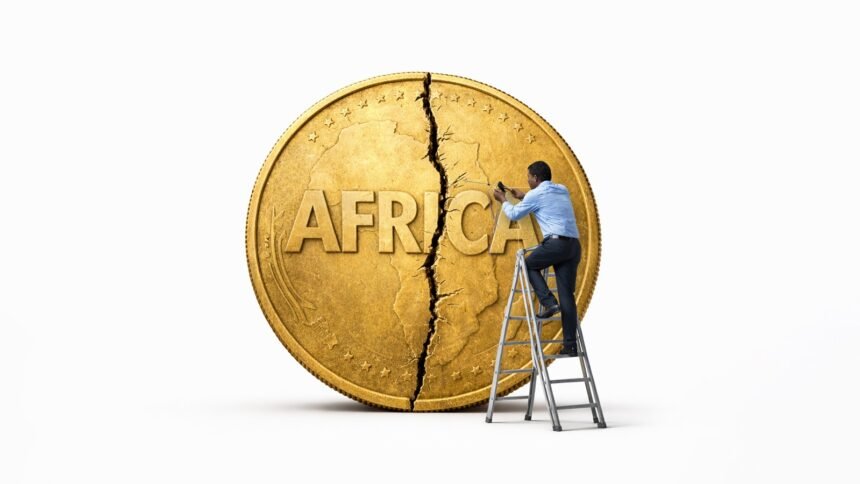
Pan African Foundations: Building Unified Financial Pillars
Across the African continent, monetary reforms are a cornerstone of sustainable development, weaving diverse economies into a tapestry of shared prosperity. The pursuit of economic integration, rooted in post-colonial aspirations for autonomy, gains renewed urgency amid global uncertainties. The African Continental Free Trade Area (AfCFTA) serves as a catalyst, harmonizing fiscal policies to amplify intra-continental trade, projected to surge by 30-40% by 2030. Yet, regional disparities persist: East Africa’s collaborative frameworks contrast with West Africa’s entrenched sub-unions, highlighting the need for tailored approaches.
Historical contexts shape these trajectories. East Africa’s legacy of communal resource sharing fosters gradual convergence, while West Africa’s colonial monetary zones—pegged to external currencies—underscore a push for sovereignty. Both regions grapple with inflation volatility, exchange rate pressures, and debt burdens, with average public debt-to-GDP ratios hovering at 63% across the continent. Reforms prioritize stability: tightening monetary stances to curb inflation, which averaged 18.6% in 2024 but is forecast to dip to 12.6% by 2026. Coordinated policies—blending orthodox tools with fiscal prudence—aim to shield vulnerable populations, ensuring that monetary unity bolsters rather than burdens growth.
This foundation extends to institutional evolution. Central banks adopt inflation-targeting frameworks and digitize operations to enhance transparency. Sovereign wealth funds and pension schemes channel domestic savings into productive sectors, mitigating external shocks. As global aid wanes—declining 9-17% in 2025—Africa’s monetary reforms pivot inward, leveraging remittances and diaspora bonds to fortify reserves. The vision: a resilient Pan-African financial architecture that transforms demographic dividends into economic engines, fostering inclusive expansion across borders.
East Africa Horizons: Charting Collaborative Monetary Paths
In East Africa, monetary reforms are unfolding through incremental harmonization, anchored in the East African Community’s ambitions for a unified currency. The roadmap emphasizes policy alignment, with 2025-2026 budgets allocating resources to enact legislation that is a prerequisite for the East African Monetary Union. Growth projections underscore resilience: the region leads continental forecasts at 5.8% in 2026, propelled by Ethiopia’s 7.2% and Kenya’s 4.8% expansions. Central banks adopt accommodative stances—Kenya’s benchmark rate is expected to ease to 8.5% by late 2025—to stimulate private credit, which is rebounding 5% year-on-year.
Key initiatives include the Cross-Border Payment System Master Plan, modernizing transactions to reduce costs by 15-20%. Ethiopia’s launch of its securities exchange signals deeper financial markets, while Rwanda’s digital platforms facilitate seamless cross-border flows. Inflation moderates to 6-7% regionally, aided by improved weather and supply chain improvements. Yet, challenges loom: fiscal deficits widen to 5.1% of GDP, necessitating prudent borrowing amid the expiration of AGOA, which threatens apparel exports.
Reforms prioritize convergence: harmonizing interest rates and reserves to mitigate asymmetries. Uganda’s liquidity management contains inflation below 5%, supporting the shilling’s stability. Tanzania’s agro-processing investments diversify revenues, cushioning against commodity swings. This collaborative ethos—blending monetary discipline with infrastructure thrusts—positions East Africa as a beacon of integrated growth, where unified policies amplify regional synergies.
West Africa Dynamics: Navigating Sub-Regional Fiscal Frontiers
West Africa’s monetary landscape features established unions such as WAEMU and CEMAC, which peg their currencies to the euro for stability, alongside broader ECOWAS aspirations for the Eco currency by 2027. Reforms accelerate amid volatility: Nigeria’s dual naira devaluations unify exchange rates, with the naira stabilizing at 1,400 per dollar by 2026. Inflation eases from 33% in 2024 to 16.5% regionally, enabling policy easing; Nigeria’s benchmark rate cuts signal an accommodative shift to spur 3.9% growth.
The Presidential Task Force’s reactivation underscores the urgency: convergence criteria require fiscal discipline, with deficits narrowing to 4.1% of GDP. Côte d’Ivoire’s 6.4% expansion exemplifies the benefits—tax reforms attract investment, bolstering reserves to $45 billion across the continent. Ghana’s positive developments include debt restructuring, while Senegal’s oil production boosts 6% growth. Inflation disparities persist: WAEMU’s stable 4-5% contrasts Nigeria’s double-digit pressures, addressed via recapitalization and FX liquidity enhancements.
Challenges include aid cuts and trade tensions, prompting diversification. Remittances, at $91 billion in 2023, bolster buffers, but debt service absorbs 15% of revenue. Reforms emphasize digital revenue collection and pro-poor measures to cushion low-income households. This dynamic blend—sub-regional pegs with union ambitions—fosters resilience, transforming monetary tools into drivers of equitable expansion.
Monetary Reforms Mosaic: Strategies Across Regions
Monetary reforms in East and West Africa diverge in scope yet converge on stability goals. East Africa’s strategy emphasizes gradual integration: the EAC framework coordinates policies to reduce inflation through targeted rate adjustments. Kenya’s 5% private credit rebound contrasts with West Africa’s aggressive overhauls—Nigeria’s naira unification curbs parallel markets, while WAEMU’s euro peg ensures low volatility. Both deploy orthodox tools: East’s accommodative easing stimulates demand, West’s tightening combats 21.4% average inflation.
Convergence hurdles highlight differences: East meets fewer criteria due to diverse structures, while West’s sub-unions achieve stability but struggle with broader alignment—digital innovations bridge gaps—East’s payment master plan versus West’s treasury controls. Fiscal-monetary coordination remains key: East’s 4.9% deficit target balances growth, while West’s 4.5% projections prioritize debt sustainability. External shocks amplify reforms: AGOA’s lapse prompts diversification, with the East rerouting exports regionally and the West leveraging oil rebounds.
This mosaic reveals adaptive strategies: East’s collaborative harmonization fosters long-term unity, West’s bold interventions address immediate imbalances. Unified approaches—enhancing reserves, curbing deficits—promise enhanced transmission, turning reforms into catalysts for robust, inclusive trajectories.
Economic Bedrock: Indicators and Regional Impacts
Economic indicators reflect the bedrock of reforms: East Africa’s 5.3% 2025 growth outpaces the West’s 4.5%, driven by diversified bases—Ethiopia’s infrastructure versus Nigeria’s oil recovery. Inflation metrics diverge: East’s 6.7% forecast by 2029 signals control, West’s 14.9% in 2026 demands vigilance. Reserves bolster stability—East’s digital enhancements boost inflows; West’s remittances mitigate declines in aid.
Impacts manifest unevenly: East’s private consumption buoyancy aids disinflation, West’s fiscal consolidation narrows deficits but strains households. Debt ratios stabilize at 65%, yet West’s commercial burdens heighten risks. Trade dynamics evolve: AfCFTA amplifies intra-flows, with the East’s 7.3% sub-group average contrasting with the West’s convergence challenges. Unemployment pressures persist—youth bulges demand job-rich policies; East’s agro-clusters create opportunities, while West’s energy hubs promise 4-5% growth.
This bedrock underscores the efficacy of reforms: coordinated policies enhance resilience, turning vulnerabilities into strengths. Regional synergies—East’s market integration, West’s monetary anchors—fortify the continent’s 4.3% 2026 projection, embedding sustainable indicators for enduring prosperity.
Development Dawn: Prospects and Policy Imperatives
As dawn breaks on Africa’s development horizon, monetary reforms herald transformative prospects. East Africa’s union trajectory promises 6.1% growth in 2026, unlocking $109 million in budgets for integration. West’s Eco ambitions, reactivated for 2027, could unify 385 million consumers and slash transaction costs by 15-20%. Convergence imperatives demand audacity: East’s skills alignment with employer needs, West’s tax digitization to boost revenues.
Prospects hinge on innovation: blended finance mobilizes $245 billion annually and leverages $6 trillion in natural assets. Debt-for-nature swaps unlock funds, while digital platforms electrify off-grid populations. Challenges—fiscal slippages, climate shocks—necessitate prudence: East’s corridor-led strategies, West’s subsidy reforms. Inclusive policies target youth, women—East’s fintech booms, West’s safety nets—halving poverty by 2035.
This dawn mandates sovereign resolve: deepening the AfCFTA and fortifying institutions. By 2027, unified currencies could increase GDP by 4-5%, creating millions of jobs. Africa’s monetary mosaic, once fragmented, is now converging toward affluence, ushering in an era of self-reliant development.