





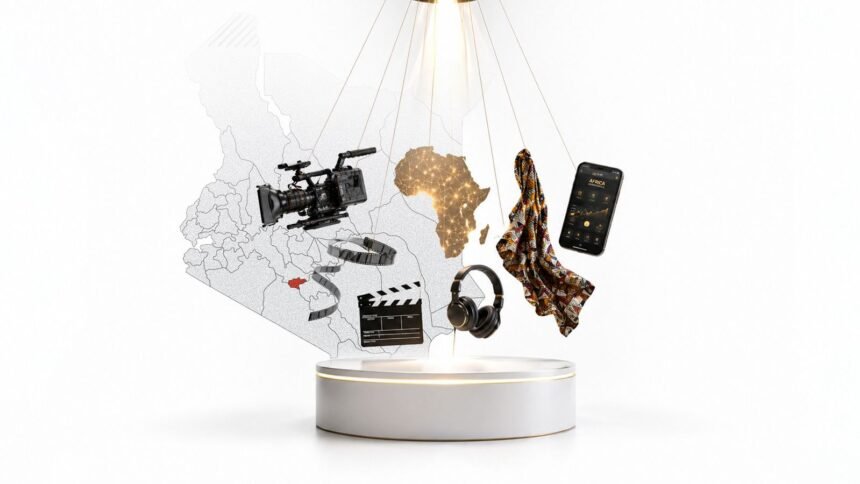
In late May, Nairobi will be asked to do two things at once: host another high-end African summit, and quietly test whether the continent can turn creative and digital energy into real bargaining power. From 20–23 May 2026, the Africa Soft Power Summit will return to the Hyatt Regency Nairobi Westlands, bringing together investors, policymakers, technologists, and cultural leaders from across Africa and its diaspora in the same corridors.
The core program opens on 20 May with a welcome reception and exhibition, moves through the Remarkable African Women’s Leadership (RAW) Conference and the Creative & Innovative Industries Conference, and closes with the Africa Soft Power Gala & Awards, followed by an extended program of side events in the city.
On the surface, this looks familiar: panels, networking rounds, photo calls, carefully lit red carpets.
Organized by the Africa Soft Power Project and now in its seventh edition, the summit advertises itself as a leading platform at the intersection of capital, creativity, technology, and women’s leadership.
Behind that language is a harder ambition: to see whether finance, policy, and infrastructure can be aligned with Africa’s creative and technology ecosystems in ways that strengthen the continent’s economic competitiveness and global influence, rather than letting value leak outwards yet again.
This year’s edition matters because Nairobi 2026 compresses a wider continental struggle into one hotel: how to convert African creativity and innovation into strategic leverage at a time when governments and businesses are trying to diversify growth, negotiate new digital rules, and keep more value on the continent along cultural and technology value chains.
In that sense, the summit is less about another entry on the conference calendar and more about whether African decision-makers can set terms in industries that have so far been defined elsewhere.
The Africa Soft Power Summit 2026 will run from 20–23 May at the Hyatt Regency Nairobi Westlands. Its agenda rests on three main pillars: the RAW Conference, the Creative & Innovative Industries Conference, and the closing Gala & Awards evening.
Together, they are meant to pull policy, investment, women’s leadership, culture, and technology into one conversation, rather than letting each sit in its own silo.The 2026 theme, “Africa’s Compound Interest: Aligning Ecosystems of Finance, Creativity and Human Capital for Growth,” makes the framing explicit. This is not intended as a branding exercise about image or prestige.
It is a forum built around a simple question: can creative industries, digital infrastructure, investment flows, and leadership pipelines reinforce one another strongly enough to shift Africa’s international position?
That question feels more urgent at a moment when global streaming platforms, big tech firms, and multinational brands have deepened their footprint in African markets, often without a commensurate shift in ownership or decision-making power onto the continent.
Nairobi is a deliberate stage for that experiment. Kenya’s capital has become one of Africa’s most visible junctions for mobile money, start-up capital, creative production, and policy experimentation around digital systems.
The same city also carries the frictions that come with that status: uneven access to opportunity, pressure on urban services, and continuing debates about how to balance openness to capital with domestic control over data, platforms, and cultural value. The summit is not arriving in neutral space; it is stepping into a city that already lives many of the contradictions it wants to debate.
Where Soft Power Meets Daily Work
For many people flying into Nairobi, the language of “influence” and “competitiveness” will land in very practical ways. A film producer trying to move African stories into regional or global circulation knows that visibility is governed by platforms, licensing structures, and recommendation systems that are still designed elsewhere.
A fashion entrepreneur with continental ambitions understands that viral recognition does not automatically translate into reliable suppliers, faster payments, or easier regional market access. What reads as soft power in press releases depends, in practice, on hard questions of contracts, logistics, intellectual property, and infrastructure.
The same is true for the technology founders and investors expected to be in the room. The summit’s public framing puts technology and innovation alongside creativity and leadership, and previous editions have leaned into AI, investment, and cross-border opportunity.
For founders working in fintech, digital media, logistics, or creator platforms, the obstacles are well known: fragmented regulations, costly compliance, uneven enforcement of competition rules, and the difficulty of scaling across African markets that are rhetorically integrated but operationally fragmented. The test for Nairobi is whether those issues remain background grumbling or are pulled into a more coordinated agenda.
The RAW Conference adds another layer that is often treated as an afterthought elsewhere. Organizers position women’s leadership not as a symbolic side track, but as part of the institutional architecture required for long-term economic design, capital allocation, and stability.
That matters because board composition, access to finance, leadership pipelines, and workplace conditions all shape which African firms scale, which ideas are backed, and whose authority counts across sectors. If the summit delivers on this front, it will be because women’s leadership is treated as a structural economic question rather than a reputational accessory.
At the same time, the distance between the summit’s rhetoric and the broader ecosystem cannot be ignored. Ticket costs, travel budgets, and a focus on major capitals mean that smaller creative collectives, rural innovators, and micro-enterprises often feel the soft-power agenda only indirectly.
They absorb the impacts of policies and investment flows set in rooms like these without necessarily having a seat at the table. The quietly revealing truth is that soft power becomes real only when it changes the terms of ownership, trade, and value capture, not just the images projected into global feeds.
Fault Lines in the Nairobi Conversation
Several tensions are likely to shape the sharper conversations in Nairobi, even if they never make it into official communiqués. One runs between regulation and flexibility. Investors and business leaders tend to push for streamlined approvals, predictable rules, and strong intellectual property protection as preconditions for growth.
Policymakers, drawing on years of uneven negotiations with larger global firms, are more inclined to emphasize local content requirements, fair taxation, competition safeguards, and protections against platform dominance. The question is not whether regulation matters, but whose interests it ultimately secures, and how coherent those rules can become across borders rather than stopping at each national frontier.
A second fault line cuts through regional integration. The summit brands itself as pan-African, with a broad enough focus to bring in leaders from business, government, technology, and culture across the continent and the diaspora. Yet firms in these sectors still operate in a patchwork of national rules on payments, data protection, content standards, and market access.
Regional bodies may use Nairobi to argue for harmonization, but domestic regulators continue to defend their own thresholds and priorities. For founders and creators, this is not an abstract issue; it is the daily dilemma of trying to build continental strategies in a marketplace that still behaves like a cluster of guarded national compartments.
A third tension sits between inclusion and concentration. The summit’s design highlights women, younger innovators, and creative-industry leadership, and that broad framing is part of what draws attention. But gatherings of this kind are also scrutinized to see whether opportunity and visibility continue to cluster around familiar elites in entertainment, investment, and policy.
Nairobi 2026 will be judged partly on whether smaller markets, second-tier cities, and less glamorous segments of the creative and tech economy find real space on panels, in deal-making, and in awards, not just in the program’s language.
What Comes After the Gala
Publicly, organizers are attempting something more ambitious than another polished conversation about African potential. The summit’s materials emphasize curated networking, ecosystem alignment, and practical intersections between capital providers, creators, technologists, and public actors.
By that measure, success will not be determined by the gala’s production quality alone, but by whether Nairobi delivers concrete follow-through: cross-border co-production deals, new financing mechanisms for creative infrastructure, stronger leadership pipelines, or shared positions on digital and cultural trade that can be carried into future negotiations.
When the summit opens on 20 May, Nairobi will be hosting more than another branded gathering on the African calendar. It will be staging a compact argument about how influence is built, and for whom. The public sessions will speak in the language of opportunity, confidence, and growth. The more consequential conversations, as always, will reevaluate bargaining power, ownership, and who can turn visibility into durable value.
The unresolved question, likely to linger long after the last award is handed out, is whether this seventh edition can help turn Africa’s creative and technological energy into a genuine negotiating asset—or whether the continent’s vibrancy will once again be celebrated without fundamentally shifting who sets the rules and captures the returns.