





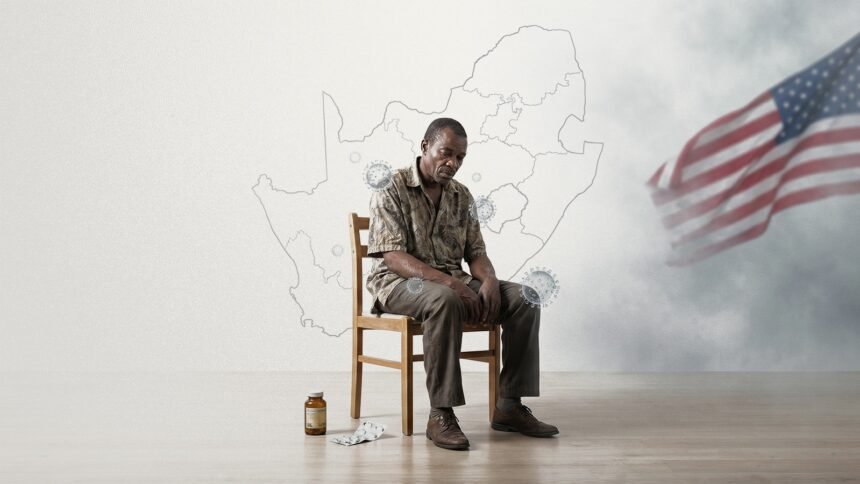
The Pan-African Paradigm of Public Health Sovereignty and Multilateral Dependencies
Across the African landscape, the contemporary configuration of global health diplomacy places intense pressure on developing nations to balance immediate clinical stabilization with long-term macroeconomic and institutional sovereignty. The Pan-African vision for a self-sustaining continent depends fundamentally on the progressive de-linking of baseline medical architectures from external financial centers. When local bio-surveillance systems and human resource pipelines remain dependent on the budgetary decisions of foreign powers, domestic health security becomes vulnerable to external political shocks and changing strategic priorities. Reclaiming Africa’s shared developmental future requires a comprehensive structural shift away from donor-driven financing towards sustainable internal resource mobilization, robust regional regulatory frameworks, and localized pharmaceutical supply chains that protect vulnerable populations without compromising sovereign political independence.
Structural Imbalances and Scale of the Epidemic
The contemporary epidemiological landscape of South Africa is defined by a massive biological burden that continues to heavily strain the country’s public health infrastructure and human capital. Demographic assessments indicate that the republic holds the largest absolute population of individuals living with HIV/AIDS globally, with approximately 8 million people actively carrying the virus. While the state has made substantial progress by establishing extensive local drug programs to produce and distribute antiretroviral therapies, the sheer scale of the patient registry creates ongoing financial and operational strain for national planning ministries. Maintaining continuous treatment pipelines for millions of citizens requires extensive domestic resources, leaving peripheral care networks and public clinical services vulnerable to variations in institutional support and infrastructure funding.
Global Targets and the Vulnerability of Long-Term Progress
The technical coordination of the global response to the epidemic is guided by joint frameworks established between the African Union and the Joint United Nations Program on HIV/AIDS (UNAIDS). These multilateral entities have instituted a formal target to end AIDS as a prominent public health threat by 2030, a directive that has driven considerable progress across the sub-continent. Globally, these combined initiatives have successfully placed 32.1 million out of roughly 40 million people living with the virus on active treatment lines.
However, leadership at UNAIDS, including Executive Director Winnie Byanyima, has strongly cautioned that this structural progress remains highly uneven and fragile. Comprehensive registry data indicate that approximately 9 million people worldwide still lack basic access to life-saving treatment, while 1.2 million individuals were newly infected last year. This ongoing gap demonstrates that any abrupt withdrawal of institutional support risks stalling global containment campaigns and reversing decades of public health investments.
The Phased Drawdown of PEPFAR Allocations
The operational stability of local care delivery networks has been hit by a major financial shock following a significant shift in transatlantic development assistance. In a formal policy declaration, the United States government announced its decision to initiate a phased drawdown of the President’s Emergency Plan for AIDS Relief (PEPFAR) in South Africa. Historically, the American program functioned as a major external funding pillar for the republic’s broader public health response, injecting over $400 million annually into the national framework and covering the direct salaries of approximately 15,000 local health workers.
The sudden removal of this transatlantic capital, which accounted for up to 17% of South Africa’s aggregate HIV funding pool, threatens the continuity of baseline services. Public health monitors warn that losing PEPFAR support will lead to an immediate shortage of trained community health workers, compromising testing, contact tracing, and localized counseling networks.
Conditionality Frameworks and Sovereign Policy Friction
The strategic rationale for suspending PEPFAR funds highlights the complex intersection of international health assistance, geopolitical conditionality, and state sovereignty. The U.S. State Department justified the funding drawdown by citing Pretoria’s failure to make demonstrable progress on specific policy requests issued by the American administration, arguing that as a middle-income country, South Africa possesses the fiscal capacity to support its own medical initiatives.
However, diplomatic disclosures indicate that the funding cut serves as a direct response to Pretoria’s resistance to specific Washington demands. These friction points include demands that South Africa scale back its strategic economic and diplomatic partnership with Iran, dismantle its domestic Black Economic Empowerment policies, and legally suppress controversial anti-apartheid political chants such as “Kill the Boer”. This policy standoff demonstrates how external global aid programs can be used as leverage to influence domestic laws and foreign policy alignments, creating sharp tension between international health funding and national self-determination.
Sub-Regional Cascades and Early Signs of Reversal
The financial contractions affecting South Africa carry immediate, negative implications for the broader Southern African Development Community (SADC) corridor, where high epidemiological connectivity means localized disruptions can cause sub-regional spikes in transmission. UNAIDS field monitoring has already identified early signs of structural reversal across several high-burden zones.
Due to the broader drop in development assistance from traditional donors in Europe and North America, basic diagnostic and prevention services are facing severe disruptions. Regional surveys show that HIV testing rates in highly vulnerable zones have dropped by 22%, while some sectors have registered an alarming 90% decline in condom distribution networks. This sharp decline in preventive services threatens to reverse long-term downward transmission trends, creating a serious risk of a major rebound in new infections across shared-border sub-regions.
Protecting Vulnerable Demographics from Abrupt Transitions
The sudden withdrawal of external capital allocations from the South African public health matrix presents a major challenge to human rights and clinical ethics. Multilateral legal conventions establish that access to life-saving medical care is a fundamental human right that should not be subject to changing geopolitical calculations or diplomatic standoffs.
UNAIDS leadership has emphasized that while transition plans to shift funding responsibilities to middle-income states are necessary, abrupt financial cuts without a planned transition directly threaten the lives of the most vulnerable populations. When clinical personnel are laid off, and local tracking networks are dismantled due to international political disputes, the resulting gaps in care violate the rights of patients who depend on continuous institutional support to survive, transforming public health into an asymmetric political tool.
Reengineering Internal Resource Mobilization and Structural Transitions
The path forward for South Africa and the wider pan-African public health network requires an immediate transition away from external dependencies toward sustainable, self-determining financial models. To address the current funding gap and insulate the national care system from foreign policy shocks, South Africa’s Ministry of Finance and the National Department of Health must prioritize reallocating domestic tax revenues to cover the salaries of the 15,000 healthcare workers previously funded by PEPFAR. Furthermore, the state must expand public-private partnerships to incentivize domestic pharmaceutical manufacturing of antiretroviral drugs, lowering import costs and maximizing regional supply security.
On the multilateral front, the African Union must accelerate the operationalization of the African Medicines Agency and create continental health emergency funds, ensuring that future transitions are planned, gradual, and guided by medical science rather than external political demands. Success will ultimately be measured by the continent’s capacity to protect its citizens independently, securing a stable, healthy, and sovereign future for the global republic.