




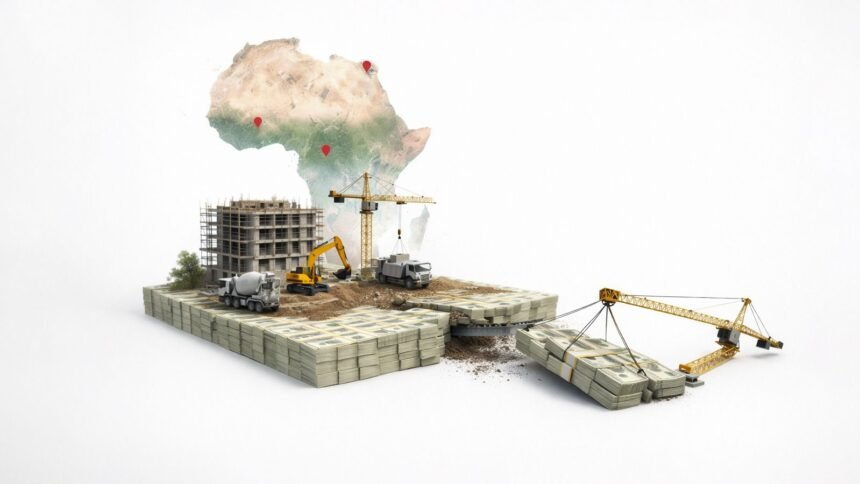
It is the kind of figure that makes even veteran finance ministers fall silent. In 2026, African governments will have to repay more than 90 billion dollars in hard‑currency external debt, a record sum that is already reshaping budgets from Cairo to Lagos.
The number is more than three times what the continent owed in 2012, and it comes due at a moment when interest rates remain high, and growth alone cannot outrun the bill.
Behind that abstract total sit very concrete dilemmas: which hospital upgrades get delayed, which flood‑protection project is shelved, which teacher‑training program is quietly downsized so that bonds can be honored on time.
Africa is heading into what one analysis calls “a difficult year on the debt front”, and the true cost will be measured in foregone resilience, not just missed fiscal targets.
Background and Stakes
S&P Global Ratings estimates that external debt repayments by African states will exceed 90 billion dollars in 2026, most of it denominated in foreign currencies like the dollar and the euro.
Egypt alone accounts for nearly one‑third of the amount due, with about 27 billion dollars in principal repayments.
At the same time, Angola, South Africa, and Nigeria face some of the heaviest remaining maturities. These obligations arrive on top of already‑high domestic debt and, in many countries, chronically weak and narrow tax bases.
At the same time, countries are not just repaying; they are still borrowing. A separate S&P assessment released in March projects that African sovereigns will raise about 155 billion dollars in long‑term commercial debt in 2026, up from 140 billion in 2025, largely to refinance maturing obligations and plug persistent budget gaps.
By year’s end, total sovereign commercial debt is expected to top 1.2 trillion dollars, roughly 45 percent of the continent’s economic output. Analysts describe this less as a temporary spike than as a structural pattern: refinancing old debt while taking on new loans to keep basic state functions running.
For now, global financial conditions have eased just enough to let some African issuers return to markets, sometimes at yields that would be unthinkable in richer economies. Others lean harder on multilateral lenders and creative financing structures.
None of these options, on their own, resolves the basic arithmetic of a continent whose external repayments are nearing a peak just as demands for climate and development spending intensify.
Human Stories and Real‑world Examples
The headline numbers can obscure how unevenly this pressure is felt. Egypt’s outsized 2026 bill, for instance, reflects years of heavy hard‑currency borrowing to finance infrastructure and stabilize public finances.
In Angola and Nigeria, oil price swings and currency volatility magnify the pain of repaying in dollars when local revenues are earned in weaker currencies. For finance officials there, each lurch in the exchange rate can alter the feasibility of a school‑feeding program or an urban rail extension.
Ordinary citizens experience the debt crunch indirectly, through spending choices. Climate‑vulnerable communities in the Sahel or along Africa’s coasts need multi‑year investment in adaptation, from early‑warning systems to resilient roads and housing.
But as one report on Africa’s “vicious cycle of debt and climate change” notes, higher debt‑service costs raise the cost of capital for these projects, leaving “less fiscal room to invest in adaptation and resilience” and heightening exposure to future shocks.
In effect, every extra dollar paid to creditors is a dollar not spent shoring up defenses against the next flood, drought, or heatwave.
Think of a coastal city weighing whether to reinforce its drainage system ahead of projected sea‑level rise. The technical case is clear; the financing case is not. When external repayments are fixed and urgent, investment timelines stretch, and residents are left to improvise their own protections with sandbags and makeshift barriers, hoping that the next storm does not come before the next budget cycle.
Policy, Debate, and Expert Views
The politics of this moment are not lost on African leaders or their partners. An analysis by the Atlantic Council warns that Africa enters 2026 “facing a debt crisis,” trapped in a cycle where external shocks and domestic constraints force higher spending despite low revenues, prompting more borrowing on worse terms.
That cycle, the authors argue, cannot be broken by fiscal belt‑tightening alone; it requires rethinking how the global system helps refinance and restructure debt before crises become unmanageable.
Multilateral forums have started to acknowledge the problem. The G20’s focus on debt sustainability, including a high‑level dialogue with African officials, has yielded proposals ranging from a “borrower’s club” to experiments with rechanneling Special Drawing Rights.
Yet the main mechanism for dealing with distressed sovereigns, the Common Framework, is widely criticized for being too slow and ill‑suited to a world in which China and private bondholders hold large chunks of African debt. For countries staring at 2026 maturities, the calendar moves faster than the reforms.
Climate advocates add another layer of concern. Africa’s resilience plans, they note, depend on multi‑year financing flows at scale, exactly the kind of predictable, low‑cost capital that is hardest to secure when ratings are fragile and debt‑service ratios are high.
Even as global climate diplomacy inches toward higher targets for adaptation and loss‑and‑damage funding, the sums on offer remain a fraction of what African planners say they need.
In that gap between ambition and reality, debt service often takes precedence, not because leaders do not grasp the climate threat, but because default would trigger its own cascade of costs.
There are, however, ideas on the table. Economists and African officials have proposed expanding the use of debt‑for‑climate and debt‑for‑nature swaps, creating regional refinancing facilities, and strengthening domestic revenue systems to ease reliance on hard‑currency borrowing.
None is a silver bullet. But together, they point toward a simple premise: Africa’s path to climate‑safe development will be determined as much in bond markets and debt negotiations as in climate summits.
The looming 90‑billion‑dollar repayment wall makes that premise impossible to ignore. The question for 2026, and for the partners who say they want a more resilient, prosperous Africa, is whether they will help build a different kind of wall in time, one that keeps climate shocks and social instability at bay instead of locking scarce resources into the past.