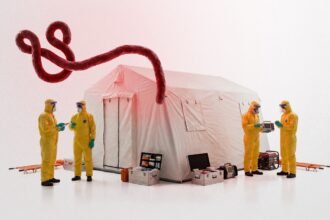






Pan African: The Institutional Imperative for Continental Biosecurity
Across the African landscape, the consolidation of public health frameworks is a defining pillar of the continent’s collective security and sovereign development. The Pan-African vision for the 21st century emphasizes that biological threats are not merely localized medical crises but systemic risks that threaten regional integration, cross-border trade, and human development. In an increasingly interconnected continent, an outbreak in an isolated rural zone can rapidly transition into a transnational health emergency. Reclaiming the future of continental biosecurity requires a unified move away from fragmented, aid-dependent health interventions toward a resilient, continent-wide surveillance and response architecture that prioritizes African-led solutions and structural self-reliance.
DRC’s Health Systems Outlook: Navigating the Intersection of Conflict and Contagion
The health systems outlook for the Democratic Republic of Congo is fundamentally defined by structural vulnerabilities that severely compromise the nation’s capacity to contain epidemics rapidly. In 2026, the country is grappling with its 17th recorded Ebola outbreak, an emergency concentrated in the conflict-hit northeastern province of Ituri. The operational capacity of local clinics is heavily constrained by decades of systemic underinvestment, a reality further exacerbated by active regional conflicts that displace populations and destroy medical infrastructure. This precarious environment ensures that even when outbreaks are identified, the state’s healthcare network is immediately overwhelmed, struggling to deploy the basic personnel, materials, and transport systems necessary to secure a stable and healthy populace.
What’s Ebola?: The Biological Dynamics of the Bundibugyo Strain
Ebola Virus Disease is a severe, often fatal illness in humans caused by infection with a virus belonging to the Filoviridae family. The current public health emergency in the northeast involves the rare Bundibugyo strain, a variant of the virus that presents distinct diagnostic and therapeutic challenges. Transmitted to people from wild animals and subsequently spread through human-to-human contact via bodily fluids, the disease causes severe hemorrhagic fever, systemic organ failure, and high mortality rates. The Bundibugyo strain is particularly dangerous because it can circulate undetected for weeks due to its rarity and overlapping symptom profiles with other endemic tropical diseases. Furthermore, there are currently no approved virus-specific therapeutics for this specific strain, rendering medical interventions primarily palliative, centered on strict isolation, aggressive oral or intravenous rehydration, and symptom-specific pain management.
CDC-WHO Efforts: The Limitations and Realities of Multilateral Intervention
The international response to the current outbreak involves high-level coordination among global bodies, including the World Health Organization, which declared the situation a Public Health Emergency of International Concern on May 16, 2026. Multilateral interventions have focused on mobilizing emergency resources, including airlifting tons of medical supplies to affected zones. Additionally, bilateral support has led to commitments for rapidly deployable treatment clinics to strengthen the regional response. However, these international efforts frequently face significant operational constraints on the ground. The vast and difficult terrain of the Congo, coupled with regional insecurity, restricts the velocity at which these resources can be deployed, demonstrating that top-down international funding cannot fully substitute for the absence of pre-existing, robust domestic health infrastructure.
First Responders & Underfunding: The High Cost of the Foreign Assistance Vacuum
The operational reality for first responders on the front lines of the epidemic is characterized by a stark and dangerous deficit of essential medical assets. Local healthcare workers are forced to manage suspected cases without access to basic protective equipment, including face masks, gloves, and thermometers. This severe material scarcity is directly tied to a broader funding vacuum, highlighted by recent cuts in foreign assistance and the dismantling of major international development agencies last year. Consequently, local non-governmental organizations and community clinics have been forced to exhaust their highly limited contingency stocks to maintain basic triage operations. This underfunding not only slows down the immediate medical response but cripples active contact tracing, as workers lack the motorbikes needed to navigate the remote terrains to track and isolate potential exposures.
Health Promotion & Awareness: Behavioral Mitigation in the Virtual Age
Mitigating viral transmission depends heavily on community-led health promotion and the rapid dissemination of accurate health advisories. In the current crisis, public awareness campaigns utilize local radio networks and digital platforms to educate communities on symptoms and prevention methods. The installation of public hand-washing stations in urban centers, transport hubs, and marketplaces is a vital physical intervention to interrupt transmission pathways. However, successful behavioral modification requires overcoming deep-seated civic mistrust of state-mandated health regulations, which can occasionally restrict movement or access to public and financial institutions. Reclaiming public trust involves working directly with local civil society leaders to ensure that sanitary protocols are viewed not as punitive restrictions, but as essential, community-owned instruments for collective survival.
Trial Vaccines: The Frontier of Preventive Immunology
The long-term containment of recurrent filovirus outbreaks rests on the development and deployment of effective preventive immunology. While highly successful vaccines exist for the Zaire strain of Ebola, the scientific frontier for the Bundibugyo strain remains limited, with candidate vaccines still largely stuck in trial and experimental phases. The lack of a readily deployable vaccine stockpile for this rare variant severely limits the preventive toolkit available to epidemiologists, preventing the execution of “ring vaccination” strategies that are critical for cutting off transmission chains around active clusters. The current crisis highlights the urgent need for global and continental research partnerships to accelerate clinical trials and establish sovereign vaccine manufacturing capabilities within Africa, ensuring that the continent is immunologically fortified against all strains of emerging pathogens before they escalate into catastrophic epidemics.