





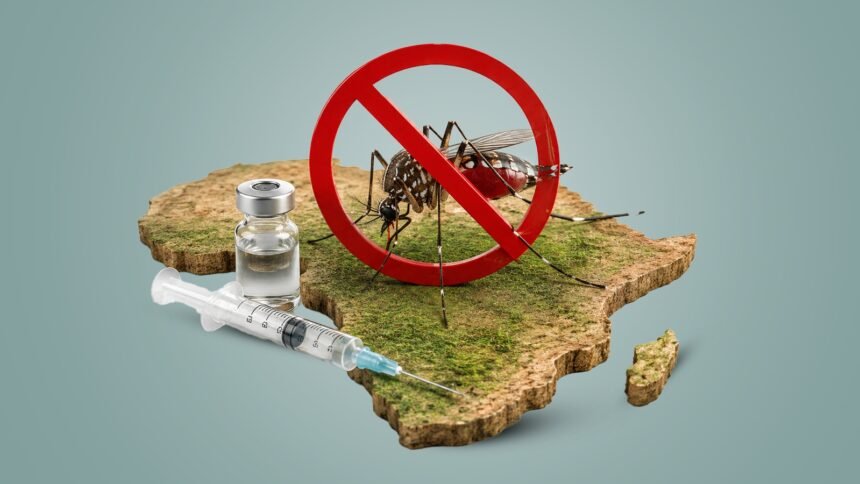
Pan-African Health Autonomy: Breaking the Cycle of Biological Vulnerability
Across the African landscape, the contemporary configuration of public health serves as a primary metric of sovereign stability and continental self-determination. For decades, sub-Saharan Africa has borne an asymmetric burden of vector-borne illnesses, where the persistent transmission of endemic pathogens has drained national productivity and strained local health systems. The Pan-African vision for the late 2020s recognizes that sustainable development cannot be achieved. At the same time, peripheral states remain structurally dependent on the shifting political priorities and volatile financial contributions of foreign powers. Achieving true epidemiological sovereignty requires transitioning away from short-term, externalized crisis management toward an indigenous, continent-wide manufacturing and distribution network for life-saving countermeasures, ensuring that the protection of African citizens is permanently anchored in regional leadership.
The Continental Burden: The Macroeconomic and Human Toll of the Vector
The contemporary public health landscape in Africa remains deeply challenged by the relentless transmission of the malaria parasite, which continues to function as a primary barrier to economic and human development. Despite decades of conventional interventions, including the widespread deployment of insecticide-treated bed nets and indoor residual spraying, the disease continues to exact a heavy toll on the labor force, particularly in the agrarian and informal sectors. The disease creates a recursive poverty trap, where families exhaust their limited fiscal reserves on treatment while missing vital productive cycles. This systemic drain on human capital is worsened during periods of global supply chain disruptions, proving that relying solely on environmental containment is insufficient to shield vulnerable populations from a highly adaptable biological threat.
Immunological Horizons: The Transition from Chemical Suppression to Preventive Cures
The strategic orientation of continental disease control has entered a historic phase, marked by a decisive shift from temporary chemical suppression toward permanent immunological prevention. The rollout of novel, high-efficiency malaria vaccines represents a monumental breakthrough in global health technology, offering a proactive shield capable of interrupting transmission chains before they reach vulnerable hosts. Unlike traditional treatments that only manage active infections after pathology has initiated, advanced immunization protocols prime the human immune system to neutralize the parasite at the pre-erythrocytic stage. Integrating these vaccines into routine childhood immunization schedules provides a sustainable mechanism to build herd resilience, radically reducing child mortality rates and easing the structural pressure on overextended rural clinics.
Multilateral Synchronization: Harmonizing Global Policy and Regional Delivery
The structural deployment of these advanced medical tools requires an intricate, high-level synchronization between continental governing bodies and international public health organizations. Under the strategic guidance of the African Union and the World Health Organization, regional health ministries have sought to integrate malaria immunization into their broader universal healthcare roadmaps. These multilateral frameworks focus on mapping high-transmission corridors, harmonizing cross-border regulatory approvals, and ensuring that technical data flows seamlessly between local research centers and global policy setters. However, the practical implementation of these international mandates frequently faces significant operational challenges, as weak cold-chain logistics and administrative bottlenecks at transit hubs can delay the delivery of specialized materials to the frontlines of exposure.
Alliance Logistics: Navigating Capital Allocation and External Conditions
The global distribution of capital needed to sustain these mass immunization campaigns is heavily shaped by the strategic actions of major financing institutions, most notably Gavi, the Vaccine Alliance. In mid-2026, Gavi’s downstream operations are caught in a complex geopolitical matrix, following a series of funding stand-offs with international donors. The alliance has been working to unlock $600 million in restored congressional funding from the United States, which American health authorities had temporarily withheld due to disputes over vaccine preservation standards. To secure these vital resources, Gavi has agreed to accelerate a planned portfolio shift toward newer meningitis and hexavalent vaccines that completely phase out the mercury-based preservative thimerosal, illustrating how international financing is frequently intertwined with the legislative and regulatory shifts of external superpowers.
Financial Deficits: Bridging the Structural Funding Chasm
The temporary resolution of the transatlantic funding stand-off highlights a deeper, structural vulnerability within global development finance: the persistent reality of multi-billion-dollar budget shortfalls. Before securing the restored American capital, Gavi had documented a massive $1.9 billion funding chasm for its 2026–2030 strategic cycle, a deficit that threatened to severely restrict access to new malaria vaccines for millions of children across sub-Saharan Africa. When international funding pools contract, the immediate consequences are felt on the ground, disrupting preventive campaigns for concurrent outbreaks like cholera and depleting global vaccine stockpiles. This persistent financial instability demonstrates the limits of a global health architecture that relies on unpredictable foreign appropriations, underscoring the urgent need for African states to develop domestic, self-sustaining healthcare financing mechanisms.
Countering Resistance: Neutralizing Infodemics and Restoring Public Trust
The ultimate efficacy of advanced public health interventions depends entirely on the successful management of the information environment and the systematic elimination of medical disinformation. For decades, anti-vaccine groups have aggressively promoted unscientific claims linking safe chemical preservatives to neurodevelopmental disorders, exploiting historical grievances to foster deep-seated civic mistrust regarding state-sponsored health initiatives. This information warfare has created a dangerous secondary challenge for health administrators, where digital disinformation campaigns can depress vaccine acceptance rates even when life-saving materials are physically accessible. Overcoming this resistance requires local authorities to execute transparent health promotion, collaborating directly with trusted community networks, local languages, and civil society organizations to rebuild public trust and ensure that scientific progress is not neutralized by populist skepticism.
Safeguarding Tomorrow: Cultivating a Self-Sustaining Future Generation
The long-term success of contemporary immunization campaigns will ultimately be measured by the structural resilience and productivity of future generations in Africa. By systematically deploying advanced malaria vaccines alongside robust domestic health systems, the continent can insulate its youth from a historic cause of cognitive and physical developmental delays. Protecting the next generation from the chronic drain of vector-borne illnesses is a foundational requirement to unlock Africa’s demographic dividend, ensuring that the youth can fully participate in advanced education, technological innovation, and economic construction. Success will be defined by African states’ capacity to transform current public health interventions into a permanent foundation for human dignity, securing a vibrant, healthy, and fully self-determining future for the entire continent.