



Pan-African Mobilization and Somatic Decolonization
Across the African landscape, the contemporary configuration of political self-determination relies heavily on the historical memory of popular resistance against structural oppression. The Pan-African ideal of complete liberation goes far beyond the mere reclamation of statutory borders; it demands the total dismantling of legacy systems that institutionalize human inequality. Throughout the twentieth century, anti-colonial movements demonstrated that state power cannot indefinitely suppress a population’s collective desire for dignity. Reclaiming the continent’s shared future requires an active engagement with past revolutionary moments, translating the lessons of historical grassroots struggles into robust frameworks of modern civic governance that prioritize human security and institutional accountability over elite insulation.
South Africa’s Contemporary Democratic Fabric and Institutional Memory
The contemporary political landscape in South Africa is deeply shaped by an intense struggle to balance its revolutionary legacy with acute modern socio-economic pressures. Decades after its democratic transition, the republic operates under a complex social contract continually tested by structural constraints, including high youth unemployment and deep-seated income disparities. In this environment, the institutional memory of the liberation struggle serves as a vital source of political legitimacy and national identity. The state’s public policy priorities are frequently evaluated against the foundational promises of the democratic breakthrough, making the preservation of revolutionary history a central element in maintaining domestic stability and citizen trust across the nation’s provinces.
Soweto Uprising Remembrance: The 50-Year Echo of Resistance
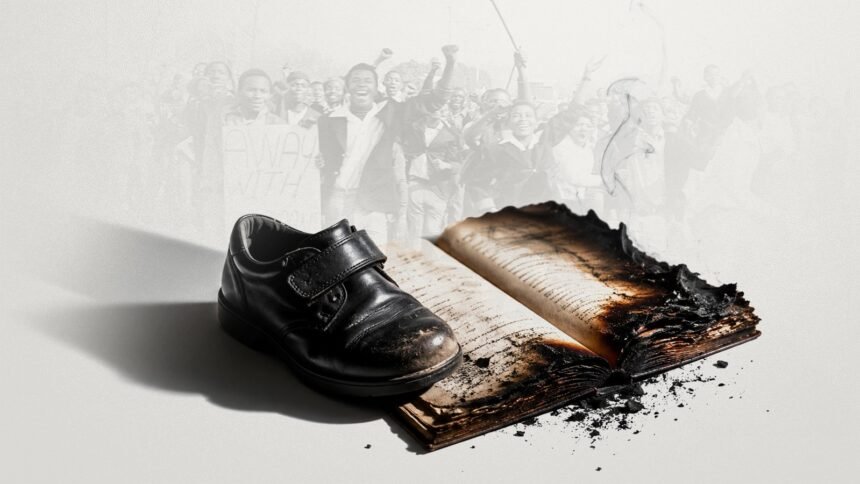
The historical evolution of South Africa’s liberation struggle reached an absolute turning point on 16 June 1976 in the sprawling Johannesburg township of Soweto, an historic moment whose profound aftermath is vividly remembered exactly 50 years later in mid-June 2026. What began as a peaceful march organized by student leaders from high schools across the township rapidly transformed into a site of state-sponsored devastation. Thousands of pupils marching toward Orlando Stadium to protest the compulsory use of Afrikaans in schools were met by a barricade of anti-riot police who deployed teargas, attack dogs, and live ammunition. The ensuing violence resulted in an unconfirmed death toll that some historical resources place at more than 200 individuals on that single day, including young casualties like 15-year-old Hastings Ndlovu and 12-year-old Hector Pieterson, whose bloodied body became the permanent symbol of the uprising.
Apartheid & Colonialism: The Structural Violence of Bantu Education
The mass demonstration in Soweto was a direct response to the oppressive structural architecture of the white minority supremacist government. The immediate trigger was the state’s aggressive imposition of Afrikaans as a compulsory medium of school instruction, forcing an under-resourced teaching corps and an unwilling student population to adopt the language of the oppressor. Beyond the immediate linguistic grievance, the youth were fundamentally revolting against the deliberately substandard Bantu education system, a racist policy explicitly designed by the apartheid regime to keep Black South Africans in a permanent status of second-class citizenship and restricted economic utility. This systematic denial of intellectual development exposed the true, violent nature of colonial governance, transforming local classrooms into frontline spaces of anti-apartheid resistance.
African Solidarity: Exilic Networks and the Armed Resistance
The brutal suppression of the Soweto youth triggered an immediate wave of international condemnation and consolidated pan-African solidarity across the continent’s borders. In the months following the uprising, as civil unrest spread to other peripheral townships and government buildings were targeted, the entire apartheid system was effectively put on trial before the global community. The crisis created a massive new generation of anti-apartheid activists, reviving a domestic struggle that had stalled after the imprisonment of senior leadership in 1964. Thousands of students fled the country to escape police sweeps, crossing porous borders to join uMkhonto we Sizwe, the armed wing of the African National Congress in exile, which operated secure training camps and diplomatic missions across supportive front-line states.
Students & Youth as Revolution Pillars: The Generational Cost of Liberation
The historical legacy of the 1976 uprising proves that organized youth networks function as primary pillars of revolutionary transformation, though often at a devastating personal and generational cost. Young organizers faced severe state retaliation; many were swept into the prison system, experiencing months of freezing solitary confinement, continuous physical assaults, and psychological torture designed to break their resolve. Activists like Sibongile Mkhabela, an 18-year-old organizer at Naledi High School, endured multiple detentions and lengthy isolation cells. In contrast, others like Oupa Moloto suffered severe long-term trauma, paranoia, and physical ailments stemming from state-sponsored kidnapping and torture. Even those who successfully escaped into exile, such as Kingsley Mamabolo, spent decades surviving as refugees on basic food rations while representing the liberation movement in Cuba, Mozambique, Tanzania, and Zimbabwe, highlighting the profound personal sacrifices required to secure national liberation.
South Africa-SADC Relations: Regional Security and the Post-Liberation Matrix
The strategic consequences of South Africa’s internal liberation struggle have fundamentally reshaped the country’s modern diplomatic relations within the Southern African Development Community (SADC). During the anti-apartheid era, neighboring frontline states provided vital sanctuary and logistics networks for exiled South African freedom fighters, enduring direct military cross-border raids and economic sabotage from the Pretoria regime as a price for their pan-African alignment. In the contemporary era, this historical debt influences regional diplomacy, anchoring South Africa’s role as a primary stabilizer and economic driver within SADC. Protecting this shared borderland requires modern states to coordinate closely on regional safety and trade integration, ensuring that the collective security frameworks forged during the liberation struggle are maintained against contemporary irregular challenges.
Recent Developments: The Living Reality of Intergenerational Trauma
The contemporary remembrance of the Soweto uprising reveals that the historical events of 1976 remain a living, breathing reality rather than a closed chapter in academic textbooks. Fifty years after the initial gunfire, the physical and psychological remnants of apartheid brutality continue to shape the lives of survivors and their families within local communities. At dedicated memorial sites across the country, descendants and primary carers manage the severe, long-term post-traumatic stress disorder and physical ailments afflicting aging veterans. This continuous presence of intergenerational trauma emphasizes that true national reconciliation requires sustained public investment in specialized mental health support, transparent historical documentation, and the preservation of independent civic spaces, ensuring a dignified, just, and completely self-determining future for the republic.