





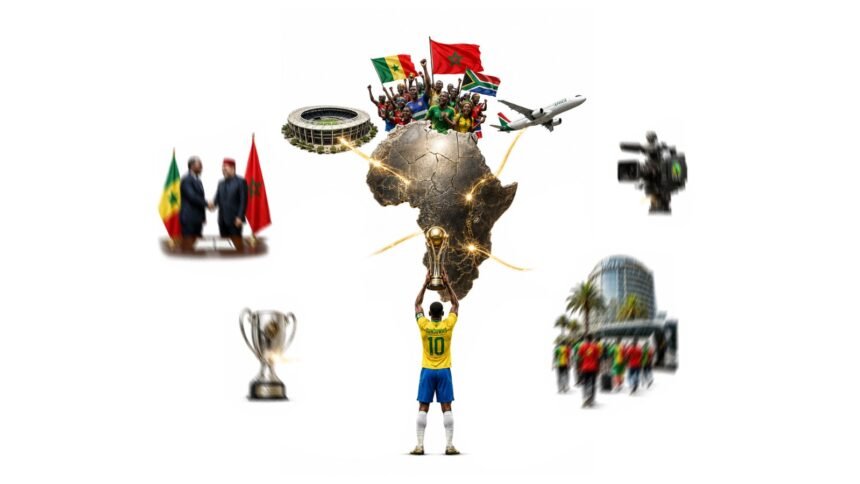
Pan African: The Kinetic Landscape of Continental Integration
Across the African landscape, the structural evolution of professional football has transcended the boundaries of sport, becoming a primary engine of the broader Pan-African agenda. The pursuit of sporting excellence functions as a dynamic instrument of cultural diplomacy and soft power, positioning the continent as an indispensable pillar of the modern international order. In an era increasingly defined by multipolar alignments and the reassertion of sovereign identity, the governance of the African game serves as a critical theater for demonstrating administrative autonomy and institutional resilience. By engineering world-class competitive structures and reclaiming control over local talent pipelines, continental footballing bodies are demonstrating that African agency can successfully challenge historic global hierarchies, turning the pitch into a vital frontier for continental self-determination and collective pride.
Africa & Football: The Political Economy of Performance Industrialization
The contemporary landscape of African football is characterized by a decisive transition away from traditional primary talent exportation toward a model of domestic performance industrialization. For decades, the continent’s elite athletes were forced to seek athletic and commercial validation within the metropoles of Western Europe. However, the current era is defined by the emergence of high-capacity domestic clubs and a professionalized corporate ecosystem that drives significant national revenue through broadcasting rights, global sponsorships, and localized sports commerce. This industrialization supports millions of youth livelihoods, transforming a historical drain of human capital into a sustainable domestic asset. While systemic hurdles such as macroeconomic volatility and uneven infrastructural financing persist, the sports sector has solidified its position as a high-growth component of the continental creative and service economies.
AFCON & Morocco-Senegal Dispute: Navigating the Politics of Stadium Security
The delicate balance between competitive passion and diplomatic stability underwent a rigorous structural test during the recent African Cup of Nations (AFCON) cycle, highlighting the complex intersection of sports governance and transnational law enforcement. Following intense matches, severe communal friction resulted in the arrest and conviction of a significant group of visiting Senegal supporters on charges of stadium hooliganism within Morocco. This incident threatened to create a prolonged diplomatic standoff, casting a shadow over the historic bilateral relations between two of the continent’s primary footballing anchors. The situation required a high-level intervention of sovereign diplomacy rather than standard judicial processing; in a decisive gesture aimed at preserving the spirit of continental brotherhood, the Moroccan monarch issued a formal royal pardon to the convicted Senegalese fans. This royal intervention underscored a calculated use of sports-centric magnanimity to defuse localized tensions, emphasizing that the overarching stability of the Pan-African footballing framework takes precedence over domestic judicial retributions.
Africa’s Champions League: The Triumphant Rise of the Southern Corridor
The tactical and commercial supremacy of the continental club ecosystem reached an extraordinary milestone in the recent TotalEnergies CAF Champions League, signaling a fundamental rebalancing of power away from its traditional northern strongholds. The pinnacle of this shift was demonstrated in a high-stakes encounter in Rabat, where South Africa’s Mamelodi Sundowns secured the prestigious continental crown following a dramatic 1-1 draw against Morocco’s AS FAR. Having established a narrow 2-1 advantage in the opening leg, the Pretoria-based club demonstrated exceptional tactical discipline and psychological resilience to withstand an intense away environment and secure a 3-2 aggregate triumph. This historic victory marks the first time a southern African team has claimed the premier continental trophy since 2016, illustrating the profound structural expansion of advanced coaching methodologies and corporate-backed club management models into the Southern African development corridor.
Football as a Unity: Re-engineering the Social Fabric of Cohesion
Beyond the strict metrics of commercial profitability and tactical configurations, football is the most potent collective identity factor across the continent’s diverse demographics. In a global landscape frequently fragmented by complex geopolitical crises, economic austerity, and localized civil unrest, the shared experience of the stadium or the viewing center provides a rare sanctuary of unconditional social cohesion. Major continental tournaments foster a unique form of trans-border belonging, where the success of a regional representative is celebrated with equal fervor across distant capital cities. This cultural integration serves as a powerful mechanism for social engineering, utilizing the universal language of physical excellence to bridge linguistic, ethnic, and political boundaries that have historically hindered continental solidarity.
Tourism & Culture: The Multiplier Effect of Destination Athletics
The integration of sporting spectacles with the wider tourism economy has created a highly lucrative sector known as destination athletics, generating substantial non-tax revenue for host nations. Major fixtures, such as the showpiece matches of the CAF Champions League and AFCON, attract tens of thousands of regional and international visitors, triggering a profound multiplier effect across the hospitality, transportation, and service sectors. By transforming historical urban centers and coastal hubs into premier athletic arenas, states are leveraging football to showcase modern infrastructure and cultural heritage to a worldwide demographic. This strategic alignment turns every high-profile matchday into a major economic event, providing a resilient fiscal alternative to traditional resource-dependent sectors and funding the sustainable rejuvenation of public infrastructure.
The World Cup 2026: The Global Reassertion of African Agility
The long-term trajectory of continental football is inexorably linked to the approaching 2026 FIFA World Cup, a tournament that represents an unprecedented expansion of African representation on the global stage. Under the revised 48-team format, the continent will deploy a record contingent of at least nine guaranteed national teams, giving African athletics its largest-ever share of global competitive space. This expanded presence is not merely a quantitative victory; it is a structural acknowledgment of the competitive parity that African nations have earned through decades of high-performance output. Success on this international stage will depend on continental organizations’ ability to sustain the momentum generated by domestic triumphs, ensuring that the next generation of African players enters the global arena not as peripheral participants but as sovereign contenders shaping the future of the world’s most beautiful game.