



The Pan-African Imperative for Educational Sanctity
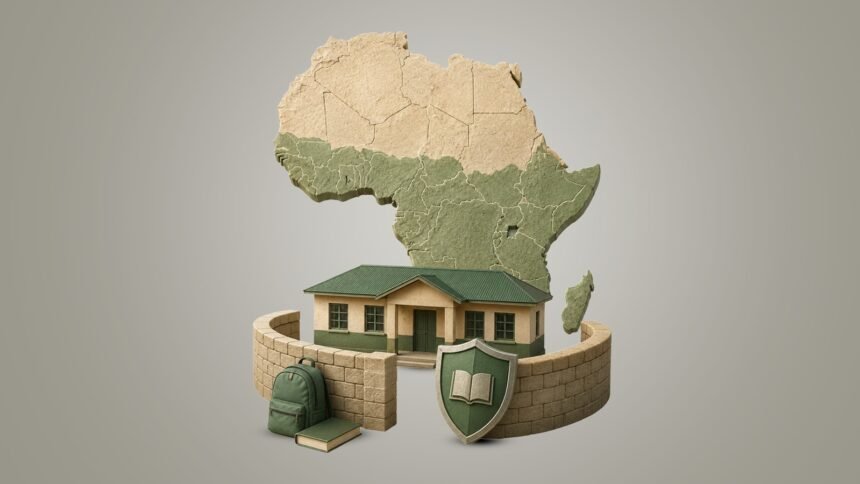
Across the African landscape, the structural preservation of instructional spaces represents a foundational pillar of continental self-determination and human security. The Pan-African vision for sustainable development, articulated through the foundational charters of the African Union, establishes that true structural advancement cannot occur while the physical centers of knowledge production remain vulnerable to systemic degradation. In areas experiencing irregular conflict, the breakdown of structural protections for educational networks erodes civic trust and hinders long-term human capital formation. Reclaiming the continent’s shared future requires moving beyond basic crisis containment toward establishing schools as legally protected, non-militarized zones, ensuring that the development of future generations remains permanently insulated from geopolitical and domestic unrest.
Systemic Fragility and Institutional Pressure
The contemporary educational landscape across sub-Saharan Africa is characterized by severe institutional friction, where the push for universal literacy intersects with high geopolitical and environmental volatility. National ministries of education operate under intense fiscal constraints, struggling to expand infrastructure, train instructional personnel, and distribute learning resources across vast peripheral territories. This baseline fragility is further complicated by a dramatic surge in global and regional conflicts, which have reached their highest levels since the mid-twentieth century. As state institutions struggle to maintain administrative continuity, scholastic infrastructure is increasingly exposed to external shocks, leaving localized school systems vulnerable to complete operational collapse.
Demographic Dividend Versus Structural Threat
The strategic urgency of fortifying educational safeguards is driven by the unique demographic profile of the continent, where children and youth constitute the absolute majority of the aggregate population. This youth bulge represents an immense demographic dividend capable of driving industrialized economic transformation, provided the state can deliver consistent, high-quality technical and foundational training. However, when the state fails to secure these spaces, this vast demographic concentration transforms into a significant structural vulnerability. Without access to safe, institutionalized learning environments, millions of young citizens are left exposed to arbitrary exploitation, systemic marginalization, and the immediate pressures of peripheral poverty, turning a major developmental asset into a complex governance challenge.
The Expanding Vacuum of Educational Exclusion
The direct consequence of this infrastructural instability is a significant expansion in the population of out-of-school children across highly volatile sub-Saharan corridors. When local schools are forced to shut down due to proximity to active combat lines, community displacement, or direct physical destruction, the educational pathway for entire cohorts is abruptly severed. This systemic exclusion removes vulnerable youth from a critical protective environment, disrupting literacy development and eroding the societal trust required to sustain modern democratic institutions. The long-term accumulation of this educational deficit locks peripheral communities into cycles of low productivity, restricting their capacity to engage with the modern digital economy.
The Exploitation of Youth Demographics
The vacuum created by institutional collapse and prolonged school closures directly facilitates the recruitment and tactical exploitation of children by non-state armed groups and irregular militias. Lacking the physical sanctuary and structured discipline provided by functional academic systems, displaced and marginalized youth are frequently swept up by insurgent networks. Militias systematically utilize these vulnerable cohorts as frontline combatants, logistical couriers, and intelligence scouts, replacing structured civic development with tactical military indoctrination. This breakdown of traditional youth protection frameworks complicates regional stabilization initiatives, as the dismantling of independent educational networks allows irregular factions to continuously replenish their ranks by exploiting youth demographics.
The Dynamics of Scholastic Devastation
The operational space for formal learning has been severely compromised by an unprecedented, globalized escalation in deliberate, high-velocity assaults targeting scholastic networks. Empirical data published by the Global Coalition to Protect Education from Attack (GCPEA) indicates that violent attacks on schools, pupils, and staff surged by 40% globally during 2024 and 2025, with at least 10,600 students and personnel killed, injured, abducted, or arrested. Sub-Saharan Africa sits at the epicenter of this crisis, with the Democratic Republic of the Congo, Ethiopia, Cameroon, and Nigeria registering some of the highest volumes of localized devastation. This systematic campaign features a 91% increase in the military occupation of schools, where armed groups transform classrooms into tactical bases, inviting direct kinetic strikes.
Furthermore, these assaults have taken on an increasingly strategic, gendered, and targeted dimension. In regions like northern and western Cameroon, and across Nigeria, more than 700 students and staff were harmed or abducted in high-profile raids. Armed factions have deliberately targeted girls’ boarding institutions, exemplified by a brutal assault where gunmen executed school security personnel and abducted 25 female pupils, specifically to enforce regressive social doctrines and halt female educational advancement. The widespread deployment of high explosives, heavy artillery, and improvised drone-borne munitions has resulted in extensive infrastructural ruin, transforming schools from safe spaces into highly dangerous combat zones.
Institutional Frameworks and Accountability Deficits
Managing this profound structural crisis requires highly synchronized, cross-border interventions spearheaded by regional bodies and global child protection agencies. The African Union, in close coordination with UNICEF, has aggressively championed the universal adoption of the Safe Schools Declaration, a multilateral political commitment designed to restrict the military use of scholastic infrastructure and strengthen localized early warning monitoring networks. However, the practical rollout of these protective frameworks is heavily hindered by deep funding cuts from Western donor states, which have removed critical resource lines for educational emergency response. Furthermore, international observers warn that a pervasive atmosphere of political impunity for war crimes allows state and non-state actors to bypass international humanitarian law without fear of formal diplomatic or economic sanctions, leaving frontline monitoring systems under-resourced and structurally weakened.
Future Hopes
The path forward for sub-Saharan education requires an immediate transition away from reactive humanitarian containment toward a permanent, legally secure strategy of structural fortification and judicial accountability. Reclaiming long-term stability depends on national governments enacting strict legal bans on the military occupation of schools while investing in decentralized, blast-resistant infrastructure capable of withstanding modern explosive hazards. To counter international aid shortages, states must maximize domestic resource mobilization, using resource revenues to fund digital remote-learning networks that can sustain instructional delivery during active crises. Success will ultimately be measured by the continent’s collective capacity to enforce transparent accountability mechanisms for war crimes targeting youth, ensuring that schools function as secure, self-sustaining anchors of peace and pan-African democratic progress.