




The Pan-African Paradigm of Resource Sovereignty and Structural Value-Retention
Across the African landscape, a profound paradigm shift is reordering the geopolitical economy of natural resource management. The contemporary Pan-African consensus is moving away from the structural dependencies of the post-colonial era toward a unified assertion of resource sovereignty. Historically, the continent has functioned as a source of raw materials for foreign manufacturing centers, capturing only a fraction of the global value chain. Today, a coordinated legislative and executive push across multiple sovereign states aims to dismantle this extractive model. By legally mandating that strategic assets be refined, processed, and commercialized within continental borders, African nations are seeking to establish a self-sustaining industrial base. This collective strategy aims to retain economic value, insulate domestic markets from global supply shocks, and ensure that resource wealth directly funds the development of citizens rather than external entities.
Strategic Subsurface Inventories and Green-Transition Elements
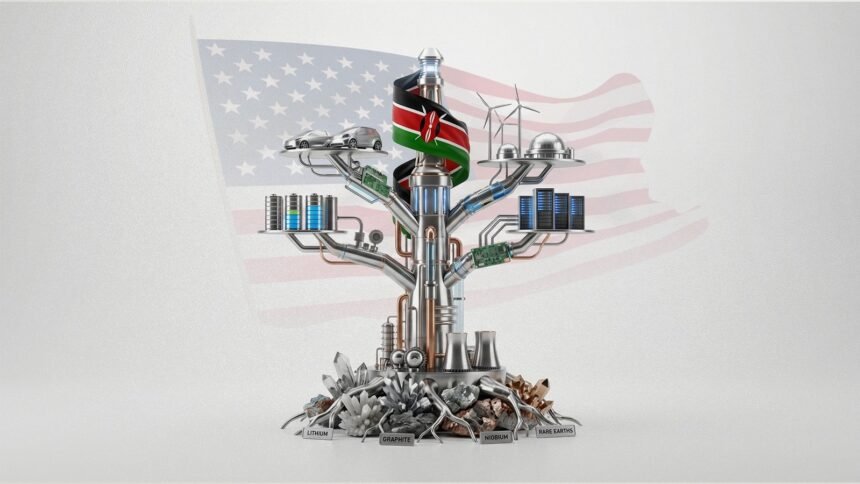
The sub-surface geology of East Africa contains highly valuable, under-explored mineral horizons that are crucial for the global green transition and advanced industrial manufacturing. Within Kenya’s borders, extensive geological surveys reveal major, unexploited deposits of critical elements. The state holds substantial natural concentrations of rare earth elements and strategic metals, including large untapped deposits of niobium, lithium, graphite, copper, and nickel. Niobium and rare earths are essential for producing advanced superconducting alloys, aerospace infrastructure, and electronics, while lithium, graphite, and nickel form the core components of battery storage technologies. The presence of these high-value resources places the East African nation at the center of international supply chains, turning its subsurface wealth into a key source of geopolitical leverage.
Structural Modernization and Local Content Legislation
The internal administration and operational framework of Kenya’s extractive sector are undergoing structural updates to transition from small-scale artisanal extraction to highly competitive, industrialized production. Historically, the sector has faced constraints due to limited exploration investment, weak regulatory frameworks, and insufficient infrastructure. To correct these deficits, the Ministry of Mining is restructuring its concession protocols and geological recording systems to attract stable, long-term corporate capital. Central to this institutional overhaul is the implementation of local-content regulations that prohibit the direct export of unrefined ore. By modernizing its mining codes and updating transportation networks, the state is building an integrated industrial system designed to process raw mineral outputs domestically, making the local extraction sector more competitive and secure for large-scale investment.
Transatlantic Investment Frameworks and Geopolitical Competition
The changing dynamics of the global energy transition have triggered intense competition between Western states and China over access to strategic African resources, prompting a significant shift in American diplomatic and economic strategies. On the sidelines of the G7 summit in Evian-les-Bains, France, Kenyan President William Ruto announced that Kenya and the United States are close to sealing a major critical minerals deal. Following direct discussions between President Ruto and U.S. President Donald Trump, the two administrations agreed on an investment framework covering rare earths and other strategic minerals.
A central pillar of this bilateral agreement is that all extracted resources must be processed domestically within Kenya. This represents a shift in Western bilateral engagement, mirroring similar value-retention frameworks established in the Democratic Republic of Congo. As G7 leaders step up coordination to reduce their industrial reliance on Chinese supply chains, Washington is utilizing targeted investment partnerships rather than traditional aid frameworks to secure alternative, reliable resource corridors in East Africa.
Regulatory Safeguards and Ecological Preservation Mandates
The rapid industrialization and expansion of critical mineral extraction require a balanced approach to protect the environment and preserve ecosystems. Large-scale open-cast mining and chemical refining processes carry inherent environmental risks, including potential soil degradation, the contamination of local water tables, and localized air pollution. To prevent the ecological damage often associated with resource extraction, Kenya’s regulatory bodies are implementing stricter environmental impact assessment requirements and sustainable land reclamation mandates. By aligning domestic environmental codes with global sustainability benchmarks, the state intends to ensure that the extraction of transition minerals does not compromise local ecosystems or displace agricultural communities, establishing a framework in which environmental stewardship and industrialization of resources advance together.
Technology & Knowledge Transfer: Advanced Metallurgy and Human Capital Upgrading
The strategic implementation of the Kenya-U.S. critical minerals deal depends on the systematic transfer of advanced industrial technology and technical knowledge to the domestic workforce. Establishing advanced refining facilities for rare earth elements and lithium purification requires specialized processing machinery, complex chemical engineering inputs, and automated control systems. The bilateral framework requires international corporate partners to invest directly in local technical institutes and state universities. By funding specialized metallurgical training programs and joint scientific research initiatives, the agreement ensures that Kenyan engineers, technicians, and researchers acquire the advanced competencies needed to operate complex industrial infrastructure independently, converting external corporate investments into long-term local human capital.
Downstream Manufacturing and Economic Diversification
The structural requirement for in-country mineral processing serves as a direct catalyst for nationwide industrialization and broad-scale economic development. By rejecting basic raw-material extraction models, the state is utilizing its subsurface wealth to build advanced manufacturing ecosystems. Establishing local refining facilities creates a demand for auxiliary industries, including chemical manufacturing, specialized logistics, and high-capacity electrical engineering networks. This industrial expansion generates skilled, sustainable employment opportunities for a young demographic, moving workers out of informal labor into high-productivity manufacturing roles. Retaining processing value helps the state build robust domestic supply chains, transforming raw minerals into finished industrial components and driving long-term economic diversification.
Reengineering Global Finance and the Elimination of Aid Dependency
The republic’s long-term economic aspirations focus on transforming the global financial architecture to unlock sustainable growth and end aid dependency. During interactions with G7 leaders, President Ruto argued that Africa’s main developmental constraint is not a lack of capital, but systemic institutional barriers to accessing it. To overcome high borrowing costs, Kenya is advocating for the mobilization of existing internal assets—including trillions of dollars held in African pension funds and insurance reserves—supported by risk-sharing mechanisms and guarantees from G7 nations.
As part of this financial realignment, G7 countries have pledged to take shares in the African Trade & Investment Development Insurance (ATIDI) to lower international borrowing costs. By pursuing multiple partnerships with both Washington and Beijing based on shared economic priorities, Kenya is positioning itself as a sovereign, self-determining anchor of global progress.