




The Pan-African Paradigm of Resource Governance and Macroeconomic Autonomy
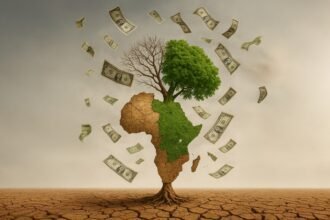
Across the African landscape, the contemporary configuration of international resource governance places intense pressure on developing nations to balance rapid industrial modernizations with the preservation of macroeconomic autonomy. The Pan-African vision for complete economic self-determination requires a decisive transition away from historical patterns of raw resource exportation toward deep-seated domestic value addition and localized refining grids. When peripheral states cede the processing and pricing of their mineral repositories to external transatlantic or Asian corporate entities, they remain structurally exposed to foreign exchange fluctuations and asymmetrical trade balances. Reclaiming the continent’s shared developmental path demands a unified approach to commodity sovereignty, ensuring that natural resources function as primary capital anchors that actively stimulate domestic processing capacities, create secure local employment, and protect national assets from external economic coercion.
Production Expansion and Global Price Windfalls
The contemporary macroeconomic profile of the Republic of Ghana is heavily anchored by its status as Africa’s premier gold producer, positioning the country as a vital locus for global mineral extraction networks. The state’s extractive sector is heading for a year of robust expansion, with mineral export earnings surging historically to over $21 billion, lifting the sector’s total share of merchandise exports past 68%. This monumental expansion is increasingly defined by a dual production base, where established multinational mining conglomerates operate alongside a booming small-scale and artisanal mining segment. To sustain this competitive edge, national planning ministries face the pressing task of ensuring policy certainty, accelerating mining lease renewals, and calibrating the fiscal tax regime to encourage deep capital spending while maximizing the state’s share of windfalls generated by record global bullion prices.
Land-Use Conflicts and Agrarian Modernization
The intersection of large-scale gold mining and the traditional agricultural sector presents a complex balancing act for Ghana’s rural socio-economic planning frameworks. Historically, cocoa farming and sub-surface mining have functioned as competing land-use priorities across the country’s fertile interior belts, occasionally resulting in severe structural friction over land rights, localized inflation, and labor reallocations. When lucrative extractive operations expand into agrarian communities, they frequently elevate rural operating costs and create intense competition for water and infrastructural access. Overcoming these regional imbalances requires national planners to design highly integrated regional development programs that insulate agricultural buffer zones from industrial expansion, ensuring that the wealth generated by subterranean mineral booms actively funds the modernization of local food systems rather than displacing them.
Mandatory Output Allocation and Reserve Accumulation
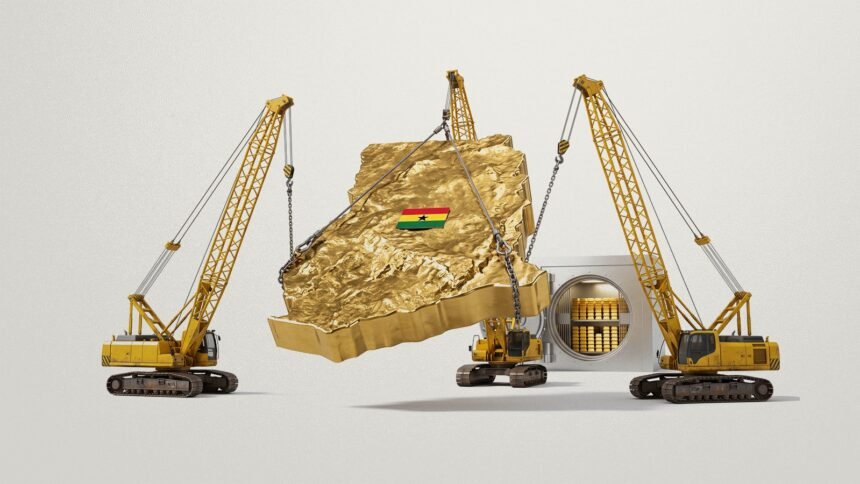
The implementation of sovereign monetary policy inside the republic experienced a significant, structural shift following a major regulatory directive finalized by the state. Rather than directly purchasing physical mining land or taking over corporate equity, the Ghanaian government has struck a landmark, mandatory agreement with the Ghana Chamber of Mines to directly purchase 30% of the total gold output of all large-scale mining companies operating within its borders, effective July 1, 2026. Brokered through the state gold trader, the Ghana Gold Board (GoldBod), this revamped initiative updates a previous 2022 arrangement that required a 20% supply allocation to the central bank.
The technical parameters of the new framework require industrial producers—including major global actors like Newmont, Gold Fields, and Zijin—to deliver their output locally in raw, doré form at a fixed 0.55% discount relative to the Bank of Ghana reference exchange rate. Settled entirely in domestic Ghanaian cedis, this strategic mechanism is explicitly tied to the Ghana Accelerated National Reserve Accumulation Program (GANRAP), which aims to build robust external buffers equivalent to 15 months of import cover by the end of 2028, protecting the domestic marketplace against future balance-of-payments shocks.
Global Supply Consolidation and Sovereignty Risks
The expanded state offtake agreement intersects directly with a broader, highly competitive international struggle for supply chain dominance over Africa’s critical transition and precious metals. Chinese state-backed corporations and private conglomerates have aggressively expanded their footprints within Ghana’s extractive industries, acquiring significant ownership stakes in massive gold, bauxite, and lithium deposits. This capital injection mirrors a wider continental pattern where Beijing uses targeted infrastructure-for-resources agreements to lock in long-term access to essential minerals. For local central planners, navigating this geopolitical reality requires implementing strong traceability standards; by designating GoldBod as the primary gatekeeper for domestic processing and export flows, the state looks to ensure that foreign mining conglomerates operate in strict alignment with national sovereign interests rather than ceding absolute supply chain oversight to external actors.
Ecological Degradation and Regulatory Enforcement Mandates
The aggressive expansion of sub-surface extraction across both large-scale and artisanal nodes introduces severe long-term environmental hazards that threaten the country’s hydrological and ecological safety. Unregulated and illegal mining activities—locally termed galamsey—have caused extensive degradation across vital river basins, polluting essential freshwater networks with dangerous heavy metals and accelerating severe deforestation across primary forest reserves. This systemic degradation places a substantial ecological burden on rural host communities, which suffer from contaminated topsoils and destroyed micro-ecosystems. To avert a cascading ecological crisis, the Ministry of Lands and Natural Resources is intensifying enforcement protocols to formalize artisanal mining, mandate strict environmental reclamation bonds, and hold corporate operators strictly accountable to global sustainability benchmarks.
Local Refining Infrastructure and Full Value Retention
The ultimate viability of the 30% domestic gold purchase mandate depends on the country’s capacity to translate raw resource accumulation into long-term industrialization and absolute value retention. The new state framework has been explicitly curated to support Ghana’s efforts to secure formal London Bullion Market Association (LBMA) accreditation for at least one local gold refinery by the year 2030. Under the planned logistics loop, all doré gold bought by GoldBod will be refined locally within domestic facilities before being shipped to certified LBMA refineries for final melting, stamping, and delivery into the central bank’s reserves. By combining disciplined monetary execution with an unyielding commitment to eliminating raw mineral exports by 2030, the republic looks to break out of legacy resource-drainage models, turning its vast underground wealth into the foundational bedrock for an autonomous, industrialized, and completely self-determining national economy.