



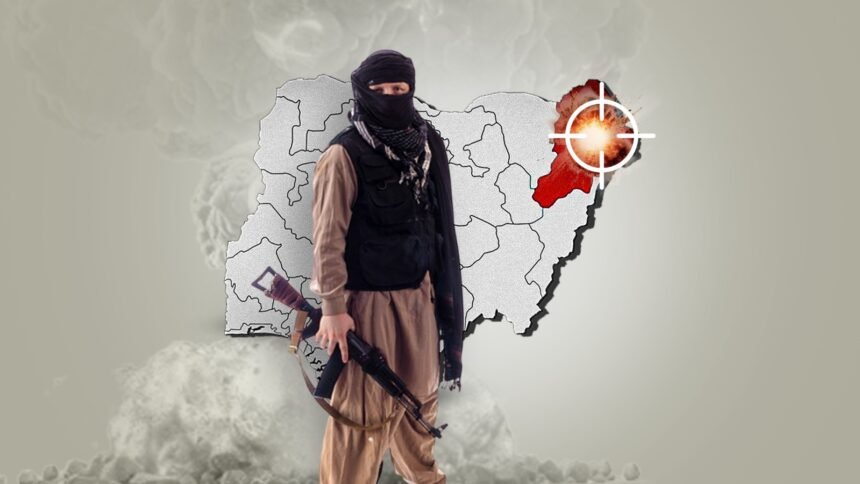
Nigeria’s northeast erupted once more on March 17, 2026, as coordinated suicide bombings tore through Maiduguri, killing at least 23 civilians and injuring over 100 in strikes on a market, post office, hospital, and Kaleri neighbourhood. These attacks, amid Ramadan observances, expose jihadist resilience despite years of counter-insurgency, US support, and military crackdowns. This analysis dissects the toll and implications of the assaults, revealing a hybrid insurgency that defies containment while straining regional stability.
Pan African Echoes: Jihad’s Cross-Border Shadows
The Maiduguri bombings reverberate as Pan-African echoes, where Nigerian jihadist violence spills across Sahel frontiers, amplifying displacement and economic ruin. With over 15,000 deaths since 2020, ISWAP and Boko Haram hybrids, rooted in Lake Chad and northwest, mirror JNIM’s Mali sieges and Burkina Faso massacres, collectively claiming 7,800 lives in 2025. Attacks on Maiduguri, a fortified military hub, signal militants’ urban reach, disrupting trade routes that link Nigeria to Chad and Niger.
Echoes strain continental responses: AU calls for unity clash with ECOWAS fractures, while AES isolation in Niger and Mali enables jihadist sanctuaries. US-Nigeria collaboration, 200 troops training forces, and the December 2025 Sokoto strikes offer a model. Yet, Pan-African predicaments demand more: shared intelligence networks and border patrols to eclipse shadows, lest Maiduguri’s toll cascades into broader African insecurity.
Nigeria & Insurgency: Hybrid Horrors Persist
Nigeria’s insurgency endures as hybrid horrors, with the Maiduguri assaults, three blasts in a heavily defended city, highlighting militants’ capacity to strike symbolic heartlands despite territorial losses. Boko Haram and ISWAP, splintered since 2016, blend suicide tactics with banditry, targeting civilians during Ramadan to sow fear and expose intelligence gaps. The attacks follow patterns of northwest abductions and northeast base overruns, where jihadists seize equipment and captives.
Horrors’ persistence: rural strongholds in Sambisa Forest regenerate after raids, while urban vulnerabilities like markets and hospitals claim dozens in single strikes. Since 2020, 15,000 fatalities underscore this, with 2025’s surge exceeding 2,200 despite operations. Insurgency’s roots, poverty, ethnic grievances, and governance voids, fuel recruitment, demanding holistic approaches beyond kinetics to dismantle hybrids and reclaim communities.
US-Nigeria Counterinsurgency Efforts: Synergy Amid Setbacks
US-Nigeria counterinsurgency efforts forge synergy through training and strikes, yet Maiduguri’s bombings reveal setbacks in curbing resilient jihadists. The February 2026 deployment of 200 troops enhances target identification and air-infantry coordination, building on the December 2025 Tomahawk assaults in Sokoto and Ghana-based surveillance. This partnership supports Nigerian Super Tucanos, reducing attacks by 15 percent in Borno while addressing Trump’s Christian protection rhetoric.
Synergy’s challenges: delayed responses in Maiduguri expose overstretched forces and intelligence lapses, with militants evading patrols. US advisers bolster Nigerian ops, destroying gun trucks and neutralizing commanders, but jihadists regenerate swiftly in vast terrain. Efforts’ future: deeper integration, US tech fused with local intel, to overcome setbacks and foster self-reliant victories against entrenched threats.
Suicide Bombings & Abductions: Tactics of Terror’s Evolution
Suicide bombings and abductions mark the evolution of terror tactics, with Maiduguri’s March 17 strikes, killing 23 at public sites, demonstrating jihadists’ shift to urban psychological warfare. Boko Haram’s history of such assaults, combined with ISWAP’s coordination potential, targets civilians during holy periods to maximize panic, as in 2025’s Ramadan escalations claiming dozens of troops.
Evolution’s patterns: bombings complement abductions like Papiri’s 315 pupils or Woro’s 162 massacre, funding operations through ransoms and extortions. Tactics exploit intelligence failures, with bombs assembled locally or smuggled into fortified zones. Countering demands vigilance: enhanced urban checkpoints, community alerts, and deradicalization to disrupt tactics, reducing terror’s lethal evolution.
Political Outlook & Security: Governance Gaps Exposed
Political outlook and security in Nigeria expose governance gaps, where Tinubu’s promises of defeat ring hollow amid Maiduguri’s carnage and military delays. Junta-like strains in the northeast, overstretched troops prioritizing VIPs and corruption diverting budgets, fuel unrest, with governors like Borno’s Zulum issuing distant assurances while residents flee.
Outlook’s challenges: US partnership signals resolve, yet domestic will falters without reforms addressing elite neglect. Security’s imperative: devolve authority to empower local patrols and dialogues to bridge gaps, lest political inertia perpetuates cycles of attacks and erodes public trust.
Human Rights Imperatives: Civilian Suffering in the Crossfire
Human rights imperatives demand attention to civilian suffering in Nigeria’s crossfire, where Maiduguri’s bombings, ripping through markets and hospitals during Ramadan, claim lives indiscriminately, traumatizing families like those losing sons in Woro or Yelwata. Over 15,000 deaths since 2020, including women and children in abductions, highlight disproportionate tolls, with militants and delayed forces both implicated.
Imperatives call for accountability: investigations into intelligence failures, protections for the displaced millions, and rights training in US-Nigeria ops to minimize collateral damage. Civilian suffering’s remedy: inclusive policies addressing poverty and grievances, ensuring security upholds dignity and halts the erosion of human rights, fueling the cycle of jihad.