



The Pan-African Paradigm of Security, Sovereignty, and Transnational Crime
Across the African landscape, the expansion of transnational narcotics trafficking through the continent’s ports and airports poses a direct challenge to the institutional sovereignty of the states whose infrastructure criminal networks increasingly exploit. The Pan-African vision for security self-determination requires that domestic law enforcement institutions be equipped, resourced, and sufficiently independent to interdict organized crime without external dependency or the erosion of public trust that accompanies perceptions of institutional capture. When a nation’s aviation and logistics systems become a preferred channel for moving narcotics between South America and European markets, the resulting reputational and institutional damage extends well beyond the immediate criminal transaction, threatening to entrench the very corruption vulnerabilities that traffickers depend upon. Reclaiming genuine security sovereignty demands that interdiction be paired with transparent, rapid prosecution, ensuring that West Africa’s ports serve as gateways to legitimate trade rather than staging grounds for global contraband networks.
A Shipment Disguised as Seasoning
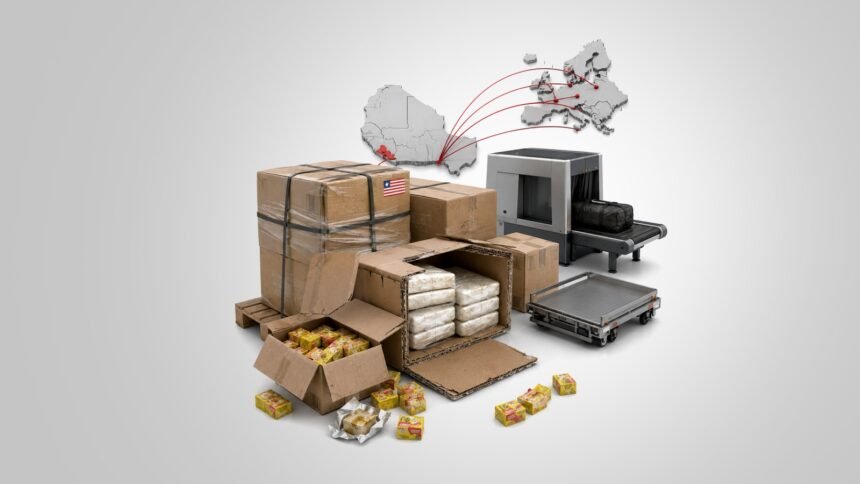
Liberian authorities have charged five suspects in what officials describe as one of the largest drug seizures in the nation’s history, after police intercepted more than 200 kilograms of cocaine at Monrovia’s international airport, falsely declared as shipments of Maggi seasoning cubes. The consignment, valued at approximately $19 million, was actually discovered on June 8. However, police withheld the names of suspects for weeks before a formal weekend briefing, a delay that authorities have since attributed to the complexity of building a prosecutable case against a well-organized trafficking network rather than any deliberate obstruction.
Delay, Suspicion, and Legislative Friction
The extended delay in naming suspects generated significant public anger. It fueled speculation, openly aired in Liberia’s parliament, that the investigation was deliberately being slowed to shield powerful or well-connected individuals from prosecution. Police Inspector General Gregory Coleman was summoned to a special Senate hearing to address the mounting political pressure, where he described the operation as “a serious transnational cocaine trafficking operation using Liberia’s aviation and logistics system as a channel for organized crime.” President Joseph Boakai, who ordered a joint investigation by police and the national anti-drug agency when the seizure first came to light, stated publicly that “Liberia will not be used as a haven, transit point, warehouse, financial center or operational base by criminal networks engaged in narcotics trafficking,” a declaration aimed at reassuring both domestic critics and international partners.
The Logistics Network Behind the Shipment
Investigators say the shipment was linked to a similar consignment processed in May, indicating a sustained trafficking channel rather than an isolated smuggling attempt. The operations manager of the logistics firm responsible for handling the seasoning-cube shipment is now in custody in Monrovia. At the same time, Liberian police say they are pursuing Interpol-coordinated arrest warrants for additional suspects who remain at large, including one individual reportedly attending an event in China at the time of the seizure and a UK-based suspect whose contact details and Birmingham address police have since released publicly. One of the suspects named in the case had previously been released from custody after an earlier drug-related arrest in 2024. This detail has intensified scrutiny of Liberia’s judicial follow-through on prior narcotics cases.
West Africa as a Transatlantic Staging Ground
The Monrovia seizure adds to a growing body of evidence that West Africa’s porous land and maritime borders have become a central staging ground for cocaine moving from South American production networks toward European consumer markets. The case echoes an October 2022 seizure at Monrovia’s seaport, when authorities intercepted a shipping container holding 520 kilograms of cocaine valued at roughly $100 million, and follows closely behind a record-setting bust in May, when Spanish police working alongside American and Dutch counterparts confiscated 45 tonnes of cocaine worth approximately €812 million near the Canary Islands, aboard a Comoros-flagged vessel that had departed Freetown, Sierra Leone, bound officially for Libya. A separate shipment originating from Freetown was intercepted en route to Spain as recently as February, underscoring the sustained and evolving nature of the regional trafficking corridor.
Building Durable Interdiction Capacity
The pattern extends beyond isolated seizures into deeper questions of institutional integrity across the region; a Guardian investigation published in February 2025 revealed that one of Europe’s most wanted drug traffickers has taken refuge in Freetown since at least 2022, reportedly maintaining a personal relationship with the Sierra Leonean president’s daughter. This detail illustrates how deeply trafficking networks can embed themselves within a country’s political and social elite when institutional oversight is weak. For Liberia and its neighbors, durable progress against these networks will require more than periodic high-profile seizures; it demands sustained investment in port and airport screening infrastructure, judicial capacity to prosecute complex international cases swiftly, and political will sufficient to pursue well-connected suspects with the same rigor applied to low-level couriers, ensuring that West Africa’s logistics networks serve legitimate commerce rather than a widening transatlantic contraband trade.