



The Pan-African Paradigm of Industrial Self-Sufficiency and Capital Sovereignty
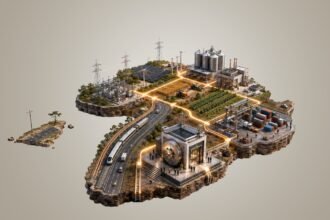
Across the African landscape, few enterprises embody the aspiration toward economic self-determination as vividly as Aliko Dangote’s refining empire, and this week’s news that the Dangote refinery is preparing to raise approximately $5 billion through what would be Africa’s largest-ever initial public offering marks a milestone in the continent’s long struggle for capital sovereignty. For decades, Africa’s industrial ambitions have been financed disproportionately through foreign capital, foreign currency debt, and foreign equity, a structural dependency that has left even the continent’s most successful enterprises vulnerable to external shocks and offshore decision-making. Dangote’s planned listing, anchored on the Nigerian Stock Exchange but deliberately courting capital markets in Kenya, South Africa, Egypt, Ghana, and Rwanda, represents an attempt to reverse that architecture, positioning African pension funds, institutional investors, and retail savers as the primary financiers of the continent’s own industrial infrastructure. This is the essence of the Pan-African paradigm now unfolding in Lagos: an industrialist explicitly framing a stock listing not merely as a fundraising exercise but as a vehicle for continental participation in what he calls “an African champion.” The coming months will test whether this vision can translate into genuine cross-border capital mobilization, or whether it remains constrained by the same regulatory and structural fragmentation that has historically limited African capital markets from reclaiming ownership of the continent’s most consequential assets.
Anatomy of the Offering: Structure, Scale, and Regulatory Trajectory
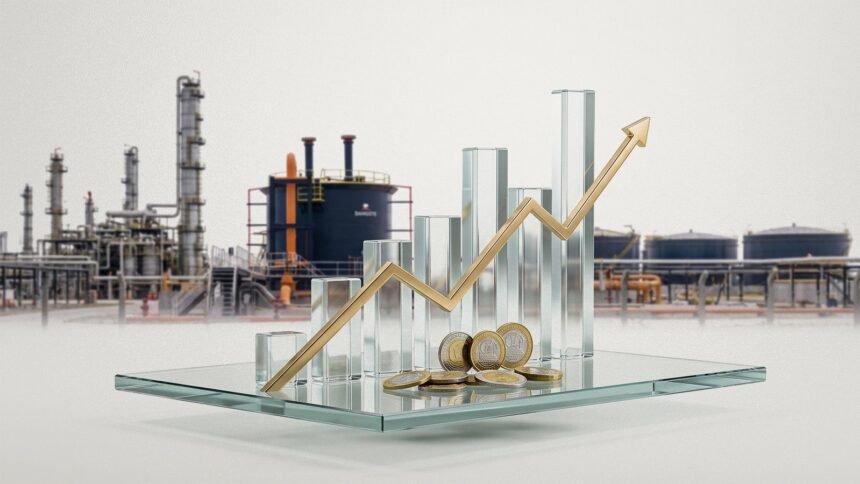
The proposed IPO, according to a source with direct knowledge of the plan, targets roughly $5 billion and is expected to conclude in October, following a filing already submitted to Nigeria’s Securities and Exchange Commission. A second source indicated regulatory approval is expected within weeks, with a prospectus anticipated in September. However, both sources cautioned that final figures depend on the outcome of the regulatory review. That target would represent just over 4% of the capitalization of Nigeria’s All Share Index, whose total value stood at $116 billion this week, underscoring the sheer scale of an offering that would dwarf prior African listings. Dangote Petroleum Refinery & Petrochemicals FZE has structured the primary listing on the Nigerian Stock Exchange, whose standard 20% minimum free float requirement has, in past instances involving Dangote’s other ventures, been subject to exceptions; Dangote Cement, for comparison, maintains a free float of just over 12.7%. The final allocation structure, including how much of the offering will go to public investors and the treatment of pre-allocations for regional exchanges, remains to be determined, reflecting a deal that is still being architected in real time even as its ambitions are already being broadcast across the continent’s capital markets landscape.
Continental Appetite: Kenya’s $500 Million Stake and the Cross-Border Investor Matrix
Perhaps the most structurally significant element of the offering is its explicit multinational orientation. Stock exchanges in Kenya, South Africa, Egypt, Ghana, and Rwanda have held a series of meetings with the refinery’s advisers over the past few months. Kenya’s capital markets alone could absorb as much as $500 million of the target, according to the source, who described “tremendous” appetite among local investors such as pension funds. Because a full cross-listing is not planned at this stage, other national markets seeking a share of the offering will need to craft what the source called “structured solutions,” including global depositary receipts or exchange-traded instruments that mirror the underlying Nigerian shares while preserving the right to accrue future dividends. This financial engineering matters because it tests whether Africa’s fragmented capital market architecture, historically siloed along national regulatory lines, can be temporarily bridged to allow genuinely continental participation in a single industrial asset. If successful, the Dangote offering could become a template for how future pan-African infrastructure projects raise capital without defaulting to London, New York, or Gulf sovereign wealth funds, reinforcing the broader project of asserting African ownership over African industrial capacity.
Valuation Tensions: The $40 Billion Question and Global Refining Benchmarks
The scale of Dangote’s ambitions invites scrutiny when compared with those of comparable global refiners. A $2.5 billion private placement last month for a 6% stake implied a valuation near $40 billion for the refinery. This figure appears ambitious compared with Turkey’s Tupras, which operates four refineries with equivalent aggregate capacity yet trades at just $12 billion, or New York-listed HF Sinclair, whose 678,000 barrels-per-day capacity commands a $16 billion market capitalization. This valuation gap reflects both the scarcity premium attached to Dangote’s dominant position in a historically fuel-import-dependent Nigerian market and the execution risk inherent in translating that scarcity into sustained profitability once regional refining capacity, including a planned Kenyan facility, comes online. The 650,000-barrel-per-day Lagos refinery, which cost approximately $20 billion to construct and began operations in 2024 before reaching full capacity this year, benefited substantially from disruptions tied to the Iran war, which pushed the facility into exporting jet fuel across Africa and into Western Europe. Whether that windfall-driven performance can be sustained, or whether it inflates near-term valuation expectations beyond what steady-state operations justify, will be a central question for prospective investors evaluating the offering’s long-term structural soundness.
Dangote’s Personal Doctrine: Domestic Capital and the Refusal of Offshore Flight
Aliko Dangote, Africa’s richest man with an estimated net worth of $31 billion to $35 billion, has built his reputation partly on a doctrine that distinguishes him from many African billionaires: keeping his wealth domiciled in Nigeria rather than in offshore accounts. That doctrine now extends to the structure of the IPO itself, which Dangote reportedly views as an opportunity to enable “an African champion” to be owned, in meaningful part, by African capital. His broader ambitions include lifting the Lagos refinery’s output to 1.4 million barrels per day and replicating the model with a facility planned along the Kenyan coast in partnership with East African governments. However, it remains unclear whether IPO proceeds will be directed toward that expansion. Investors will be offered the choice of subscribing in naira or dollars, a dual-currency structure designed to accommodate both domestic and diaspora (or foreign) institutional participation without forcing a single settlement currency that might favor one investor class over another. This flexibility signals an awareness that, in practice, capital sovereignty requires accommodating the realities of currency volatility that have historically deterred foreign direct investment in Nigerian assets.
Reclaiming the Refining Trajectory: What Success Would Mean for African Industrial Sovereignty
Should the Dangote offering proceed as planned, its significance will extend well beyond Lagos trading floors. A successfully executed, majority African-capitalized IPO of this scale would offer tangible proof that the continent’s institutional investors, from Kenyan pension funds to South African asset managers, possess both the capital depth and the confidence to underwrite African industrial infrastructure at a scale previously reserved for multinational energy majors. It would also validate a model of pan-African capital market integration that has long been discussed in AU policy circles but rarely demonstrated at this magnitude. Risks remain substantial, from regulatory delays to the valuation questions surrounding the $40 billion benchmark, and the coming weeks of Nigerian SEC review will be decisive in determining whether the October timeline holds. But the underlying trajectory is unmistakable: African capital, increasingly, is being asked to finance African industry, reducing the continent’s structural dependence on external financiers and asserting a form of economic self-determination that complements, rather than merely follows, the continent’s political sovereignty. If Dangote’s gamble pays off, it may mark the moment African capital markets began reclaiming a meaningfully larger share of the continent’s own industrial destiny.