





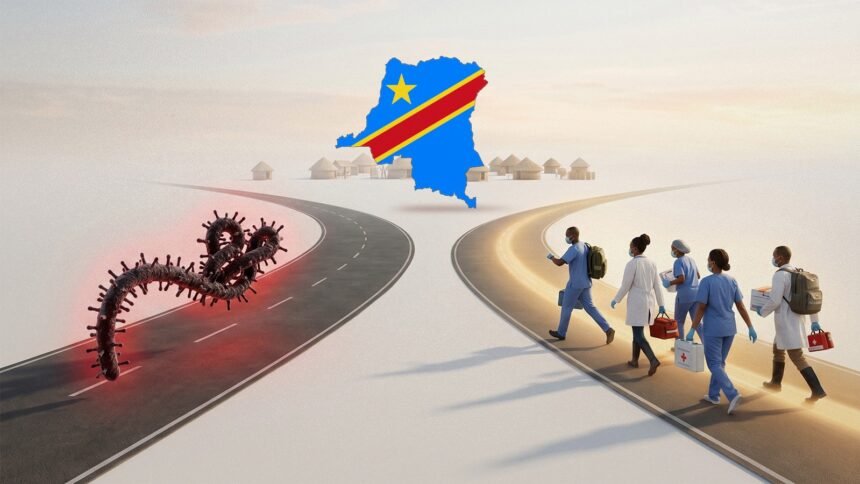
The Pan-African Paradigm of Public Health Sovereignty and Institutional Response
Across the African landscape, the current Ebola outbreak in the Democratic Republic of the Congo has become the defining proof point for whether continental public health institutions, built and led by Africans in the years since the devastating 2014-16 West Africa epidemic, can match the speed and severity of a crisis on their own terms. With confirmed cases surpassing 4,000 and officials now investigating whether the Bundibugyo strain driving the outbreak may be mutating, the epidemic has become the second-largest Ebola outbreak on record and, by some measures, the fastest-spreading ever documented. The Africa Centers for Disease Control and Prevention, the continent’s own health watchdog established in the aftermath of that earlier crisis, has declared that “the time for incremental action is over,” pivoting to a door-to-door search strategy in conflict-affected Ituri province. This is a test case for African-led epidemic response as an instrument of structural sovereignty: whether institutions built on the continent, for the continent, can outpace a virus that international response mechanisms have historically been too slow to contain, reclaiming public health governance as a matter of African agency rather than external emergency intervention.
The Scale and Speed of an Unprecedented Outbreak
The DRC’s national public health institute confirmed 4,053 cases and 1,850 deaths as of early August, in an outbreak first declared on May 15 but which genomic and epidemiological evidence, published in the journal Science, suggests may have been circulating undetected since January. Africa CDC Director General Dr. Jean Kaseya confirmed the outbreak had eclipsed 4,000 cases, noting it now carries eight times more cases and six times more deaths than were recorded at the equivalent eleven-week mark of the 2014-18 West Africa epidemic, which ultimately infected more than 28,000 people across Guinea, Liberia, and Sierra Leone. Cases have now spread across five provinces, Ituri, North Kivu, South Kivu, Haut-Uele, and Tshopo, with the epidemic centered on the conflict-affected mining province of Ituri, where military instability has compounded already overwhelmed surveillance systems.
The Mutation Question and the Limits of Contact Tracing
Kaseya disclosed that he had consulted directly with World Health Organization Director General Dr. Tedros Adhanom Ghebreyesus about launching studies to determine “if there is no additional issue, or maybe if the virus is not mutating,” citing an unprecedented level of severity in this Bundibugyo-strain outbreak. Underlying that concern is a stark contact-tracing gap: Dr. Wessam Mankoula, Africa CDC’s acting head of emergency preparedness, said only around 10 contacts are being identified per confirmed patient, against an expected benchmark of closer to 40. More than two-thirds of Ebola deaths are occurring within communities rather than treatment centers, and at a Médecins Sans Frontières facility in Bunia, ninety percent of admitted patients did not appear on any official contact list, both indicators of extensive untracked transmission that complicates any confident assessment of the outbreak’s true trajectory.
A Structural Shift From Tracing to Active Case Search
In response, Africa CDC announced a fundamental recalibration of strategy, moving “from contact tracing to active case search,” which will see community health workers moving door to door across affected villages, asking households directly whether anyone is exhibiting Ebola symptoms. Kaseya described this as a “village-centered response” that will incorporate deeper community engagement, expanded digital tracking tools, and intensified action within camps housing people displaced by the conflict gripping affected provinces. Officials also announced plans to deploy the antiviral remdesivir on a compassionate-use basis and to begin testing whether Ervebo, a vaccine licensed for a different Ebola strain, may offer protection against Bundibugyo, after preliminary data suggested it produced “zero deaths” among previously vaccinated individuals exposed to the virus. Dr. Placide Mbala Kingebeni, Africa CDC’s director of research, was blunt about the stakes: “Seeing the expansion of this outbreak, only the public health measures will not be enough to control or stop this outbreak quickly.”
The Compounding Cost to Communities Beyond Ebola Itself
The outbreak’s structural damage extends well beyond direct Ebola mortality. UNICEF has warned that essential healthcare access is collapsing across affected areas as fear of infection and service disruptions keep families away from clinics altogether; in the outbreak’s epicenter, the mining town of Mongbwalu, the proportion of children receiving their first measles vaccine dose has fallen by 69 percent. Authorities are simultaneously investigating a suspected Ebola death aboard a river boat intercepted near Kinshasa, with more than 300 fellow passengers screened and quarantined amid fears the virus may have spread during transit toward the capital. A separate outbreak of 20 cases in neighboring Uganda has already been brought under control, offering a limited but instructive counterpoint on containment even as the DRC’s own crisis accelerates.
Reclaiming Epidemic Response as African-Led Infrastructure
The DRC’s Ebola outbreak is unfolding as both a humanitarian emergency and an institutional trial for the continent’s post-2016 public health architecture. Africa CDC’s shift to door-to-door active case search, its direct coordination with the WHO on mutation studies, and its compassionate-use deployment of remdesivir all represent a structural departure from the externally-led response models of a decade ago, an assertion of African institutional capacity to manage a crisis of this scale on its own terms. Whether that capacity proves sufficient will depend on factors well beyond epidemiology alone, including the conflict dynamics in Ituri that have hampered surveillance from the outset and the resourcing gap between the response Africa CDC has outlined and what it can actually deploy at speed. What is not in question is the stakes: a fastest-spreading Ebola outbreak on record, in a region already strained by displacement and instability, will test whether reclaiming public health sovereignty on the continent can translate into lives saved before the epidemic’s trajectory outpaces the response built to meet it.