




The Pan-African Paradigm of Fiscal Sovereignty and Structural Inequality
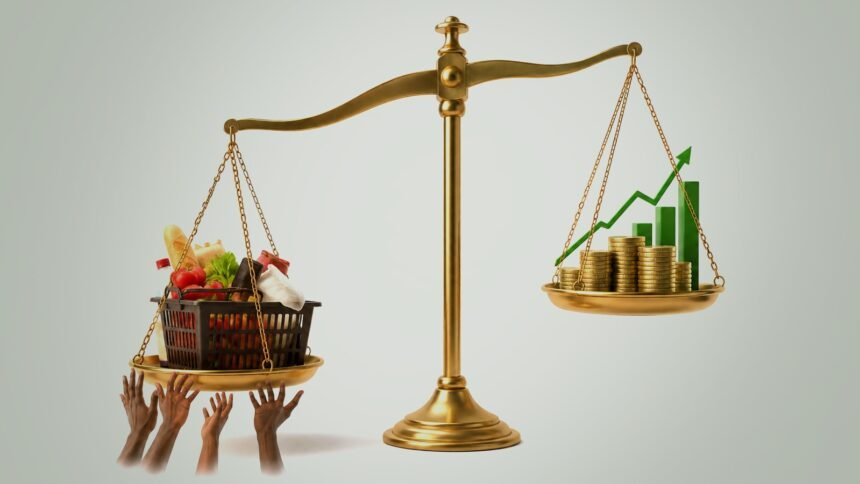
Across the African landscape, no tension defines the present moment more sharply than the gap between macroeconomic recalibration and lived material reality. Nigeria, the continent’s largest economy and its most populous nation, has become the starkest laboratory for this paradigm. Since President Bola Tinubu’s administration moved to dismantle decades of fuel subsidies, unify a fractured currency regime, and strip away electricity subsidies, the country has been cast by international finance as a model of long-overdue structural reform. Yet for millions like Abuja-based health worker Grace Adama, whose salary evaporates within a week of being paid, that reform reads less as sovereignty regained than as austerity imposed from above. This is the paradox sitting at the center of Pan-African economic self-determination: the same policies that unlock foreign capital and investor confidence often deepen the very inequities that erode a state’s legitimacy with its own people. As Nigeria approaches a pivotal January election, the question is no longer whether reform was structurally necessary, but whether its architecture can be recalibrated to distribute its gains, not merely its costs, across the base of society, reclaiming the promise that economic sovereignty was meant to serve citizens first.
The Jollof Index and the Architecture of Ordinary Hardship
The texture of Nigeria’s adjustment is best measured not in bond yields but in the price of jollof rice, which now costs more than double what it did in 2023, according to an index tracked by Lagos-based SBM Intelligence. Petrol prices have risen sixfold since the subsidy was scrapped, compounded by a weakened naira and surging global oil prices. Grace Adama, a health NGO worker earning 135,000 naira ($99) a month, nearly double the national minimum wage, told Reuters her pay “stays with me just for one week.” She has cut meat from her diet, downsized her apartment, and now relies on short-term loans to bridge the gap, unable even to send money to her aging mother in Benue state. The World Bank estimates just over half of Nigerians lived in poverty last year, up from roughly 42 percent in 2022. This is the granular matrix through which structural reform is actually experienced: not as an abstraction of fiscal discipline, but as a daily arithmetic of subtraction.
Capital Inflows and the Asymmetric Architecture of Investor Confidence
Set against this hardship is a starkly different narrative playing out in financial markets. The Nigerian stock exchange is up nearly 60 percent this year, foreign capital inflows hit a six-year high of $23 billion in the past year, according to the National Bureau of Statistics, and the 650,000-barrel-per-day Dangote refinery outside Lagos has begun reshaping the country’s energy architecture. “This is the most positive investors have been about Nigeria probably in the last two decades,” said Thys Louw, a portfolio manager at Ninety One. But this optimism is structurally asymmetric: fewer than 5 percent of Nigerian adults invest in capital markets, and the inflows are concentrated in short-term instruments that can be withdrawn as quickly as they arrived. The chasm plays out geographically and socially, from glittering, cosmopolitan Lagos to militant-threatened Maiduguri, from marble-clad mansions to tin-roofed shacks housing entire extended families, an asymmetry that complicates any straightforward narrative of national recalibration.
Monetary Tightening and the Recalibration of the Naira
Nigeria’s Central Bank has held its benchmark interest rate at 26.5 percent as it battles inflation near 16 percent, a stance that has made credit prohibitively expensive for ordinary businesses and households, even as it stabilizes the currency for institutional investors. Petrol now averages roughly 1,600 naira ($1.18) a liter nationally, lower than in neighboring Ghana and the Ivory Coast, but a shock to citizens accustomed to decades of cheap fuel as a de facto government benefit. “The solution for me is for the government to bring the fuel price down,” said Lagos food seller Eji Uchenna, whose customers can no longer afford to buy in bulk. This monetary architecture follows eight years of unorthodox policy under former President Muhammadu Buhari, whose import bans, tight currency controls, and fuel subsidies drained $10 billion from state coffers in 2022 alone. Finance Minister Taiwo Oyedele has framed the current recalibration bluntly: “We were living in fiscal illusions. We needed to stop deceiving ourselves so the country can move forward.”
The Political Trajectory Toward a January Reckoning
The structural cost of reform is now colliding with electoral timing. In June, federal workers rejected a proposed minimum wage of 100,000 naira, threatening an indefinite nationwide strike, while an SBM Intelligence voter sentiment tracker found that 80 percent of Nigerians believe the country is moving in the wrong direction. Security concerns, particularly rampant kidnapping, top the list of public anxieties. Yet SBM chief executive Cheta Nwanze cautioned that popular anger may not translate into political defeat for Tinubu, given a fragmented opposition: “The opposition is disunited, and the only way the opposition beats Tinubu is if they are united.” Oyedele himself acknowledged the stakes of the moment with unusual candor: “When inequality persists, it becomes dangerous. It’s like sitting on gunpowder; it explodes.” Louw, for his part, argued that if the government maintains its policy trajectory, falling inflation could eventually allow lower interest rates and broader benefit distribution.
Reclaiming the Dividends of Structural Sovereignty
Nigeria’s cost-of-living crisis is, at its core, a referendum on what economic sovereignty is for. Reform architects insist the pain is transitional, the price of correcting decades of fiscal illusion; critics counter that a recalibration measured only in investor sentiment and exchange-rate stability cannot claim legitimacy while half the population remains in poverty. The Pan-African lesson embedded in Nigeria’s experience is not that structural reform should be abandoned, but that its institutional design must center the citizen alongside the creditor. A currency stabilized, a stock market ascendant, and a refinery operational are meaningful achievements of national self-determination, but they remain incomplete without a distributive mechanism that reaches Grace Adama’s kitchen table. As January’s election approaches, Nigeria’s trajectory will test whether the continent’s largest economy can convert macroeconomic sovereignty into a genuinely shared prosperity, reclaiming reform as an instrument of the people rather than a burden placed upon them.