




The Pan-African Paradigm of Press Freedom and State Suspicion
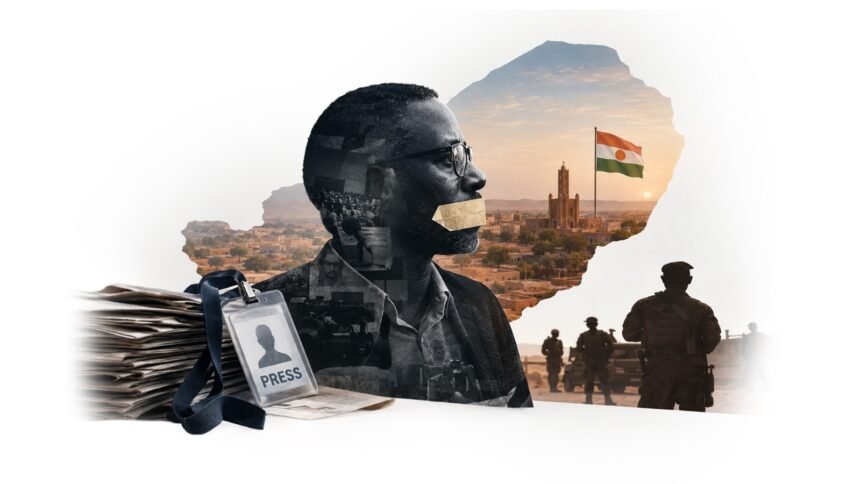
He left his radio station in Niamey at around seven in the evening on August 31 and never arrived home. Moussa Kaka, director-general of Radio-Télévision Saraounia and a former Radio France Internationale correspondent with more than thirty years covering Nigerien politics, security and society, has now been missing for over a week, with no word from him reaching his family, colleagues, or employer. His disappearance lands atop a documented pattern: more than a dozen journalists arrested, detained, or abducted in Niger between May 2025 and August 2026, a period during which the military authorities that seized power in 2023 have steadily narrowed the space for independent reporting. The Media Foundation for West Africa has called for an urgent investigation, but the deeper question Kaka’s vanishing raises extends beyond a single case file: what does state sovereignty mean when it is invoked to justify surveillance and suppression of the very press institutions meant to hold power accountable to citizens? Across West Africa’s recent run of military-led transitions, journalists have repeatedly become the earliest casualties of governments consolidating control under the banner of national security. Kaka’s case, and the silence surrounding it, tests whether Niger’s authorities will treat press freedom as compatible with the sovereignty they claim to be defending.
A Journalist Already Marked
Kaka’s disappearance is not his first brush with Niger’s security apparatus. In October 2025, authorities arrested him alongside five other journalists, Abdoul Aziz, Ibro Chaibou, Souleymane Brah, Youssouf Seriba and Oumarou Kané, in an investigation aimed at identifying who had circulated a social media invitation to a press conference organized by the Fonds de Solidarité pour la Sauvegarde de la Patrie, a state fund established by the military government to mobilize citizen contributions toward security, food and economic sovereignty. No formal charges were ultimately brought against Kaka, who was released along with two colleagues and placed under judicial supervision. At the same time, the remaining three journalists faced prosecution under Niger’s Cybercrime Law for ‘complicity in disseminating a document likely to disturb public order,’ a charge that carried eight to ten months of pretrial detention before their eventual release. That Kaka had already been targeted once, over an infraction as minor as circulating a press conference invitation, underscores how tightly the military government has drawn the boundaries of acceptable journalistic activity, and how a journalist with his public profile and institutional history was, by the time of his disappearance, already a marked figure within Niger’s security calculus.
The Machinery of a Deteriorating Press Landscape
Kaka’s case must be read against the documented trajectory of Niger’s press freedom environment since the 2023 coup. The Cybercrime Law, ostensibly designed to combat online disinformation and public disorder, has become a recurring instrument for detaining journalists over reporting or social media activity the military authorities deem destabilizing. The pattern- arrest, extended pretrial detention without formal charges resolved quickly, release only after months- functions as a form of institutional intimidation that does not require securing a conviction to achieve its chilling effect on independent reporting. For a media landscape already operating under resource constraints typical of Sahelian states, the cumulative effect of more than a dozen such cases within roughly fifteen months has been a narrowing of the journalists willing to cover politically sensitive material, from counterterrorism operations to the FSSP’s use of citizen contributions, without fear of arrest. Kaka’s decades of experience covering exactly these subjects made him precisely the kind of institutional memory a security-conscious government might regard as a liability, whether or not his disappearance ultimately proves connected to state action.
An International Call Without Enforcement Power
The Media Foundation for West Africa’s appeal, urging Nigerien authorities to treat the case with urgency, keep Kaka’s family and the public informed, and hold any responsible party accountable, reflects the limited tools available to regional press freedom advocates confronting a military government largely insulated from conventional diplomatic pressure. The organization’s parallel call for international bodies, including UN human rights mechanisms, to press Niger’s authorities for answers acknowledges that MFWA’s own leverage is primarily reputational rather than coercive. Niger’s military authorities, having weathered sanctions and diplomatic isolation following the 2023 coup without substantially altering their governing approach, have shown limited responsiveness to external pressure campaigns on human rights and press freedom issues specifically. This leaves Kaka’s case dependent largely on sustained visibility, ensuring that a single missing journalist does not disappear from international attention the way he has disappeared from Niamey’s streets, as the primary mechanism available to advocates seeking answers about his fate.
Sovereignty Cannot Be Built on a Silenced Press.
Niger’s military government has framed its post-2023 trajectory as a reclamation of sovereignty, security, economic, and informational, from what it characterizes as decades of foreign dependency and interference. But a state’s claim to sovereignty is diminished, not strengthened, when it cannot account for the whereabouts of a veteran journalist who vanished en route home from work. Genuine self-determination requires institutions capable of investigating disappearances transparently, prosecuting wrongdoing regardless of who commits it, and tolerating scrutiny of state programs, including funds like the FSSP that the government itself established to rally citizen support. Kaka’s case, layered atop a documented pattern of press restrictions since 2023, will test whether Niger’s authorities can meet that standard or whether the disappearance of yet another journalist becomes one more data point in a deteriorating record. Until Moussa Kaka is found, and until his case receives the transparent investigation MFWA has demanded, the credibility of Niger’s sovereignty project will remain shadowed by the fate of the newsroom voices it has struggled to accommodate.