


Bundibugyo, the Strain Without a Vaccine
Forty-eight point six percent. That was the fatality rate reported at the end of October for the Ebola outbreak centered on the Democratic Republic of Congo, which began in May and has since become the deadliest in the country’s history. More than 10,000 cases have been confirmed, and the outbreak now ranks as the second deadliest recorded, behind only the West African epidemic of 2014 to 2016. This week it moved further into the politics of travel and foreign health systems: the United States began requiring air passengers to sign a statement that they have not been in Congo, and the British government confirmed that a UK national in Congo has tested positive for the virus.
The death toll is reported in slightly different terms depending on the count. One widely cited count puts deaths at more than 5,000. In contrast, the Africa Centers for Disease Control and Prevention, the continent’s top public health agency, puts the toll at more than 5,300 across Africa, the vast majority of them in Congo. Both figures point in the same direction, and both are rising.
The First British Case
The UK government said the British national, who is in Congo, had tested positive and that the country’s established procedures for such cases had been activated. It said further information would be shared in due course and that the risk to the UK public remains low. It is the first confirmed case of a UK national contracting Ebola during this outbreak.
Some details remain unconfirmed. One account, based on an internal government document, says the patient is a health worker who will be flown to the United Kingdom for treatment; the Foreign Office has not confirmed whether the patient will be brought back. There is precedent: a UK resident exposed to the virus in July was flown home for medical care, as have other nationals infected abroad. Imported Ebola cases are extremely rare in Britain and have caused no deaths there. The UK has had only four confirmed cases ever, one from a laboratory incident in 1976 and three health workers who had responded to the West African outbreak in 2014 and 2015.
A Signature Before Boarding
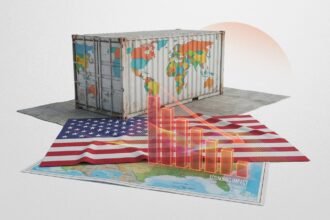
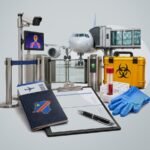
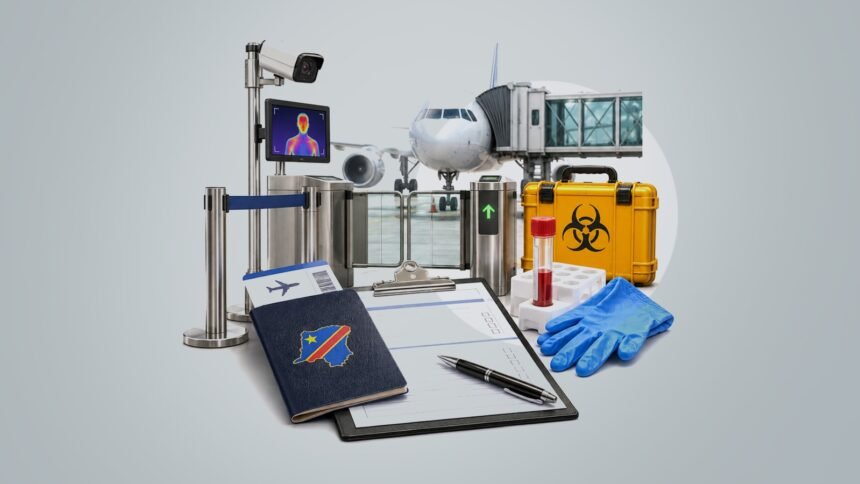
Under rules that came into force on Tuesday, anyone boarding an international flight to the United States must sign a statement that they have not been present in Congo in the 21 days before travel. The US Centers for Disease Control and Prevention describes the requirement as a public health measure to reduce the risk of Ebola entering the country through air travel. The 21-day window matches the period within which symptoms are expected to appear after infection.
An attestation is a light-touch measure compared with outright entry bans, but its message is heavy. It applies to every passenger on every route, and it singles out one African country as the source of risk, even though cases have also been confirmed in Kenya, Nigeria and Uganda. For Congolese travelers, business people and students, and for the health workers moving in and out of the outbreak zone, it adds a new layer of suspicion to journeys that were already difficult.
Why This Outbreak Is So Hard to Stop
The outbreak is driven by the Bundibugyo strain of Ebola, for which there is no approved vaccine and no approved treatment. That sets it apart from recent outbreaks of the more common Zaire strain, where the Ervebo vaccine helped health teams ring-fence clusters of cases. In recent weeks, clinical trials have begun to test Ervebo against Bundibugyo.
Ebola spreads through contact with infected bodily fluids such as blood or vomit. Early symptoms include vomiting and diarrhea, and the disease can progress to organ failure and internal bleeding. Without a vaccine, control depends on finding cases quickly, isolating patients, tracing their contacts and running safe burials, all of which demand trained staff, money and security in the areas most affected. Health workers are therefore both the front line of the response and among those most exposed, as the British case shows.
Risk, Fairness and the Travel Map
The two announcements of this week reflect a familiar imbalance. Richer countries can activate specialist procedures, evacuate their nationals and screen their borders, while the countries carrying the outbreak must manage it with far thinner health systems. Travel measures can protect people abroad, but they can also discourage the movement of responders and supplies and punish economies that are already under strain, which is why global health rules have long urged that such restrictions be proportionate.
The more lasting protection, for Congo and for everyone else, lies in ending transmission at its source. That means sustained funding for case-finding and isolation in Congo and its neighbors, rapid access to trial results, and a fair share of any vaccine that proves effective against Bundibugyo for the countries and health workers who need it first.
A Continent’s Own Defenses
Africa’s health institutions have grown stronger since the West African epidemic a decade ago, and the Africa CDC now tracks and reports this outbreak across the continent. The next step is for African governments to fund their own surge capacity, laboratories and vaccine trials, so that the response to a deadly outbreak on African soil is shaped first in Kinshasa, Kampala, Nairobi and Abuja rather than at foreign boarding gates. A signed form in an airport queue is a reminder of how others see the risk; the work of reducing it remains, above all, African.