




The Pan-African Paradigm of Custodial Duty and Extractive Neglect
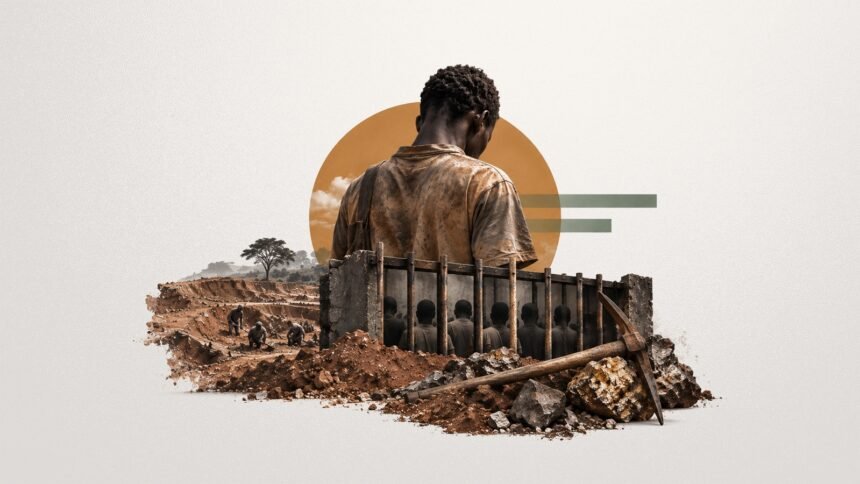
Thirty-seven bodies under a Minna sky answered questions no state audit had yet asked. When the Nigeria Security and Civil Defense Corps locked dozens of suspected illegal gold miners, many of them children as young as fourteen, into an overcrowded cell in Niger State this week, it exposed a fault line that runs far beyond one paramilitary outpost: the gap between a continent’s constitutional promises of dignity and the institutional machinery that is meant to enforce them. Niger state sits atop gold, tantalite, copper and lithium, minerals the world’s clean-energy economy now covets, yet the young Nigerians who dig for that wealth remain criminalized, unregulated and, this week, asphyxiated behind a locked door for want of ventilation. The paradigm at stake is not simply one of policing failure but of a broader structural sovereignty question: who has the right to extract Africa’s resources, under what protections, and who answers when the state’s own custodial apparatus becomes the instrument of death rather than the guarantor of due process. Nigeria’s response- an investigation, suspensions, three days of mourning- will be measured against a continental pattern in which accountability for the mining sector arrives only after tragedy forces it. Reclaiming that architecture, before the next raid and the next cell, is the unfinished work now before Abuja and every mineral-rich state like it.
A Cell Built for Fewer Than It Held
The NSCDC raided suspected illegal mining sites in the Wushishi-Lukoto area west of Minna on 15 and 16 September, sweeping up dozens of artisanal miners in operations the paramilitary corps described as routine enforcement. By Thursday, 37 of those detainees were dead. The corps initially attributed the deaths to a disease outbreak. This claim collapsed within a day under an intelligence report seen by Agence France-Presse pointing instead to overcrowding and inadequate ventilation. Survivors described a cell so densely packed that breathing itself became a struggle, guards who ignored banging on the door, and a slow realization among the detained that appeals for help were being met with silence. One survivor, positioned nearest the entrance where air still circulated, recounted screaming for help as fellow detainees told the guards, repeatedly, that people were dying. The institutional mechanics of custody, meant to be the state’s most basic guarantee of a detainee’s survival, instead became the mechanism of mass death, a failure not of individual cruelty alone but of a structural indifference to the conditions under which African states hold their own citizens.
Children Underground, State Overhead
Niger state governor Mohammed Umaru Bago’s admission that many of the dead were children aged fourteen to eighteen, working the mines instead of attending school, reframes the tragedy as a symptom of a deeper economic asymmetry. Artisanal mining in Niger State, more than twice the size of Belgium and rich in gold and battery minerals, has become the default employment matrix for a generation of Nigerien and Nigerian youth for whom formal schooling offers no comparable return. The governor’s declaration of three days of mourning and the postponement of campaigning for January’s elections signals political recognition of the crisis. Still, the underlying trajectory- children mining unregulated pits because no viable alternative exists- persists untouched by the week’s condemnations. Criminal gangs, officials and researchers note, tax the miners and extract levies for pit access, layering a shadow economy of coercion atop an already precarious labor force until the state builds a licensing and protection architecture around artisanal mining rather than simply raiding it; the same asymmetric vulnerability that filled that Minna cell will keep refilling similar cells elsewhere in the mineral belt.
The Gold That Left Before the Truth Did
Much of the gold extracted from Niger State’s illegal pits does not stay in Nigeria long enough to be regulated at all. According to a 2024 Swissaid report, the bulk of it is smuggled toward the United Arab Emirates, where it is laundered into global supply chains reaching Europe, the United States, Asia and South Africa, an extractive circuit in which the miners bear the mortal risk and a distant refining economy captures the value. This is the asymmetry that gives the Minna deaths their continental resonance: the same institutional gap that let 37 men and boys suffocate in a locked cell also permits the mineral wealth beneath their feet to exit the country largely untaxed and untraced. President Bola Tinubu’s ordered investigation and the suspension of the state’s NSCDC commandant, Suberu Siyaka Aniviye, address the immediate chain of custodial failure. Still, they do not yet touch the parallel architecture of smuggling that renders the miners’ labor so lucrative to intermediaries and so cheap, in human terms, to the state.
Teargas as Answer, Curfew as Silence
Protests broke out in Minna on Thursday evening and intensified Friday, when demonstrators, some carrying sticks, machetes and traditional hunting rifles, gathered near the NSCDC office demanding accountability. Security forces responded with tear gas and, according to Reuters witnesses, live rounds; at least one body lay on the street as protesters attempted to set fire to government buildings in the Tunga neighborhood. A 6 pm curfew imposed Friday evening restored a fragile calm, patrolled by soldiers and police. The pattern is a familiar one across the continent: a custodial or institutional failure triggers public grief, grief curdles into protest, and the state’s answer to protest is the same coercive apparatus that produced the original harm. Miner Yusuf Auwal’s plea to Reuters that the detained were not thieves but people seeking a livelihood captures the asymmetry precisely: those punished for informal extraction face the state’s force twice over, first in custody and again in the street.
Reclaiming the Right to Mine, and to Breathe
What Minna exposes is not an isolated custodial lapse but a continental pattern in which the institutions meant to police extraction become, through neglect or overcrowding or indifference, complicit in the deaths of the extractors themselves. Reclaiming structural sovereignty over Africa’s mineral wealth means more than renegotiating export contracts or courting new investors; it means building the domestic regulatory and custodial architecture that ensures a raid does not become a death sentence and a mining pit does not become the only path to survival for a fourteen-year-old. Tinubu’s investigation, if it produces more than suspensions, could become a template: licensing artisanal miners rather than criminalizing them, tracing gold before it reaches Emirati refineries, and holding custodial institutions to standards that treat detainees as citizens rather than liabilities. Until then, Niger State’s gold will keep moving, and so will the risk borne entirely by those who dig it up.