




The Pan-African Paradigm of Representation and Royal Prerogative
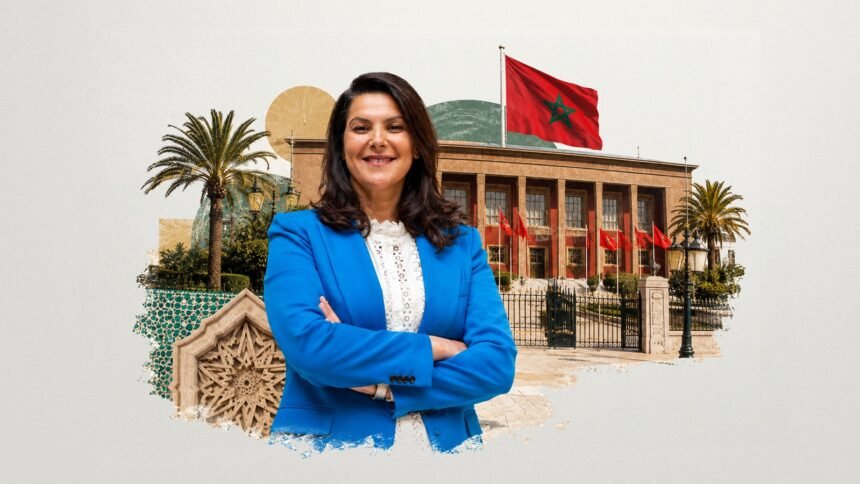
Thirty-eight percent. That is the share of Moroccans who bothered to vote on September 23, down from roughly half five years earlier, and it is the number that shadows the otherwise historic appointment of Fatima Ezzahra El Mansouri as the kingdom’s first woman prime minister. The palace announced her nomination on Tuesday, September 29, after her Authenticity and Modernity Party (PAM) finished first in the parliamentary contest. Across Africa’s constitutional monarchies and hybrid republics, the question is rarely whether a woman can hold high office; it is whether any office, however symbolically transformative, can carry real sovereignty when the architecture of power sits elsewhere. Morocco offers a paradigm case of that tension, where a milestone for gender inclusion coexists with an institutional matrix in which the crown retains decisive authority. Reclaiming political agency for a disillusioned generation will require more than a first, however overdue.
An Appointment Written Into the Constitution
The mechanics are straightforward. Under Morocco’s constitution, King Mohammed VI names the head of government from whichever party wins the largest number of seats in the House of Representatives. PAM secured 97 seats, ahead of the National Rally of Independents (RNI) with 66 and the conservative nationalist Istiqlal with 65. The palace statement instructed El Mansouri, a lawyer who served as housing minister in the outgoing government and as mayor of Marrakech, to form a coalition and submit a list of ministers for royal approval. The choreography is instructive: the electorate supplies a plurality, the monarch supplies the mandate, and the constitution frames the exchange as parliamentary democracy while preserving a structural asymmetry. The king keeps sweeping powers over foreign policy, defense and other key portfolios, which means the prime ministerial office administers a policy space whose most consequential boundaries are drawn above it.
A Party Born Inside the Palace Orbit
Institutional lineage matters in reading this result. PAM was founded in 2008 by an adviser to the king and has since positioned itself as a counterweight to the Islamist Justice and Development Party (PJD), promoting social modernization and secular-leaning views. The PJD, led by former prime minister Abdelilah Benkirane, won 54 seats and said it would sit in opposition, a striking contrast to the decade it governed before its heavy defeat five years ago. PAM’s ascent was helped by the recruitment of Fouzi Lekjaa, head of the national football federation and a two-time budget minister, who joined only weeks before polling. The recruitment of a figure tied to Morocco’s World Cup ambitions signals how electoral strategy now fuses sport, infrastructure and state prestige. Critics can reasonably ask whether a party with palace-adjacent origins can embody renewal, while supporters will argue that institutional continuity is precisely what a period of heavy public investment requires.
Youth Discontent and the Weight of Abstention
The incoming government inherits a legitimacy problem that no appointment can resolve alone. The drop in turnout to about 38 percent registers a widening distance between institutions and citizens, and the backdrop is vivid: deadly Gen-Z-led protests last year and a mass border rush on the Spanish enclave of Ceuta in July, both read as expressions of frustration over jobs, prices and opportunity. The outgoing coalition partners, PAM and the RNI, traded blame during the campaign over their failure to stop rises in food prices, and PAM initially ruled out remaining in a coalition with the RNI. Yet El Mansouri told supporters she would set no red lines in negotiations and declared that the country had turned the page. Whether coalition arithmetic produces a program that answers young Moroccans, rather than merely a cabinet, will determine if abstention hardens into a durable political posture.
The World Cup as Deadline and Distraction
Time pressure shapes the mandate. The new cabinet will supervise the final stages of a 20-billion-dollar effort to prepare for the 2030 World Cup, which Morocco will co-host with Portugal and Spain. Mega-events can crystallize national ambition, catalyzing transport, stadium and urban investment. Still, they also concentrate scarce fiscal and political attention on prestige projects at the very moment when many households want relief on bread-and-butter issues. The government is expected to pair that build-out with economic policies aimed at youth discontent, a pairing that will test administrative capacity and public patience. The symbolism of a woman leading that effort is not trivial, particularly given that the outgoing government counted four women ministers and that women have held senior institutional roles in recent years. But symbolism is an asset that depreciates quickly if the material conditions of ordinary life do not visibly change.
Beyond the First: Sovereignty Measured in Trust
Africa’s political calendar is full of firsts, and each deserves its due. Yet the deeper measure of self-determination is whether institutions command the confidence of the citizens they claim to serve. A woman at the head of government in Rabat marks genuine progress in representation, and it would be churlish to minimize it. At the same time, a turnout of 38 percent, a governing party with origins in the royal circle, and a constitutional design that reserves the most weighty decisions to the monarch together describe a system whose renewal is managed rather than won. The task before El Mansouri is therefore twofold: to assemble a workable coalition quickly, and to demonstrate that the office can generate outcomes, not just images. If Morocco’s young citizens come to believe that the ballot moves policy, the record of this appointment will be written as a turning point rather than a footnote.