



The Pan-African Paradigm of Climate Justice and Southern African Resilience
Mozambique has contributed very little to the warming of the planet, yet it is among the countries most exposed to its consequences. That is not a rhetorical flourish but the finding of Elisa Morgera, the United Nations Special Rapporteur on climate change, who delivered it at the close of an 11-day working visit. The timing is ominous: the world faces what is being described as a record-breaking super El Niño, with severe heatwaves, below-normal rainfall and heightened drought risk projected across Southern Africa. For a continent that has long argued that climate burdens fall most heavily on those least responsible, Mozambique’s situation distills the argument into a single national case. Reclaiming agency in climate governance begins with insisting that vulnerability, not emissions, shapes the allocation of protection.
The Warning from the Special Rapporteur
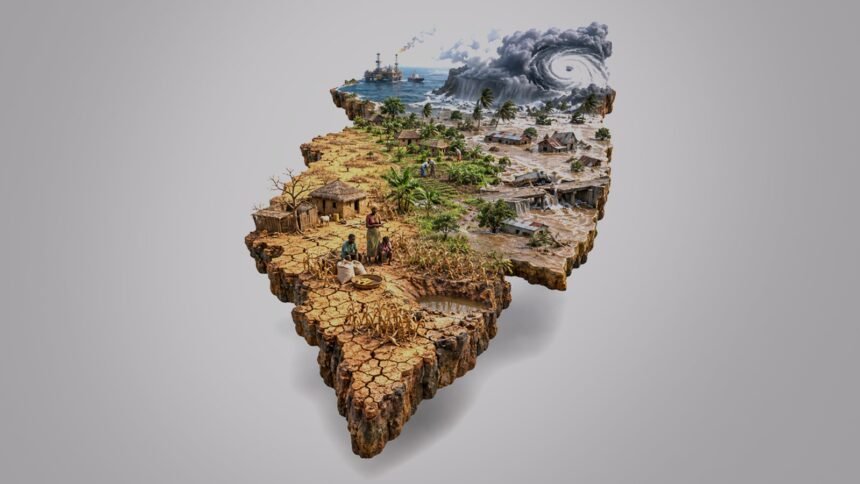
Morgera said that in the coming months, in the context of the 2026 super El Niño, prolonged droughts, cyclones and floods are predicted for Mozambique. The combination is unusual and punishing, because the country can face drought and flood within the same season, each stressing infrastructure, agriculture and public finances differently. Her assessment places Mozambique among the most climate-vulnerable nations on earth, and the United Nations ranks it among the most vulnerable in Africa alongside Malawi and Madagascar. The three share a profile of low emissions, high exposure and limited fiscal room to absorb shocks, a structural pattern that financial and diplomatic systems have so far failed to address adequately.
An Economy Already Under Strain
The warning arrives while Mozambique is still contending with acute economic strain following catastrophic flooding earlier this year. Three and a half million people are already experiencing acute food insecurity. Recovery has therefore barely begun when the next climatic threat is approaching, a compounding dynamic in which each disaster erodes the household and institutional reserves needed to withstand the following one. This is the cycle that climate adaptation finance is meant to break. Yet, the support available often arrives after the damage rather than before it, and in forms that add debt rather than build resilience.
Corporate Responsibility and the Fossil Fuel Frontier
Morgera also called on multinational companies operating in Mozambique to avoid environmental damage, arguing that very clear obligations must be defined so that private firms respect human rights and avoid foreseeable environmental and climate harm. She singled out fossil fuel companies as a particular concern. The point is pertinent in a country whose gas reserves have attracted some of the largest foreign investments in Africa. The tension between extractive revenue and climate exposure is acute: the same industry that promises fiscal salvation contributes to the warming that deepens Mozambique’s vulnerability. Binding obligations, rather than voluntary commitments, are the institutional response she advocates.
Preparing a Region for a Dry Season of Uncertainty
The projections extend beyond Mozambique’s borders to a Southern African region heavily dependent on rain-fed agriculture and hydropower. Drought risk threatens harvests, water supplies and electricity generation, and the effects typically cascade through food prices and public budgets. Early action is therefore decisive. Governments, regional bodies and humanitarian agencies can pre-position resources, support drought-tolerant farming and strengthen early warning systems, but only if funding and political attention precede the crisis. Experience across the continent suggests that anticipatory investment costs far less than emergency response.
Reclaiming Climate Sovereignty
Climate sovereignty means more than adaptation plans; it means the authority to demand justice from the principal emitters and accountability from the corporations operating on African soil. Mozambique’s case, articulated by a United Nations expert, strengthens the continental claim that loss and damage finance is an obligation rather than a favor. As the super El Niño approaches, the measure of global solidarity will be whether support reaches vulnerable communities before the rains fail or the cyclones arrive. The continent’s negotiators would do well to carry Mozambique’s example into every forum where the terms of climate finance are decided.