


The Pan-African Paradigm of Child Protection and Compound Crisis
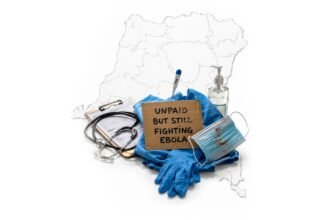
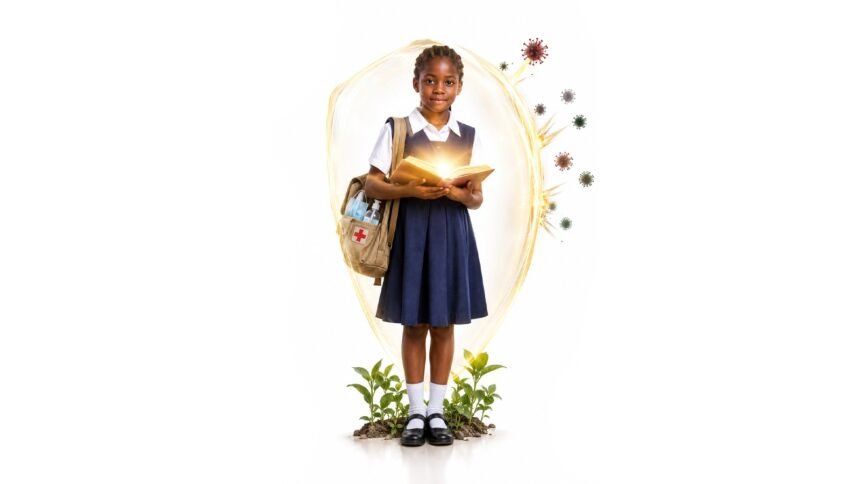
In Goma, children considered among the city’s most vulnerable, many of them orphaned, have received school supplies alongside protective kits against Ebola. The occasion was a solidarity day organized by the local NGO Assistance Samaritaine aux Vulnérables, or Samaritan Assistance for Vulnerable People. The scene is modest. Its meaning is not. In a city that Africanews describes as still living with the consequences of the fighting that led to its capture nearly two years ago, the distribution of school supplies and disease-prevention kits to orphans is an act of triage in a compound crisis that layers conflict, displacement, poverty and epidemic on the same small shoulders.
Espoir Kikuni, who heads the organization, told Africanews that orphaned children are often forgotten during awareness campaigns and that his group had decided to prioritize them so they could understand the Ebola virus like everyone else. Beyond material aid, the NGO runs a mental health and psychosocial support program in beneficiary schools, aimed at children coping with trauma linked to conflict, displacement and precarious living conditions.
The Epidemic That Targets the Youngest
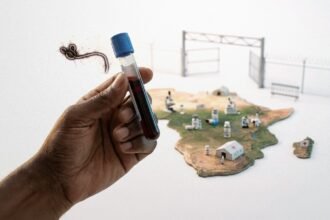
The numbers bear out the urgency of including children in Ebola prevention. Africanews reported on 2 October, citing Save the Children and Congolese health ministry data, that at least 2,071 children under 18 had contracted Ebola since the outbreak was detected on 15 May, and that 961 of them had died, almost one in two of those infected. About two-thirds of child deaths, 623, were among children under five, and the case fatality rate for children aged up to four stood at 61 percent against 48 percent for the outbreak as a whole. The charity estimated that about seven children had died each day on average since mid-May. The health ministry’s latest figures at the time put the overall toll at 4,018 deaths among 8,300 recorded cases. These figures depend on their sources and dates; they will continue to change as the outbreak evolves.
Trauma in the Classroom
Teachers in Goma see the human architecture of the crisis daily. Africanews reported that some pupils struggle to concentrate, while others become aggressive or withdraw, behaviors school officials link to the conditions in which the children are growing up. John Mwamba, principal of the EPAIMOG school, said the children have nothing and are traumatized by living away from their parents. Education teams therefore argue that schools must be more than places of instruction; they must offer a stable environment that restores routine and a sense of safety. In a conflict zone, the school becomes one of the few remaining institutions of the social contract, even when it is sustained largely by teachers and local charities.
Africanews describes the objective of this work in deliberately simple terms: through psychosocial support, schooling and health awareness, to help children gradually regain a more stable environment and rebuild their lives despite the wounds left by years of crisis. The modesty of the aim is its strength. Recovery for a traumatized child is not a single intervention but a sustained architecture of routine, attention and safety, built week by week by adults who remain present. That kind of care rarely features in emergency appeals, yet it determines whether a generation emerges from crisis able to learn, work and trust institutions.
Breaking the Intergenerational Cycle
Kikuni framed his organization’s work in long historical terms, telling Africanews that the region has been in this situation for more than 30 years and that investing in children is how intergenerational trauma can be limited. That framing is analytically important. It shifts the conversation from emergency relief toward structural prevention. Children who grow up in cycles of violence, loss, and disease carry those experiences into adulthood, into families, and into the political life of the region. A trajectory of repeated crisis is not only measured in casualties; it is measured in the cumulative psychological deficit that shapes the next generation’s choices.
Money, Accountability and the Last Mile
The resources to address this exist on paper. In a statement carried by AllAfrica on 4 October, Africa CDC said donor commitments to the Ebola response had reached 2.9 billion dollars and welcomed the Congolese government’s push for transparency, traceability and accountability in managing them, insisting that every dollar must be traceable from commitment to services delivered. The asymmetry is plain. Billions are pledged at international meetings, while orphans in Goma depend on a local NGO’s solidarity day for exercise books and protective kits. Whether funding reaches the last mile, including psychosocial care for children, is a test of the accountability architecture Africa CDC says it will strengthen.
Closing: Sovereignty Measured in Childhoods
Structural sovereignty in eastern Congo is usually debated in terms of territory, armed groups, and minerals. The children of Goma suggest a different metric. A state, and the regional and international system that supports it, is sovereign in a meaningful sense only when it can protect the most vulnerable from the compounded effects of war and epidemic, and give them a classroom where recovery is possible. Local organizations such as Samaritan Assistance for Vulnerable People are holding that space with limited means. The trajectory of the region will depend on whether national institutions and the 2.9 billion dollars in pledged Ebola funding reinforce that work, or leave it to charity. Repairing a generation is slower than retaking a city, but it is the more durable architecture of peace.