




The Pan-African Paradigm of Resource Wealth and Downstream Fragility
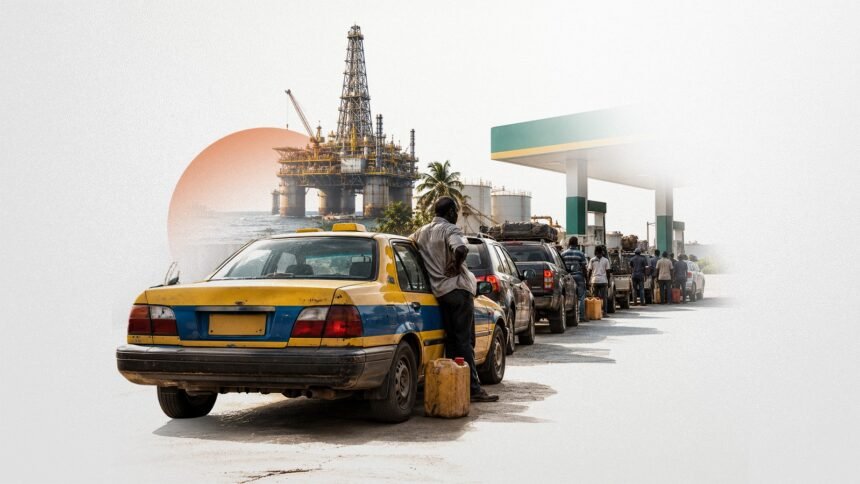
An oil-producing country whose capital cannot find diesel sounds like a contradiction, yet that is what Libreville has lived through since the end of September; queues had been growing outside service stations across the Gabonese capital, with customers waiting in long lines, jerrycans in hand. A taxi driver, Vianey Ndoumou, said he had been queuing since 4 a.m. after being sent from one station to another. RFI quoted a motorist who put the paradox plainly: Gabon is an oil country and should not be short of diesel.
Gabon’s experience is a case study in a familiar weakness: producing crude is not the same as controlling the fuel an economy runs on. The gap between the two is where shortages happen.
The Queue as Economic Indicator
The details of the shortage show how quickly it spread through daily life: fuel was rationed at 10,000 CFA francs per person, while RFI and the business outlet Échos de l’Éco reported a cap of 15 liters per customer; the two limits may reflect different stations or stages of the crisis. Diesel had been unavailable for more than three days across Greater Libreville, including Ntoum and Akanda. Échos de l’Éco noted that taxis were hit first, and that a diesel shortage reaches freight, generators and construction sites, turning a forecourt problem into a macroeconomic one if it lasts.
Competing Explanations
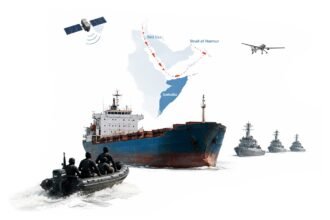
Officials and industry actors have offered different accounts of what went wrong. Ministry of Petroleum and Gas acknowledged a temporary supply disruption and linked the shortage to declining stocks at SOGARA, the national refinery, and to difficulties transporting refined fuel because of the maritime crisis. Échos de l’Éco reported that the ministry pointed to lower stocks held by distributors. At the same time, downstream officials blamed the delayed arrival of an imported cargo, which docked on the night of 3 to 4 October. Thibault Gaël Idoumi, director general of the downstream oil and gas sector, told RFI that since the Iran war, all countries are buying on almost the same market and that logistical constraints had held up the ship. A forecourt manager, Regis Mavoungou, said supply was not the issue at all: stations ordering 20,000 liters receive 15,000, he said, and this happens repeatedly.
Échos de l’Éco summed up the problem: none of these explanations says why reserves were too thin to absorb a single delayed ship. That is the structural question.
A Refinery Built for Another Era
The figures on Gabon’s refining capacity show a large gap between upstream and downstream. Échos de l’Éco, citing the World Bank, reported that oil provides about 60 percent of tax revenue and more than 80 percent of export earnings, and, citing a Reuters survey, that Gabon extracted about 220,000 barrels a day in August. SOGARA, the country’s only refinery, in Port-Gentil and in service since 1967, processed about 13,000 barrels a day in 2023 and 2024, according to OPEC, roughly 6 percent of output, and its activity fell 15.2 percent year on year in the first quarter of 2026.
How much of national demand the refinery covers is itself contested. The storage company SGEPP, quoted by the Agence Gabonaise de Presse on 4 October, said about 60 percent of fuel consumed is imported and 40 percent comes from SOGARA. Échos de l’Éco reported estimates ranging from 28 percent, in a 2023 OPEC note, to 80 percent, according to the ministry, and called the gap a sign of missing public data. Policy cannot be planned well when the state’s own figures disagree this widely.
Stocks, Ships and a Tight Global Market
Storage is the second weak link. Échos de l’Éco reported that SGEPP had aimed in 2021 and 2022 for 12 days of diesel autonomy, up from three, but that recent figures are lacking, and that similar shortages were reported in 2015, 2018 and 2022. At a meeting at the ministry on 5 October, SGEPP’s director general, Yvon Tchicot, acknowledged that imported stocks had not returned to pre-crisis levels and said international demand was very high, the outlet reported. AGP said the planned New Owendo Petroleum Depot should double national storage capacity. A tanker was due to restore normal diesel supply by Monday, but petrol had then become scarce.
Subsidy Choices and Investment Trade-offs
Fiscal choices are also part of the picture. Échos de l’Éco, citing a World Bank review dated 29 September, reported that fuel subsidies reached nearly 1 percent of GDP in 2024, about 126 billion CFA francs, with 96 percent benefiting wealthier households, and that the 2026 subsidy allocation was raised from 12 billion to 55 billion CFA francs in a supplementary budget. The outlet was careful to say no direct link to the shortage has been established. Still, money spent holding down pump prices is money not spent on storage tanks, refinery upgrades and supply contracts.
Toward Structural Sovereignty in Energy Supply
Gabon’s queues are a reminder that energy sovereignty is measured downstream, at the pump, not at the wellhead. A country that exports crude but relies on imported cargoes for most of its diesel stands on the weaker side of an unequal market, exposed to every disruption in global shipping. Building structural sovereignty means publishing reliable data on refining and stocks, enforcing minimum reserve requirements, finishing the storage expansion already planned, and linking refinery investment to domestic demand rather than to export revenue alone. SOGARA’s stated expansion plans, which Échos de l’Éco put at 1.25 million tonnes by 2027 and then 2.77 million, point in that direction. The test is whether the next delayed ship passes without anyone noticing.