




Protest, Military Transition and The Promise of Renewal
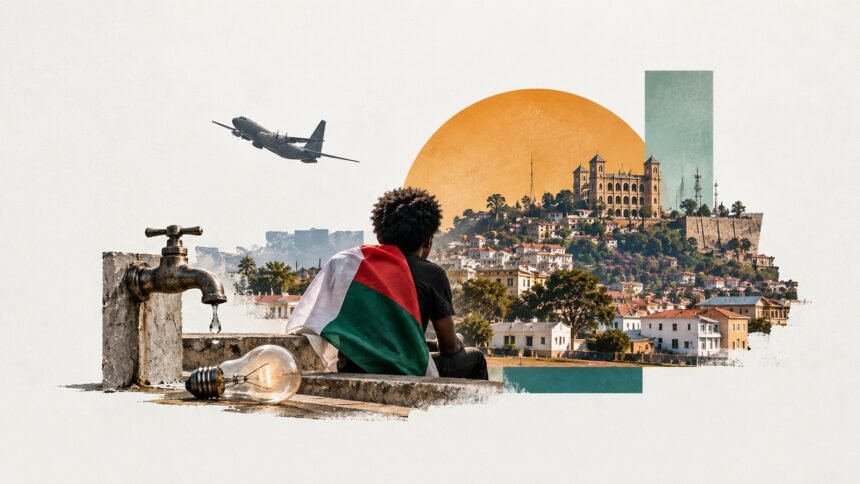
Removing a ruler is the work of weeks; changing what made people rise against him is the work of years. Madagascar is now learning the second half of that lesson. On 12 October 2025, after eighteen days of street protests sparked by chronic water and electricity cuts, President Andry Rajoelina stepped down and left the country aboard a French military aircraft. One year on, the young activists who led those demonstrations say the military-backed transition that followed has yet to deliver the political “refoundation” it promised.
“The basic demands still haven’t been met,” says Mihary Rakotondravelo, a prominent Generation Z activist who took part in the protests. His group sits on the national consultation committees involved in drafting a new constitution, a process that has stalled.
A Continental Pattern: Youth Protest, Military Outcome
Madagascar’s 2025 uprising was one of several on the continent in which young people, organized largely online, forced a political crisis over everyday failures such as power, water, jobs and the cost of living. What followed fits a familiar sequence. When a civilian government falls, the army is often the best organized institution left standing, and it steps in promising order and renewal. The military installed Colonel Michael Randrianirina, commander of the Capsat military unit, as “President of the Refoundation of the Republic of Madagascar”, and pledged to hold elections within two years.
The Timetable
The transition’s calendar is now clearer, if still distant. The military government has pledged to have a new constitution in place before presidential elections scheduled for late 2027. Under a timetable announced after the Southern African Development Community (SADC) called in August for a “return to constitutional normalcy”, the constitutional proposals are due to be presented in May and then put to a referendum. Regional pressure has therefore produced dates, but not yet a text, and the activists complain that the substance of change has lagged behind the schedule.
Dates matter, because transitions without them tend to drift. But a calendar can also become a substitute for change, allowing a transitional authority to point to milestones while the conditions that brought people onto the streets stay the same. The months between now and May, when the proposals are due, will show whether the consultation committees are shaping the text or merely being consulted on it, and whether the promised referendum will offer voters a real choice.
The Exile and His Shrinking Camp
Rajoelina, meanwhile, spends most of his time in exile in Dubai, seeking support from other African leaders. In February, he attended an official ceremony in Eswatini, whose king had described his removal as unconstitutional, a visit that angered Madagascar’s military rulers. At home, his political base has largely dissolved. Most of his members of parliament have switched to supporting the military, and his former supporters have either fled the country or been imprisoned.
He has so far escaped prosecution. Madagascar’s Court of Accounts documented the diversion of public resources for the benefit of his inner circle, but parliament never voted to impeach him. That gap between documented findings and legal consequences is one of the clearest tests of whether the transition is a break with the past or a change of personnel.
What “Refoundation” Has to Mean
The protests were not, at root, about one man. They were about taps that ran dry and lights that went out. A transition judged only by whether Rajoelina is gone will be judged a success; one judged by whether households have more reliable water and electricity, and whether public money is protected from diversion, faces a harder test. The activists’ verdict, a year on, is that the second test has not yet been passed.
There is also the question of who owns the new constitution. Gen Z groups have seats on the consultation committees, which gives them a formal voice. But a process that is stalled, run under military leadership and paced by an external regional timetable risks producing a text that young people do not recognize as theirs, the very outcome that would undermine the legitimacy the transition claims.
Self-Rule Beyond the Barracks
For Madagascar, real self-determination will not be measured by the departure of a president on a foreign aircraft or by the arrival of a colonel at the presidency. It will be measured by whether citizens can write and approve their own constitution, choose their leaders in a credible vote in 2027, and hold those who misuse public money to account through the courts.
The coming months will show whether the military government treats the May proposals and the referendum as a genuine handover of authority to voters, or as a formality on the way to entrenching itself. The generation that filled the streets of Antananarivo a year ago has already shown it can force change. Whether it can now shape that change is the question the anniversary leaves open.