



A Scorecard Kept by One of the Continent’s Richest Critics
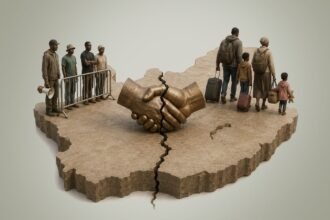
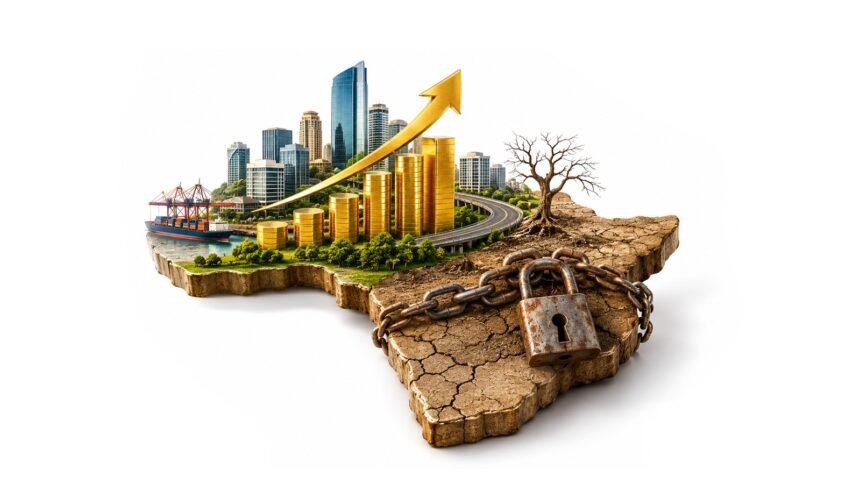
Can a continent grow richer and less free at the same time? The latest report from the Mo Ibrahim Foundation answers yes, and it puts numbers on the contradiction. Over the past decade, it finds, Africa has made broad progress on economic opportunity and human development. Over the same decade, it has registered steep declines in security, human rights and public participation, during a period marked by multiple military coups and devastating wars.
The foundation’s index found that 30 countries, home to half of Africa’s population, had better overall governance scores in 2025 than in 2016, largely because their economies improved. But 23 countries deteriorated, and one was unchanged. Behind the headline split lies a harder point: much of the progress is material, while much of the decline concerns the rules that decide who holds power and how citizens can challenge it.
Mo Ibrahim, 80, is a Sudanese-British billionaire who made his fortune in telecoms and has spent it monitoring and encouraging better governance across Africa. Speaking as the report came out, he offered a blunt explanation for the slide: Africa’s leaders are watching the rest of the world, and they like what they see.
Where the Declines Are Sharpest
The report shows sharp declines among some of the continent’s largest countries, often linked to reduced political rights—seven of the 10 countries with the biggest declines experienced at least one coup over the decade. Burkina Faso recorded the largest deterioration of any country. Nigeria, Sudan and Tunisia were also among the worst performers.
That list cuts across regions and political systems. It includes a Sahel state under military rule, Africa’s most populous country, a nation at war with itself, and the North African country once held up as the success story of the 2011 uprisings. What links them is not a single cause but a common direction: less room for citizens to take part in public life, and weaker protection for their rights.
The coup pattern matters for how the numbers should be read. Military takeovers tend to arrive with promises of order and renewal. The index suggests that, measured over a decade, the countries that went through them are more likely to sit among the worst decliners than among the improvers.
Elections Without Fair Contests
Ibrahim pointed to elections over the past year as evidence of the trend. He highlighted Tanzania, where security forces were accused of killing thousands of protesters, and Uganda, where, in his words, opposition leader Bobi Wine was “hunted and physically attacked”. The death toll in Tanzania remains an accusation rather than an established count, and it is presented here as such.
The examples are pointed because both countries hold regular elections and present themselves as stable. The index’s message is that holding a vote is not the same as allowing a contest. When security forces shape the campaign and opposition figures are pursued, the formal calendar of democracy survives while its substance drains away.
“Why Not Me Too?”
Ibrahim places part of the blame outside Africa. He links declining rights on the continent to the decline of liberal democracy around the world, from the United States to Europe and Russia. “It is a strange era… we can see this phenomenon of the rise of strongmen everywhere,” he said. “If you’re an African leader and you see all those strong people rising everywhere…you say, why not me too? I can get away with it.”
He singled out the Trump administration’s shift towards what he called a more “transactional kind of diplomacy”, saying it was “weakening the international order and the rule of law”. The argument is not that outside powers cause African backsliding, but that they have lowered the cost of it. When the countries that once lectured others on governance stop doing so, or behave in similar ways themselves, leaders inclined to tighten control face less pressure.
That reading carries an uncomfortable implication for African institutions. If restraint depended largely on outside scrutiny, its disappearance exposes how thin domestic and regional checks have been.
The End of USAID and the Push to Self-Reliance
The continent also faces fresh financial pressure. Washington’s decision last year to suddenly terminate USAID ended billions of dollars of support to African countries. Ibrahim described the move as “brutal”. “Of course, it is a prerogative of the US to give aid or not,” he said. “But please give notice.”
Yet he also sees a lesson in it. Africa has proved fairly resilient so far to the cuts, he said, and the shock has forced the continent “to face reality”. “We need to depend more on ourselves. And we need to work with all partners who are willing to work with Africa, whether it is Europe, whether China or India or whoever,” he said.
That combination of self-reliance and many partners is now a common refrain among African governments. The index adds a caution: economic diversification of partners does little for citizens if accountable institutions at home do not match the gains.
A Generation That Will Not Accept Less
Ibrahim’s hope lies, as it always has, in demography. Already 60 percent of Africans are under 25, and by 2050 one in three young people worldwide will be African. “They are much better informed, much better educated than the past generation,” he said. He was unsparing about his own: “We wasted Africa, our generation, I must admit that. We really wasted some opportunities.”
The index, read alongside that admission, frames the choice facing African states. The economic gains of the past decade are real and measurable. So is the erosion of rights and participation. Self-rule that is worth the name rests not only on growth figures and diversified partnerships but on citizens’ ability to choose and remove those who govern them. A young, informed population will judge its leaders on both counts, and the 23 countries that slipped backward have the least time to show they have heard the message.