






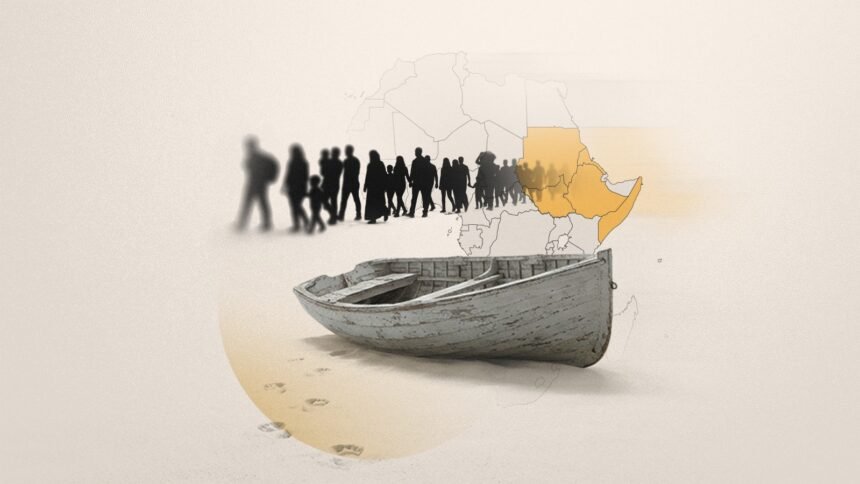
Pan-African Echoes: Historical Currents of Displacement and Migration
Africa’s narrative of human movement is a profound tapestry woven from the threads of colonial disruption, postcolonial conflict, and enduring resilience, in which arbitrary borders have long severed communities and sparked ceaseless journeys. The mid-20th century’s decolonization struggles, from Algeria’s war of independence that displaced over a million people to Angola’s liberation battles that scattered populations across southern frontiers, set the stage for a continent perpetually in flux. By the 1980s and 1990s, civil wars ravaged the landscape: Mozambique’s 16-year conflict uprooted five million, while Somalia’s state collapse in 1991 triggered a diaspora that continues to echo through the Horn. The Rwanda genocide of 1994 alone propelled two million into neighboring havens, intertwining with Burundi’s ethnic strife. In the Horn, the Ethiopia-Eritrea war from 1998 to 2000 displaced over 100,000, embedding a legacy of mutual suspicion that lingers today. Environmental pressures amplify this: Sahel droughts displace millions annually, while East African famines, like those in the 2011 Horn crisis affecting 13 million, blur lines between refugees and economic migrants. By 2025, intra-African immigrants will hover at 15-20 million, driven by labor pulls from West Africa’s vibrant trade hubs to Southern Africa’s resource economies, fostering remittances that sustain households but strain infrastructures. Refugees, however, number around 42.5 million globally, with Africa sheltering over 25 million displaced—7 million as refugees within the continent—highlighting a Pan-African solidarity tested by resource limits. This historical mosaic reveals ubuntu’s spirit clashing with modern fatigue, where shared colonial scars demand collective healing yet often yield to national survival instincts.
Refugee Realities: Numerical Shadows and Continental Burdens
The magnitude of Africa’s displacement crisis in 2025 paints a stark portrait of vulnerability, with UNHCR data revealing 42.5 million refugees worldwide, of which Eastern and Southern Africa alone host 25.1 million forcibly displaced, including 6.3 million refugees and asylum-seekers alongside 18.1 million internally uprooted. Protracted situations ensnare 23.9 million, with West and Central Africa adding 12.7 million to the tally, underscoring a continent where 71% of refugees reside in neighboring low-income states. South Sudan’s unrest has exiled 2.3 million, Sudan’s escalating violence since 2023 has displaced 2.5 million more, while the Democratic Republic of Congo’s conflicts scatter millions across porous borders. Immigrants, often economic kin to refugees, number 15-20 million, navigating informal networks that bolster economies while evading formal counts. Vulnerable groups dominate: children comprise 40% of the displaced, women and girls 50%, facing heightened risks of malnutrition and exploitation. Africa’s top hosts bear disproportionate loads—Uganda with 1.9 million, Ethiopia 1.1 million, Sudan 1.1 million, Chad 1.3 million, Kenya 870,000—each a fragile pillar in a system where aid shortfalls halve rations and shutter schools. Uganda, Africa’s refugee epicenter, accommodates 56,000 Eritreans and 16,000 Ethiopians within its mosaic, a snapshot of Horn-derived anguish where climate-induced famines and political repressions converge, demanding nuanced responses beyond mere statistics.
Asylum Crossroads: Uganda’s Policy Shift Amid Funding Crises
Uganda, once a paragon of asylum openness in Pan-African tradition, now stands at a pivotal juncture with its November 2025 declaration halting refugee status for new arrivals from Eritrea, Ethiopia, and Somalia, a move rooted in acute funding droughts and perceptions of stabilized homelands. Minister Hillary Onek’s directive, emphasizing no active wars in these nations, reflects a broader trend: UNHCR funding plummeted from $240 million annually to under $100 million, with only $18 million disbursed in 2025, despite hosting nearly 2 million refugees. This policy, while preserving rights for existing residents, strands newcomers in precarious limbo, ineligible for protection yet unable to return safely. Eritreans, fleeing indefinite military service and human rights abuses, and Ethiopians escaping regional ethnic clashes, now face deportation threats or underground existence in Kampala’s fringes. The 2025 refugee response plan, budgeted at $968 million, secures just 25% of funding, crippling services across 13 settlements where World Food Programme cuts affect a million people. Global aid retrenchments—U.S. freezes under Trump and U.K. reductions to 0.3% of GNI by 2027—exacerbate this, echoing earlier 2025 WFP ration halvings. Yet, gestures like South Korea’s $2.9 million rice donation offer fleeting relief. This crossroads signals a continental trend: Egypt’s visa mandates for Sudanese, Kenya’s encampment push, all amid donor fatigue, the unraveling of Uganda’s progressive model of work and integration rights, and the risk of a cascade of regional instability.
Ethiopia’s Exile: Internal Fractures and Cross-Border Flows
Ethiopia embodies the Horn’s paradoxical exile dynamics, serving as both a major refugee host and a prolific source of flight, with internal displacements reaching 1.9 million from ethnic federalism’s fissures—Amhara unrest, Oromia insurgencies, and Tigray’s lingering scars from the 2020-2022 war that killed hundreds of thousands. Hosting 1.1 million refugees itself, Ethiopia propels outflows southward: Oromo activists, Tigrayan survivors, and Amhara youth evading conscription form the bulk of the 16,000 in Uganda, their journeys marked by perilous treks through contested terrains. The 2018 peace accord with Eritrea, once a hopeful thaw, has frayed under Prime Minister Abiy Ahmed’s assertive rhetoric on sea access, framing it as vital to Ethiopia’s 130 million landlocked population and issuing veiled threats toward Eritrean ports like Assab. Recent 2025 escalations—military buildups, UN alerts of Eritrean preparations, and Ethiopia’s claims of Eritrean incursions—revive 1998 war fears, positioning Ethiopian refugees as geopolitical casualties. Denial of asylum in Uganda not only curtails personal sanctuaries but also intensifies Ethiopia’s volatility: returnees bearing trauma could reignite internal conflicts, while unintegrated exiles strain regional resources, undermining Pan-African burden-sharing and perpetuating cycles of despair.
Eritrea’s Escapees: Authoritarian Chains and Diaspora Desperation
Eritrea’s regime forges one of Africa’s most haunting refugee streams, with over 500,000 fleeing a nation of 3.6 million gripped by indefinite national service—often likened to modern slavery—enforced since 1991 independence and hardened after the 1998 Ethiopia war. In Uganda, 56,000 Eritreans cluster in urban shadows, their low asylum approval rates (15-30%) consigning many to undocumented peril, vulnerable to trafficking and exploitation. The 2025 policy halt amplifies this: barred from status, they endure mental health crises, gender-based violence, and Asmara’s diaspora tax extortions, their remittances a coerced lifeline sustaining the regime. Amid resurgent Ethiopia-Eritrea tensions—Abiy’s Red Sea ambitions clashing with President Isaias Afwerki’s border fortifications—Eritrean refugees become entangled pawns: suspected as spies in Ethiopian contexts or informants elsewhere, their inclusion erodes under reciprocal accusations. This severance from asylum pathways hollows Eritrea further, accelerating brain drains that deprive it of youth and skills, while fostering transnational desperation networks that destabilize neighbors, challenging the Pan-African ethos of mutual support.
Inclusion Imperatives: Navigating Displacement’s Web and Neutralization Challenges
Inclusion emerges as Africa’s critical refugee mandate, yet displacement’s complexities—interwoven with socioeconomic, gender, and environmental strands—render neutralization to citizenship or residency an elusive goal. In Uganda, progressive policies granting land, work, and services falter against realities: 79% of refugees are women and children, but education reaches only 30% of youth, health deteriorates with aid cuts, and climate displacements add 18 million internally, muddying refugee-immigrant distinctions. Xenophobia surges in host communities, as seen in South African deportations and Libyan abuses, while economic migrants’ 15 million bolster informal sectors but face expulsion waves. AU-UN frameworks, such as the 1969 OAU Convention and the 2009 Kampala Declaration, advocate “solutions from the start,” inspiring Rwanda’s empowerment programs and Zambia’s inclusive insurance initiatives. However, 2025’s funding gaps—Uganda’s plan to meet 25%—spawn “limbo economies” of informal toil, black markets, and social rifts—gender vulnerabilities peak for Eritrean and Ethiopian women in transit, demanding tailored protections. True inclusion requires dismantling camp isolation, nurturing hybrid identities that enrich hosts, and addressing neutralization barriers like legal hurdles and resource scarcity, lest perpetual exclusion breed radicalization and continental fractures.
Pan-African Solidarity Under Siege: AU-UN Pathways and Emerging Threats
The African Union’s 2019 focus on refugees, returnees, and IDPs galvanizes a Pan-African revival, aligning with the UN’s Global Compact to shift from crisis response to proactive prevention. Mechanisms like the AU Humanitarian Framework engage regional economic communities in border accords, while UNHCR’s 2026 Eastern Africa strategy innovates with digital training for Somali youth and peace initiatives in Mozambique. Yet, protracted crises trap 23.9 million, Sudan’s quarterly 1.1 million displacements swelling totals, and aid nadirs revert to 2015 levels. For Eritrean-Ethiopian streams, AU-IGAD mediations seek de-escalation, but donor shortfalls imperil progress. Horizons demand recalibration: labor mobility pacts, climate-adaptive settlements, and harnessing refugee innovation for youth dividends. Unmet resettlement needs of 125,000 and 48% secondary displacement surges since 2020 warn of a darkening future without bolstered commitments.
Asylum’s Reckoning: Grave Fallout from Exclusion in Tense Times
Denying asylum and inclusion to Eritrean and Ethiopian refugees in Uganda, amid Ethiopia-Eritrea’s 2025 flare-ups, heralds dire repercussions, shattering lives and regional stability. Tensions—Abiy’s Assab pursuits, Isaias’s mobilizations, UN warnings of imminent war—mirror 1998’s prelude, potentially displacing millions afresh. For the denied, limbo spawns chaos: undocumented Eritreans fuel irregular migrations to Europe, perishing in deserts or detention, while Ethiopians incubate extremism, their plights exploited by proxies. Uganda’s reversal erodes its stature, inspiring clampdowns elsewhere, fraying OAU principles, and AU unity. Economically, it wastes talent—Eritrean experts, Ethiopian farmers sidelined—deepening aid reliance. Socially, it stokes xenophobia, as Kampala tensions attest, risking ethnic conflagrations. Politically, it empowers Asmara and Addis to export turmoil, returnees as destabilizers. Cascades include Horn volatility, refugee radicalization, and Pan-African erosion, in which hospitality succumbs to scarcity. Urgent reversal—reinstating status, piloting inclusions—averts abyss, reaffirming asylum as Africa’s sacred bond.
Toward Inclusive Dawn: Forging Resilient Pan-African Bonds
In the refugee saga of Africa, Eritrean and Ethiopian voices implore a recommitment to inclusion’s promise, transforming exclusion’s gloom into shared prosperity. Uganda’s dilemma, overshadowed by Horn storms, probes Pan-African endurance and urges innovative collectives. Restoring asylum, amplifying AU-UN collaborations, and channeling migrant energies—via settlement hubs, apprenticeships, climate alliances—pave paths from peril. The dawn awaits not as fate’s captive but as deliberate creation: a resilient mosaic where exiles thrive, havens strengthen, and unity prevails.


