



Ethiopia’s Federal Map Still Leaves Towns Like Moyale Claimed by Two Regions at Once, and a Symbolic Act Can Bring Gunfire Within Minutes
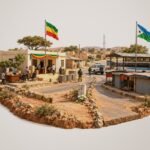
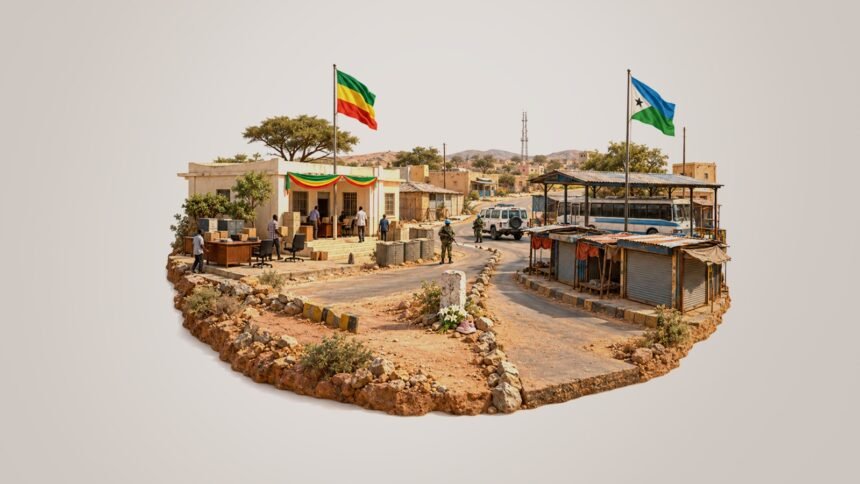
On Sunday, 18 October, officials of Ethiopia’s Somali Regional State opened a new mayor’s office in Kebele 02 of Moyale, carried in office equipment and raised the Somali Region’s flag. Within minutes, according to residents, the town was full of gunfire. When it stopped, a 13-year-old girl was dead. Her uncle, Shuraa Waariyoo, identified her as Diqqoo Jaataan Aagaa. By Tuesday, he said, she had still not been buried.
Moyale is a border town in more than one sense. It sits on Ethiopia’s frontier with Kenya, and inside Ethiopia it straddles the line between the Borana zone of Oromia regional state and the Somali Region. Which administration governs which neighborhood has been disputed for years, and Sunday’s flag-raising touched that nerve directly.
Two Accounts of One Death
Who killed the girl is contested, and the accounts divide along the same line as the town. Residents on the Oromo side accuse the Somali Region police of shooting her and killing her instantly. Mallicha Diida, a resident of Kebele 02, alleged that the officers killed the child after accusing her of throwing stones at them, calling it an act of “cruelty and lawlessness.” A security official also said Somali Region security forces killed the 13-year-old in connection with the flag dispute.
A resident on the Somali side gave a different version. In this account, the Somali-side town administration had moved its office from previous premises to a new location, and it was Oromia regional militias who opened fire to stop Somali Region police from bringing in equipment and raising the flag. “The young girl was killed in the middle of this, but Somali Region security forces did not target or kill that child,” the resident said. No independent investigation has yet been announced, and the competing claims have not been verified. These accounts come from residents and one official, all reached by a single local news source.
Soldiers Between the Lines
Both sides agree that the exchange of fire between Oromia militia members and Somali Region police lasted several minutes and that soldiers of the Ethiopian National Defense Force (ENDF) intervened to stop it. Security forces from both regions and the ENDF then held talks, but the security official said the discussions failed to produce an agreement. The girl’s uncle alleged that Somali Region forces took her body after the killing, and said the family was still negotiating with the authorities for its return.
On Monday, elders and security officials reportedly agreed to remove the Somali Region’s flag. That compromise brought its own backlash. On Tuesday, Somali residents, particularly in Kebele 02, staged demonstrations that disrupted transport services and forced businesses and bus stations to close amid security fears. In a town whose economy depends on cross-border trade and traffic, a shuttered bus station is more than an inconvenience.
A Cycle, Not an Incident
“In Moyale, human blood has been spilled year after year,” Mallicha Diida said. Clashes linked to territorial disputes between Borana communities in Oromia and Garre communities in the Somali Region have repeatedly left people dead, displaced families, and seen homes burned. Tensions rose sharply in July and August 2025, when the Somali Regional State approved an administrative restructuring plan that created new woredas, or districts, and new zonal administrations. Oromo opposition parties protested against changes affecting contested territories, and later clashes along the Oromia–Somali border killed residents and displaced more than 288,000 people.
Seen against that history, opening an office and raising a flag in a disputed kebele is not a neutral administrative act. To one community it asserts a claim; to the other it confirms one. The same gesture can be described as a routine relocation or as a provocation, and both descriptions are sincerely held. That is what makes Moyale so hard to govern and so easy to inflame.
Federalism’s Unfinished Map
Ethiopia’s federal system organizes regions largely along ethnic and linguistic lines. Where communities are mixed, or boundaries were never settled, that design turns local administration into a zero-sum contest over who belongs where. Regional special police and local militias, armed and answerable to regional governments, then become parties to the dispute rather than neutral guarantors of order. The federal army can stop a firefight, as it did on Sunday, but it cannot settle the underlying question of where one region ends and the other begins.
The country’s attention is currently fixed on larger crises, from the north to its tense relations with Eritrea. Moyale is a reminder that the quieter boundary disputes between regions can also cost lives and displace hundreds of thousands of people when they are left unresolved.
Settling Borders Before They Settle Themselves
A family in Moyale is waiting to bury a child. The minimum it is owed is the return of her body and a credible, independent investigation into how she died, with findings that both communities can see. Beyond that, lasting peace in towns like Moyale depends on Ethiopians resolving their internal boundaries through law, negotiation, and local consent, rather than through flags, offices, and the guns that follow them. A federation that cannot settle its own map leaves its citizens to settle it in the street, and children pay the price.