




In late June, at a conference hall in Cairo, a senior official from the United Nations Conference on Trade and Development (UNCTAD) clicked to a slide that drew a rare murmur from the room.
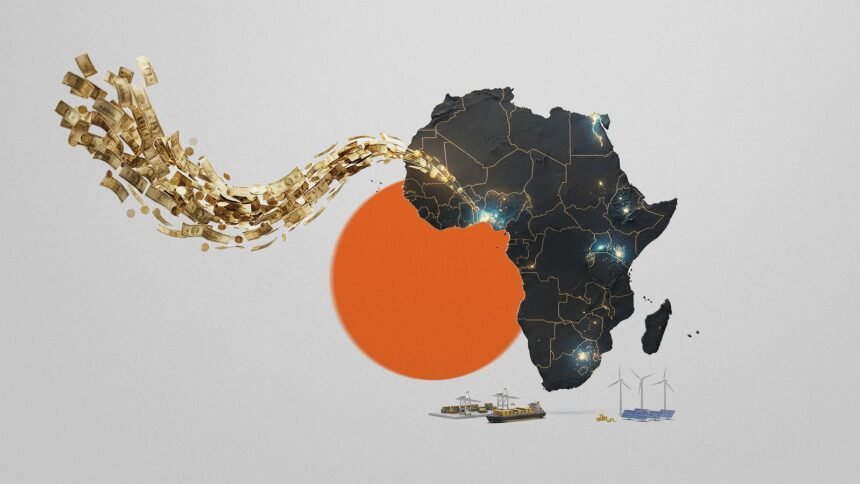
Foreign direct investment flows into Africa, she told the audience of ministers and investors, had jumped by roughly three-quarters in a single year, reaching a record 97 billion dollars in 2024.
The figure stood in stark contrast to years of volatility and disappointment that have long defined the continent’s struggle to attract global capital.
For governments from Lagos to Luanda, the number was quickly hailed as evidence that reforms and new industrial strategies were finally paying off.
For skeptics, it raised a more uncomfortable question: does a wave of foreign money signal sustainable development, or a new scramble for Africa’s resources in a warming world?
Within days, the headline statistic, 97 billion dollars, up about 75 percent from roughly 55 billion dollars in 2023, began ricocheting through government press releases, business newsletters, and social media feeds.
According to UNCTAD’s World Investment Report 2025, the continent had just experienced its strongest year for foreign direct investment on record, driven by large-scale projects in energy, infrastructure, and critical minerals.
What’s at Stake
At its core, this story is about power, timing, and the geography of risk. The UN data show that while global foreign direct investment remained uneven and fragile in the aftermath of the pandemic and amid high interest rates, Africa bucked the trend, attracting unprecedented flows in 2024.
The jump, as documented in UNCTAD’s report, reflects not only investor search for new growth markets but also the reordering of global supply chains and climate priorities.
Several factors converge here. First, demand for critical minerals, from cobalt and lithium to manganese, has accelerated as rich countries race to build electric vehicles and renewable power systems.
African countries that host these minerals have seen a flurry of commitments in mining, processing, and associated transport infrastructure.
Second, some governments have overhauled investment codes, simplified regulations, and offered tax incentives to lure manufacturers, particularly in special economic zones tied to ports and trade corridors.
Yet the 97‑billion‑dollar figure masks deep imbalances. A small cluster of economies, including large North African states and a handful of more diversified Sub‑Saharan markets, captured a disproportionate share of the inflows.
Smaller and fragile states remained on the margins, still struggling with conflict, weak institutions, and climate shocks. Even in the leading destinations, much of the money is concentrated in capital‑intensive projects that may not immediately translate into broad‑based employment or social gains.
Human Stories and Real-world Examples
On a windy stretch of West Africa’s coastline, a new offshore wind and green hydrogen project has become a symbol of both hope and unease. Backed by a European consortium, it promises thousands of construction jobs and cleaner power for an energy‑starved grid.
Local officials point to the project as one reason foreign investment statistics have soared. Young technicians, newly trained, speak of opportunities their parents never had.
But just inland, small farmers worry about land pressures and water use. Community organizers say they learned about some of the project’s details only after contracts were signed.
Their concerns echo around the continent, from communities living near new lithium mines in Southern Africa to residents of port cities where mega‑terminals are reshaping coastlines.
In one North African hub, where investment in automotive components and renewable energy has grown steadily, the boom has begun to change the skyline: new factories, logistics parks, and training centers cluster near highways.
Officials highlight the link between regulatory reforms, streamlined company registration, digital customs systems, renegotiated investment treaties, and the rise in foreign direct investment. However, labor unions argue that local workers often remain in lower‑paid roles, while higher‑value functions stay abroad.
These grounded stories capture a tension that the aggregate number cannot: foreign investment may create jobs, infrastructure, and fiscal revenues, but its distribution across regions, sectors, and communities is far from even.
Policy, Debate, and Expert Views
Economists who follow African investment patterns caution against both triumphalism and cynicism. They note that a 75 percent jump in inflows in a single year partly reflects a low base and the bunching of a few very large projects. The underlying trend, they say, is a gradual shift: more investors are willing to make long‑term bets on African markets, particularly where governments are seen as relatively stable and reform‑minded.
African policymakers, for their part, are eager to frame the record year as a turning point. Many emphasize industrial policy, adding value to raw materials at home rather than exporting them in unprocessed form, and regional integration through the African Continental Free Trade Area as key to sustaining the momentum.
In public statements, some have called the 97‑billion‑dollar figure proof that investors now see Africa not just as a source of commodities, but as a manufacturing and services frontier.
Civil society groups and climate activists take a more guarded view. They welcome capital for renewable energy and climate‑resilient infrastructure but warn that without strong safeguards, the rush for critical minerals could replicate the environmental damage and social displacement of past extractive booms.
They point out that transparency around contracts, tax arrangements, and community consent often remains weak. The fear is that a green transition elsewhere could come at the expense of local ecosystems and livelihoods.
Internationally, the surge in foreign investment is already feeding into debates over global economic governance. Advocates for fairer climate finance argue that private capital flows, however large, cannot substitute for concessional public finance needed for adaptation and social protection.
Meanwhile, some Western policymakers see the numbers as a sign that their efforts to counter Chinese influence on the continent are entering a new phase, as European, Gulf, and American investors expand their footprint.
As governments and investors tout the 97‑billion‑dollar milestone, the more consequential question may be what these flows build over the next decade: diversified economies with stronger local industries and skills, or enclaves of high‑value extraction and infrastructure that leave underlying vulnerabilities intact.
The answer will depend less on the size of the next headline figure and more on who sits at the table when the deals are made and who is left waiting outside the conference hall.