



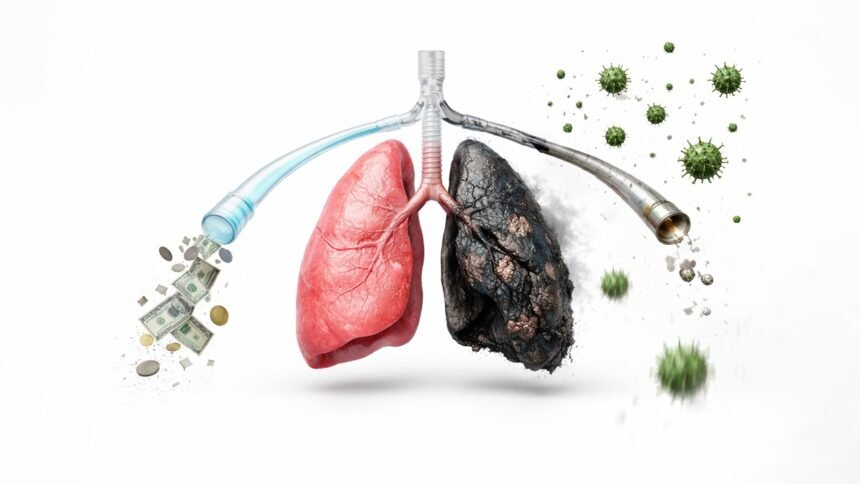
Tuberculosis (TB) remains one of the world’s deadliest infectious diseases, with an estimated 10.7 million people falling ill and 1.23 million dying in 2024 alone, according to the World Health Organization, making it the leading infectious killer
While the disease is now rare and quickly contained in many high-income countries, its burden remains disproportionately high across Africa, where transmission continues to strain health systems and expose deep inequalities in access to prevention and care.
Marked every March 24, World Tuberculosis Day raises awareness and mobilises action to end the global TB epidemic, with this year’s theme “Yes! We can end TB.”
It is also the primary cause of death among people living with HIV and a growing contributor to antimicrobial resistance.
Tuberculosis continues to highlight deep global health inequalities, with experts warning that a person’s risk of infection should not be determined by geography.
While isolated TB cases in cities such as Seattle and San Francisco in the United States often trigger swift public health responses and widespread media attention, the reality across much of sub-Saharan Africa is markedly different, where the disease remains a persistent and widespread public health challenge.
Countries including Ethiopia, Kenya, Uganda, Nigeria and South Africa are among those with the highest TB burden globally, with varying levels of infection and drug-resistant strains.
In many African countries, the response to TB is not driven by isolated outbreaks but by continuous transmission that places sustained pressure on health systems.
Experts say the disease is closely linked to socio-economic conditions, spreading more easily in overcrowded and poorly ventilated environments such as informal settlements, mines, and congested workplaces.
Undernutrition further increases vulnerability by weakening the immune system, while the financial burden of illness often pushes affected households deeper into poverty, creating a cycle that is difficult to break.
Despite decades of intervention, prevention tools remain limited. The Bacillus Calmette–Guérin (BCG) vaccine, developed more than a century ago, offers protection to young children against severe forms of TB but provides limited defence against pulmonary TB in adolescents and adults.
Yet these age groups carry the greatest burden of the disease and are the main drivers of transmission within communities, underscoring the urgent need for more effective vaccines.
Dr. Yves Mucyo Habimana, Acting Division Manager for TB and other respiratory communicable diseases at RBC, said Rwanda’s TB incidence stands at 62 cases per 100,000 people, a 74 percent decline over the past 25 years.
The country’s efforts align with the World Health Organization End TB Strategy (2016–2035), which aims to cut TB deaths by 95 percent and new infections by 90 percent globally.
Habimana noted that TB risk increases with close contact with untreated patients and poor environmental conditions such as inadequate ventilation. Weakened immunity, caused by conditions like HIV/AIDS, malnutrition, chronic illness, or age also heightens vulnerability.
“TB mainly affects the lungs and spreads through the air. A cough lasting two weeks or more is the most common symptom,” he said, adding that fever, night sweats, weight loss, and coughing up blood are other warning signs.
Despite free diagnosis and treatment, some patients delay testing or fail to complete medication due to limited awareness, stigma, and misinformation. In some cases, beliefs in witchcraft or reliance on traditional healers further delay hospital visits.
“Some patients only seek medical care when it is too late,” he said.
He urged the media to intensify awareness campaigns to promote early testing and treatment adherence.
The Government of Rwanda has strengthened its TB response by expanding early detection and improving diagnostic capacity, including the rollout of GeneXpert machines.
“These machines can detect TB bacteria and drug resistance within two hours, allowing immediate and appropriate treatment,” Habimana said.
According to the World Health Organization, a vaccine with 50 percent efficacy for adolescents and adults could save up to 8.5 million lives over 25 years, prevent 76 million new cases, and significantly reduce the economic burden on households. It could also help curb drug-resistant TB by lowering reliance on antibiotics, a critical step in addressing antimicrobial resistance.
Several TB vaccine candidates are currently in late-stage clinical trials, raising optimism that more effective prevention tools could soon be available. However, experts caution that scientific breakthroughs alone will not be enough.
Experience from other vaccines shows that impact depends on equitable access and sustained implementation. While vaccines such as those for measles have prevented millions of deaths globally, outbreaks still occur in areas where coverage remains low.
For TB, the challenge will be ensuring that new vaccines, once developed, reach the populations most affected, particularly in high-burden regions across Africa. This will require coordinated efforts between governments, international organisations, and health systems to strengthen delivery mechanisms and prioritise vulnerable communities.
Ultimately, addressing TB will require more than medical innovation. It will demand sustained investment in health systems, improved living conditions, and policies that ensure no one faces a higher risk of infection simply because of where they are born.